<?xml version="1.0" encoding="UTF-8"?><feed
	xmlns="http://www.w3.org/2005/Atom"
	xmlns:thr="http://purl.org/syndication/thread/1.0"
	xml:lang="en-US"
	>
	<title type="text">Charles Bramesco | Vox</title>
	<subtitle type="text">Our world has too much noise and too little context. Vox helps you understand what matters.</subtitle>

	<updated>2020-04-29T15:58:51+00:00</updated>

	<link rel="alternate" type="text/html" href="https://www.vox.com/author/charles-bramesco" />
	<id>https://www.vox.com/authors/charles-bramesco/rss</id>
	<link rel="self" type="application/atom+xml" href="https://www.vox.com/authors/charles-bramesco/rss" />

	<icon>https://platform.vox.com/wp-content/uploads/sites/2/2024/08/vox_logo_rss_light_mode.png?w=150&amp;h=100&amp;crop=1</icon>
		<entry>
			
			<author>
				<name>Charles Bramesco</name>
			</author>
			
			<title type="html"><![CDATA[As unemployment skyrockets, the new film Sorry We Missed You couldn’t be more relevant]]></title>
			<link rel="alternate" type="text/html" href="https://www.vox.com/2020/4/29/21241161/sorry-we-missed-you-review-amazon-gig-economy" />
			<id>https://www.vox.com/2020/4/29/21241161/sorry-we-missed-you-review-amazon-gig-economy</id>
			<updated>2020-04-29T11:58:51-04:00</updated>
			<published>2020-04-29T12:30:00-04:00</published>
			<category scheme="https://www.vox.com" term="Culture" /><category scheme="https://www.vox.com" term="Future of Work" /><category scheme="https://www.vox.com" term="Gig work" /><category scheme="https://www.vox.com" term="Movies" /><category scheme="https://www.vox.com" term="Reviews" /><category scheme="https://www.vox.com" term="Technology" />
							<summary type="html"><![CDATA[The coronavirus pandemic has thrown every American into a state of emergency &#8212; if not in the immediate medical or financial sense then in the indirect economic one, as joblessness skyrockets to record highs. Freelancers typing away at home and gig workers risking exposure out in the field have felt the strain more harshly than [&#8230;]]]></summary>
			
							<content type="html">
											<![CDATA[

						
<figure>

<img alt="" data-caption="Kris Hitchen plays a gig economy delivery person for an Amazon-esque company in Sorry We Missed You, directed by Ken Loach. | Courtesy of Zeitgeist Films in association with Kino Lorber" data-portal-copyright="Courtesy of Zeitgeist Films in association with Kino Lorber" data-has-syndication-rights="1" src="https://platform.vox.com/wp-content/uploads/sites/2/chorus/uploads/chorus_asset/file/19932807/8___SORRY_WE_MISSED_YOU_image.jpg?quality=90&#038;strip=all&#038;crop=0,0,100,100" />
	<figcaption>
	Kris Hitchen plays a gig economy delivery person for an Amazon-esque company in Sorry We Missed You, directed by Ken Loach. | Courtesy of Zeitgeist Films in association with Kino Lorber	</figcaption>
</figure>
<p>The <a href="https://www.vox.com/coronavirus-covid19">coronavirus</a> pandemic has thrown every American into a state of emergency &mdash; if not in the immediate medical or financial sense then in the indirect economic one, as <a href="https://www.vox.com/2020/4/9/21213449/unemployment-initial-claims-us-april-4">joblessness skyrockets</a> to record highs. Freelancers typing away at home and gig workers risking exposure out in the field have felt the strain more harshly than most, with many left in a no man&rsquo;s land between <a href="https://www.thedrum.com/news/2020/03/23/freelancers-guide-the-coronavirus-downturn-jobs-resources-and-support-networks">diminished rates of incoming work</a> and ineligibility for unemployment benefits.&nbsp;</p>

<p>Enter the <a href="https://www.vox.com/2020/4/3/21203006/cares-act-direct-payments-unemployment-insurance">CARES Act</a>, sweeping new legislation designed in part to toss a life raft in the direction of the gig economy. The bill&rsquo;s most eye-catching stipulation involves a $600-per-week stimulus accessible to anyone dealing with professional hardship, on top of unemployment benefits specified by their individual states.&nbsp;</p>

<p>It&rsquo;s a huge boon to those in need, and it&rsquo;s been <a href="https://www.washingtontimes.com/news/2020/apr/12/how-congress-cares-act-disincentivizes-workers-and/">pilloried</a> by the bootstrap-pullers of the world as mollycoddling. But the age-old narrative of handouts breeding a poor work ethic has received a sorely needed rejoinder in one of the films recently released to the American public via the new <a href="https://www.vox.com/culture/2020/3/27/21195928/virtual-theater-streaming-indie-vitalina-bacurau-once-were-brothers-saint-frances-zombi">&ldquo;virtual cinema&rdquo; system</a>. Ken Loach&rsquo;s <em>Sorry We Missed You</em> has finally been made <a href="https://kinonow.com/sorry-we-missed-you-film-forum">available in the US</a> following a world premiere at Cannes last year, a run in its native Britain, and a scuttled theatrical release in the US. And it arrives on our shores not a moment too soon, putting a human face on the talking points of the gig economy debate. By looking closer at one struggling family in the working-class Newcastle region, Loach exposes the human stakes of our identical crisis across the Atlantic.</p>

<p>The film has come to American viewers at a pivotal time for gig economy workers, acting as a meticulous beat-by-beat walkthrough of the injustices they face on the job. The number of real-world people coping with the same unenviable situation depicted onscreen continues to grow, and they get a sympathetic surrogate in Loach&rsquo;s protagonist. His many tribulations lay bare just how dire making ends meet can be when working for the likes of companies like Amazon, Instacart, and others that <a href="https://www.vice.com/en_us/article/n7j8zw/amazon-whole-foods-instacart-workers-organize-a-historic-mass-strike">rely on contract employees who aren&rsquo;t entitled to the same benefits or protections as full-time ones</a>.</p>
<h2 class="wp-block-heading"><em>Sorry We Missed You </em>puts a human face on the hardships of gig economy work</h2>
<p>We learn early on in <em>Sorry We Missed You</em> that the Turner clan &mdash; workhorse Ricky (Kris Hitchen), supportive wife Abbie (Debbie Honeywood), teenage son Seb (Rhys Stone) and moppet 11-year-old Liza Jane (Katie Proctor) &mdash; has been living lean since the financial downturn of 2007-2008. In the job interview that opens the film, Ricky articulates the salient points of his circumstances and personality, both of which sound lamentably familiar to any news-reading American: He believes in the virtue of labor, taking pride in never accepting government assistance. Having spent most of his life as a landscaper, he can no longer keep up with the backbreaking physical strain as he gets older. He figures that a contract job driving for Parcels Delivered Fast! &mdash; a package delivery service all but named Schmamazon &mdash; would be a good career pivot. Eager for an opportunity to be his own boss and make some real money, he&rsquo;s ruled an ideal candidate and hired on the spot.</p>

<p>Except he&rsquo;s not &ldquo;hired,&rdquo; he&rsquo;s &ldquo;onboarded.&rdquo; Loach raises the first red flag about three exchanges into Ricky&rsquo;s orientation, when his supervisor starts using pointed, loaded language. He makes the crucial distinction that Ricky will not work &ldquo;for&rdquo; PDF, but &ldquo;with&rdquo; them. Ricky doesn&rsquo;t earn wages; he&rsquo;s instead charging PDF fees. He&rsquo;s not an employee &mdash; he&rsquo;s a one-man franchise. The jargon makes normal old servitude sound fresh and new. &ldquo;Master of your own destiny,&rdquo; growls PDF overseer Maloney (Ross Brewster). &ldquo;Sloughs the fuckin&rsquo; losers from the warriors.&rdquo; Ricky cannot afford to let this unsettling messaging give him pause, and he takes the job.</p>

<p>He learns all too soon that these words contain traps into which he&rsquo;s already fallen. Every aspect of PDF&rsquo;s corporate doctrine shifts responsibility from the company to the individual, forming a parallel with the New York Times&rsquo; <a href="https://www.nytimes.com/2019/09/05/us/amazon-delivery-drivers-accidents.html">blockbuster 2019 expos&eacute;</a> on Amazon&rsquo;s business practices. That story began with the shocking case study of an overtaxed driver who caused a child&rsquo;s death in an on-the-job car crash, only to find herself solely liable for any legal recompense while Amazon shrugged its shoulders. Ricky finds himself holding the bill again and again in the same fashion, albeit for less extreme incidents, his first being a parking ticket that comes out of his pay. His every misstep ends with him kicking money back to the people paying him, whether those missteps involve the slightest delay in razor-thin one-hour delivery windows or his vehicle itself.</p>

<p>The matter of transportation first introduces the grim domino effect through which <em>Sorry We Missed You</em> traces Ricky&rsquo;s decline. Like all of Amazon&rsquo;s &ldquo;delivery service partners,&rdquo; he must provide his own up-to-code van to haul the day&rsquo;s packages, and a PDF representative presents him with the options to rent or buy one from the company. (Though the script never directly invokes the A-word, the one-to-one comparisons leave little to the imagination.) He rightly reasons that he&rsquo;ll gain more in the long run by buying, but like many members of his socioeconomic strata, he has to make sacrifices to scrounge up the cost. His family agrees to sell their own car, leaving Abbie to take the bus to the houses of the patients she cares for as a home nurse. Her mobility issues make fulfilling her duties at her own job more complicated, while Ricky can barely finish his daily list of deliveries. Their day-to-day difficulties keep compounding.</p>

<p>In the Turners&rsquo; two-pronged battle to remain solvent, Loach does what a news report can&rsquo;t by vividly rendering the emotional and psychological ramifications of their inhumane working conditions. Both Abbie and Ricky cherish the face-to-face element of their occupations; an early scene illustrates her tender bedside manner with her patients, while Ricky mentions in his initial interview with PDF that meeting new people was his favorite aspect of his old nine-to-five. He fancies himself something of the jolly neighborhood mailman, chatting up the recipients of his assorted packages. Maloney sets him straight at the end of his first day, telling him that he&rsquo;ll never make all his dropoffs unless he briskly moves from one house to the next. The mounting demands of Ricky and Abbie&rsquo;s work leave them no time for the pleasantries that make any job survivable.</p>

<p>The trouble follows them home as well, where Ricky and Abbie&rsquo;s forced workaholic schedules take a toll on their kids. With a lack of parental guidance and no exemplar of an adult life worth pursuing, Seb acts out and runs afoul of the local cops. Ricky&rsquo;s constant exhaustion makes him edgy at the dinner table and greatly exacerbates the inevitable fights with his son, which culminate in a smack that only sends Seb out to cause more havoc. In the film&rsquo;s most heartrending moment, Liza Jane hides her father&rsquo;s keys so he&rsquo;ll have no choice but to spend a little more time with them. Loach painstakingly shows that the companies enforcing these overtaxing standards have a holistic negative effect on the individual, indirectly making every part of their life more stressful. Ricky&rsquo;s job wears on the whole family, even if they&rsquo;re not personally clocking in.</p>

<p><em>Sorry We Missed You</em> &mdash; titled for the phrase of hollow politeness printed on the slips that PDF sticks on absent customers&rsquo; doors &mdash; rejects any resolution for Ricky&rsquo;s ever-increasing debt to the corporation utterly disinterested in the obstacles it&rsquo;s deliberately laid for him. A rough mugging results in fines for lost parcels, fines for missing deliveries, and then one last fine for the scanner his assailants smash, totaling upward of one thousand pounds. He can only return to work and get back on the hamster wheel that goes nowhere.&nbsp;</p>
<h2 class="wp-block-heading">The film positions itself in a hot-button debate that concerns all Americans</h2>
<p>Ricky and the thousands of real people living his nightmare generally exist in the abstract for the pundits and commentators weighing what their fate ought to be. When the CARES Act was detailed, think-tank types wasted no time doing the math on whether the benefits would be paltry enough to keep the working class motivated. This ideological bloc posits that providing too much assistance makes unemployment a more appealing prospect than work, somehow seeing that scenario as proof that aid is too great and not that wages are too low. Loach&rsquo;s film does the work of putting their theories into practice, showing how policy decisions made in isolation ripple out into tragedy once they&rsquo;re enacted.&nbsp;</p>

<p>In <a href="https://thehill.com/opinion/finance/490476-the-2-trillion-relief-package-makes-unemployment-pay-more-than-work">an op-ed</a> at The Hill<em> </em>published in March, economist and Trump campaign adviser Stephen Moore and conservative super PAC official Phil Kerpen<em> </em>restated the right&rsquo;s favored criticisms of public aid programs. From the opening salvo that &ldquo;public policies should reward productive behavior rather than punish it,&rdquo; they denigrated the proposed $2 trillion relief stimulus as a possible &ldquo;back door scheme by Democrats to greatly raise the minimum wage.&rdquo; A report from <a href="https://www.cnbc.com/2020/03/30/cares-act-will-be-an-economic-lifeline-for-gig-workers-freelancers.html">CNBC</a> painted a decidedly different picture, raising the point that &ldquo;often in a downturn, clients delay paying freelancers for work already done, leaving them with little or no income for extended periods of time.&rdquo;&nbsp;</p>

<p>CNBC cited Freelancers Union executive director Rafael Espinal as declaring the CARES Act &ldquo;an amazing win&rdquo; for gig economy workers and freelancers heretofore uncovered. <em>Sorry We Missed You </em>fits squarely into the argument he&rsquo;s making, using the mechanisms of narrative to carry it out to its logical conclusion. Loach shows the dark failure of public aid, what happens when the people a government should be caring for fall through the cracks.&nbsp;</p>

<p>Loach&rsquo;s film was made in a pre-coronavirus world, but recent developments have only served to underscore the points he makes. Ricky lives from check to precarious check, an existence known all too well to freelancers, including this one. And like the average pen for hire, he discovers that putting in the work won&rsquo;t necessarily free him from a Kafkaesque maze of small-print doublespeak and Catch-22s. He&rsquo;s playing a losing game, one that CARES makes somewhat more winnable. But that doesn&rsquo;t change the fact that everyone working is still playing, and even if we may have better odds, the house always wins.</p>
						]]>
									</content>
			
					</entry>
			<entry>
			
			<author>
				<name>Charles Bramesco</name>
			</author>
			
			<title type="html"><![CDATA[The McConaissance is back on-aissance]]></title>
			<link rel="alternate" type="text/html" href="https://www.vox.com/culture/2019/4/22/18293733/matthew-mcconaughey-critical-success-the-beach-bum" />
			<id>https://www.vox.com/culture/2019/4/22/18293733/matthew-mcconaughey-critical-success-the-beach-bum</id>
			<updated>2019-04-22T14:40:20-04:00</updated>
			<published>2019-04-22T12:40:00-04:00</published>
			<category scheme="https://www.vox.com" term="Culture" /><category scheme="https://www.vox.com" term="Movies" />
							<summary type="html"><![CDATA[When the going gets tough, the tough get going. But when the going gets tough for Matthew McConaughey, he gets going to the beach. In the first few months of this still-young year, McConaughey has already starred in two films geographically overlapping in the Florida Keys, and yet worlds apart. January&#8217;s Serenity starts out as [&#8230;]]]></summary>
			
							<content type="html">
											<![CDATA[

						
<figure>

<img alt="" data-caption="Matthew McConaughey attends a SXSW event at Paramount Theatre on March 9, 2019, in Austin, Texas. | Matt Winkelmeyer/Getty Images for SXSW" data-portal-copyright="Matt Winkelmeyer/Getty Images for SXSW" data-has-syndication-rights="1" src="https://platform.vox.com/wp-content/uploads/sites/2/chorus/uploads/chorus_asset/file/16178591/1134800494.jpg.jpg?quality=90&#038;strip=all&#038;crop=0,0,100,100" />
	<figcaption>
	Matthew McConaughey attends a SXSW event at Paramount Theatre on March 9, 2019, in Austin, Texas. | Matt Winkelmeyer/Getty Images for SXSW	</figcaption>
</figure>
<p>When the going gets tough, the tough get going. But when the going gets tough for Matthew McConaughey, he gets going to the beach.</p>

<p>In the first few months of this still-young year, McConaughey has already starred in two films geographically overlapping in the Florida Keys, and yet worlds apart. January&rsquo;s <em>Serenity </em>starts out as a smoldering neo-noir before hooking a hard left into a weird ontological parable, while March&rsquo;s <em>The Beach Bum</em> is a shaggy ramble following an eccentric law-breaker&rsquo;s aimless flight from justice.</p>

<p>The former maintains a po-faced seriousness even as it tumbles into high-concept lunacy, while the latter is a film about taking it easy that takes it easy. Any differences of genre or tone, however, cannot diminish the fundamental, ineffable McConaughey-ness that courses through both films.</p>

<p>This quiet one-two punch has returned McConaughey to his wheelhouse, which is located somewhere between <em>Serenity</em>&rsquo;s palm-tree-slung hammock and <em>The Beach Bum</em>&rsquo;s cabana bar. In both films, he plays overgrown slackers, men content to work just hard enough to finance a lifestyle of vice and relaxation. As <em>Serenity</em>&rsquo;s Baker Dill, he fishes for profit, drinks for fun, and beds a grateful local played by Diane Lane for a little bit of both. In <em>The Beach Bum</em>, McConaughey&rsquo;s mad poet Moondog appears to be more comfortable behind a bong than a typewriter, speaking like he doesn&rsquo;t know where a sentence will go once he&rsquo;s begun it.</p>
<img src="https://platform.vox.com/wp-content/uploads/sites/2/chorus/uploads/chorus_asset/file/16178597/www_media_movie_images_3439_image_5c7c6a845898b_1080x577.jpg?quality=90&#038;strip=all&#038;crop=0,0,100,100" alt="Matthew McConaughey as Moondog in The Beach Bum. " title="Matthew McConaughey as Moondog in The Beach Bum. " data-has-syndication-rights="1" data-caption="Matthew McConaughey as Moondog in &lt;em&gt;The Beach Bum&lt;/em&gt;. | Iconoclast/Neon" data-portal-copyright="Iconoclast/Neon" />
<p>McConaughey&rsquo;s looseness extends to his body language in both films, at times swaggering with a stoner&rsquo;s wobbliness, and at others gliding through his scenes with the fluid grace of Bruce Lee. McConaughey has always been at his best when he decides to be<em> </em>instead of do, in roles radiating such beatific relaxation that the audience is liable to cop a contact high.</p>

<p>But the oeuvre of McConaughey has held more twists and turns than one of the dusty Texan roads he grew up on. He was the Next Big Thing during the &rsquo;90s, before becoming a seeming casualty of poorly reviewed, lowest common denominator rom-coms for the following decade. Although a resurgence termed the &ldquo;McConaissance&rdquo; returned him to critical esteem<strong> </strong>at the top of the 2010s and culminated in a pivotal Oscar win in 2013, he&rsquo;s struggled to parlay his second coming into continued success, resulting in a string of misfires<strong> </strong>that <em>Serenity </em>and <em>The Beach Bum </em>have now broken.</p>

<p>The latest phase of the actor&rsquo;s filmography gets him back to basics, effectively relaunching the stalled McConaissance. After a few years of petering out, his comeback needed a comeback of its own, and he pulled it off by doing what he does best &mdash; that is to say, as little as possible. <a href="https://www.newyorker.com/culture/culture-desk/the-mcconaissance">That&rsquo;s what viewers love</a> about the perpetually tanned, easygoing McConaughey: He gets older, but his onscreen persona stays the same age.</p>
<h2 class="wp-block-heading"><strong>The rise-and-fall (and rise) narrative couldn’t last</strong></h2>
<p>As recently as five years ago, the trajectory of McConaughey&rsquo;s career was easy enough to chart. Point A was a promising start as a naturalistic, agreeable presence, the kind of guy who could score his first big film role simply by <a href="https://www.thedailybeast.com/dazed-and-confused-20th-anniversary-20-craziest-facts-about-the-cult-classic">sidling up to a casting director at a bar</a>. His performance as aging skirt-chaser Wooderson in 1993&rsquo;s <em>Dazed and Confused </em>made him an overnight star, his clarion call of &ldquo;alright, alright, alright&rdquo; becoming a mantra for all those going with the flow.</p>

<p>That role would come to define him on- and off-screen up to the present day, but he spent the remainder of the &rsquo;90s demonstrating his range and reliability as a movie star. He cut a dashing figure as a lawyer in the classical Grisham mold in <em>A Time to Kill</em>, and helped guide the film to a massive blockbuster payout in 1996. (Roger Ebert <a href="https://www.rogerebert.com/reviews/a-time-to-kill-1996">confessed</a> to being &ldquo;moved&rdquo; by McConaughey&rsquo;s big monologue near the tail end of the film.) The next year, he got Steven Spielberg&rsquo;s seal of approval with a clutch supporting role in the slave ship drama <em>Amistad</em>, even generating <a href="https://lasvegassun.com/news/1997/dec/12/movie-guys-amistad-a-sweeping-soul-searching-slave/">Oscar murmurs</a>.</p>
<div class="youtube-embed"><iframe title="Alright Alright Alright (Dazed and Confused)" src="https://www.youtube.com/embed/EuER2Puym4I?rel=0" allowfullscreen allow="accelerometer *; clipboard-write *; encrypted-media *; gyroscope *; picture-in-picture *; web-share *;"></iframe></div>
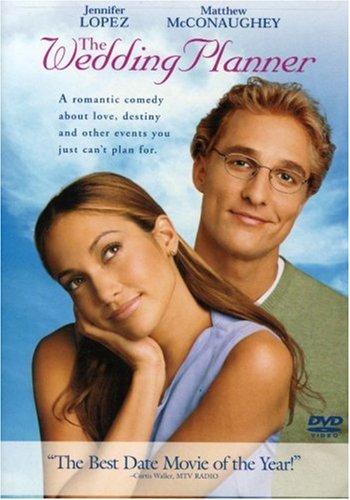
<p>Point B spread out across the Aughts, as McConaughey took a sojourn through the wilds of mediocrity. His name grew synonymous with a pitiable strain of rom-com that channeled the actor&rsquo;s charisma into a more <a href="https://images-na.ssl-images-amazon.com/images/I/519sNmwsPML.jpg">approachable</a>, dateable persona. <em>The Wedding Planner, How to Lose a Guy in 10 Days, Failure to Launch, Fool&rsquo;s Gold, </em>and <em>Ghosts of Girlfriends Past </em>made their star into a punch line between 2001 and 2009, but because the ticket sales remained robust, there was no cause to mess with success.</p>

<p>Even when McConaughey tried something different &mdash; as in the Al Pacino-led 2005 sports gambling drama <em>Two for the Money</em> &mdash; his output lacked the luster of those revelatory early turns. (An &ldquo;acting chore&rdquo; slightly less arduous than &ldquo;carrying every grain of the spring&rsquo;s miserable <em>Sahara,</em>&rdquo; raved <a href="https://usatoday30.usatoday.com/life/movies/reviews/2005-10-06-two-for-the-money_x.htm">USA Today</a>.) While this time would prove financially lucrative for McConaughey, and many rom-com devotees saw no issue in his chosen work, he didn&rsquo;t command the crossover respect from the critical establishment enjoyed by, say, a Brad Pitt.</p>

<p>A tertiary appearance in 2008&rsquo;s <em>Tropic Thunder </em>hinted at the path to the McConaissance that would span from 2011 to 2014. As talent agent Rick Peck, he repurposed his butter-smooth personality as something oilier and more unsavory, playing a knowing riff on the rascally-charmer type he&rsquo;d originally made his stock-in-trade.</p>

<p>Offering a slant on the unflappable image he&rsquo;d cultivated in <em>Dazed and Confused </em>and again as a dreamboat in <em>Boys on the Side, </em>his performances in the post-<em>Tropic Thunder </em>years would yield some of the most fascinating work in his filmography, and ultimately restore his former stature. He excelled at revealing the dark, broken parts concealed by the steely exteriors of the cowboy archetype.</p>

<p>The title character of 2011&rsquo;s <em>Killer Joe </em>was a sociopath in a black 10-gallon hat, while the eponymous role of 2012&rsquo;s <em>Mud </em>hid a lifetime of regret behind McConaughey&rsquo;s piercing gaze and molasses drawl. As Dallas in 2012&rsquo;s <em>Magic Mike</em>, he&rsquo;s playing an outsize parody of masculinity who knows he&rsquo;s a parody, just as hip to the artifice of the whole good-ol&rsquo;-boy act as we are.</p>

<p>Hollywood loves a comeback narrative, and McConaughey delivered. The first component of his two-pronged, 2013 return to the mainstream from the indie outskirts<strong> </strong>was a tour de force on <em>True Detective</em> as a desiccated husk of his usual form. The expanded canvas of HBO&rsquo;s miniseries gave him ample room for image rehabilitation, allowing him to reintroduce himself as an intense actor unafraid to plumb some dark depths.</p>

<p>That same year, he also went for the Academy jugular with his turn as Ron Woodruff in <em>Dallas Buyers Club</em>. The true story of a homophobe reformed by his own AIDS diagnosis had all the trappings of an awards-caliber showing: a topical angle, a historical basis, a clear character arc with lots of room for highlight-reel monologuing. It worked, too. He won the Academy Award for Best Actor &mdash; and his career is only now recovering.</p>
<h2 class="wp-block-heading"><strong>The McConaissance buzz led its subject astray</strong></h2>
<p>When an actor sweeps the awards circuit, the unspoken reward is that they get their pick of the auteur litter as big-name directors line up for the privilege of collaboration. As he basked in the post-Oscar glow, it made sense that McConaughey would take high-profile gigs with past award-winners such as Gus Van Sant and box office mainstays like Christopher Nolan. But the years in the wake of his new acclaim were studded with bad bets, films that affected the appearance of prestige without following through on quality.</p>
<img src="https://platform.vox.com/wp-content/uploads/sites/2/chorus/uploads/chorus_asset/file/16178603/sea_of_trees.jpg?quality=90&#038;strip=all&#038;crop=0,0,100,100" alt="Matthew McConaughey in The Sea of Trees." title="Matthew McConaughey in The Sea of Trees." data-has-syndication-rights="1" data-caption="&lt;em&gt;The Sea of Trees &lt;/em&gt;featured McConaughey in a role that strayed far from is well-liked, casual persona. | Bloom/A24" data-portal-copyright="Bloom/A24" />
<p>With the marked exception of his <a href="https://www.youtube.com/watch?v=ahlm-91krew">poignant</a> 2014 <em>Interstellar </em>performance, McConaughey spent this four-year period moping through plodders that stifled his charisma. Van Sant&rsquo;s 2015 film <em>The Sea of Trees</em> sullied the &ldquo;suicide forest,&rdquo; sending McConaughey into Aokigahara as a ponderous and mildly insufferable man who finds the will to live via helpful Japanese ghosts.</p>

<p>In 2016, Gary Ross&rsquo;s <em>Free State of Jones</em> likewise missed the mark, saddling McConaughey with a Confederate-turned-abolitionist white savior narrative and the haunted visage to match. That same year, McConaughey sported a combover and girthy paunch to play a modern-day prospector in Stephen Gaghan&rsquo;s <em>Gold</em>, but a flimsy script hobbled the lead performance. He made a lunge at blockbuster glory with the big-ticket Stephen King adaptation <em>The Dark Tower </em>in 2017, but the self-fashioned franchise <a href="https://www.avclub.com/stephen-king-tries-to-explain-why-the-dark-tower-movie-1818809217">was dead-on-arrival</a>.</p>

<p>They all faceplanted with critics and ticket-buyers alike, <a href="https://gulfnews.com/entertainment/hollywood/matthew-mcconaughey-needs-another-mcconaissance-1.2071627">calling McConaughey&rsquo;s cachet into question</a>. (The less said about his vocal contribution to 2016&rsquo;s execrable animated film <em>Sing</em>, the better.) As a good-for-nothing small-time gun-runner in 2018&rsquo;s <em>White Boy Rick</em>, McConaughey showed a glint of his old hell-raising charms, but he&rsquo;s only recently gotten back in sync with himself.</p>

<p>Films like <em>The Sea of Trees</em>, <em>Free State of Jones</em>, <em>Gold</em>, and <em>White Boy Rick</em> replicated and magnified the core imbalance of <em>Dallas Buyers Club, </em>giving McConaughey a seemingly meaty role without a film capable of sustaining it<em>.</em> They&rsquo;d use the same mannered, lumpy humorlessness as a stand-in for depth, unaware that the key appeal of fast-living Ron Woodruff was how he reminded us a bit of the man playing him.<strong> </strong></p>

<p>America responded to Woodruff and <em>True Detective</em>&rsquo;s Rust Cohle because they were distinctly McConaughey roles &mdash; hard-drinking, devil-may-care men of the south &mdash; that allowed him to play against type, creating something new, bracing, alienating, and captivating.</p>
<h2 class="wp-block-heading"><strong>For some actors, success can be its own obstacle</strong></h2>
<p>McConaughey made the same post-Oscar miscalculations as previous winners like Cuba Gooding, Jr. or Adrien Brody did. Namely that a good actor is a &ldquo;serious&rdquo; actor, and that serious acting is necessarily good acting. (Call it the <a href="https://www.newyorker.com/culture/richard-brody/movie-of-the-week-sullivans-travels"><em>Sullivan&rsquo;s Travels</em></a><em> </em>delusion.) Six years out from his unexpected Supporting Actor win for <em>Jerry Maguire</em>, and Gooding was still trying to get awards-friendly vehicles like the horrifically miscalculated <em>Radio </em>off the ground.</p>

<p>Brody tried to refashion himself as a blander sort of leading man by playing action-hero for Peter Jackson&rsquo;s <em>King Kong</em>, and while the film was a hit, a forgettable performance contributed to him falling out of favor with the arbiters of cinematic taste who once celebrated him. Many actors experience this as a phase they then snap out of; there&rsquo;s a direct line to be drawn between Brie Larson taking the Oscar for <em>Room</em> and the lamentable, somber-faced adaptation of <em>The Glass Castle </em>she signed on for shortly afterward.<strong> </strong>(She has since bounced back in a big way, albeit by <a href="https://www.vox.com/2019/2/28/18243513/captain-marvel-brie-larson-carol-danvers-news-updates">diverting toward the Marvel blockbuster route.</a>)</p>

<p>Success can leave a person mixed-up about how they achieved it. Box-office domination rerouted the career of Chris Pratt; an idiot-puppy-dog energy made him unique in <em>Parks and Recreation </em>and again in <em>Guardians of the Galaxy</em>, but films like <a href="https://www.vox.com/culture/2016/12/21/14005762/passengers-review-spoilers-jennifer-lawrence-chris-pratt">the critically savaged <em>Passengers</em></a><em> </em>and the flagging <em>Jurassic World </em>franchise sanded that quality down in the interest of making him <a href="https://melmagazine.com/en-us/story/why-regular-guys-like-chris-pratt-make-such-boring-movie-stars">broadly palatable to the widest audience possible</a>. McConaughey has the experience and smarts to know how to pull out of this tailspin simply by being himself.</p>

<p>McConaughey&rsquo;s at his best when he&rsquo;s cutting loose, exploring the weird spontaneity of his acting style, getting in touch with his physicality and rhythms of language. And for the first time in years, <em>Serenity</em> and <em>The Beach Bum</em> give him that outlet to do so. He moves through the roles of Baker Dill and Moondog like liquid silver, untouchable and constantly changing shape.</p>

<p>They&rsquo;re low-stakes performances that find brilliance by refusing to look for it, discovering along the way that just chilling can foster genius of its own. They&rsquo;re too outr&eacute; to drum up much awards talk, with too many odd angles and frayed ends. But that&rsquo;s the McConaughey way, in its best and purest form. If he does things that only make sense within the confines of his addled brain, don&rsquo;t worry about it, at least he knows what he&rsquo;s doing. At last, McConaughey has resubscribed to the Tao of <em>alright, alright, alright</em>.</p>
						]]>
									</content>
			
					</entry>
			<entry>
			
			<author>
				<name>Charles Bramesco</name>
			</author>
			
			<title type="html"><![CDATA[One of film’s greatest epics is a 7-hour adaptation of War and Peace. Really.]]></title>
			<link rel="alternate" type="text/html" href="https://www.vox.com/culture/2019/2/15/18223285/war-and-peace-sergei-bondarchuk-adaptation-1966" />
			<id>https://www.vox.com/culture/2019/2/15/18223285/war-and-peace-sergei-bondarchuk-adaptation-1966</id>
			<updated>2019-02-15T12:39:20-05:00</updated>
			<published>2019-02-15T13:00:00-05:00</published>
			<category scheme="https://www.vox.com" term="Culture" /><category scheme="https://www.vox.com" term="Explainers" /><category scheme="https://www.vox.com" term="Movies" />
							<summary type="html"><![CDATA[Good critics avoid hyperbole as a rule, and declaring a single film to be the greatest ever made makes a professional sound like an undergrad who just saw Citizen Kane for the first time. And even some voracious readers are guilty of seeing the writings of Leo Tolstoy as an essential chore. Having said all [&#8230;]]]></summary>
			
							<content type="html">
											<![CDATA[

						
<figure>

<img alt="" data-caption="Sergei Bondarchuk’s War and Peace. | Janus Films" data-portal-copyright="Janus Films" data-has-syndication-rights="1" src="https://platform.vox.com/wp-content/uploads/sites/2/chorus/uploads/chorus_asset/file/13765923/28891id_008.jpg?quality=90&#038;strip=all&#038;crop=7.9153605015674,0,73.197492163009,100" />
	<figcaption>
	Sergei Bondarchuk’s War and Peace. | Janus Films	</figcaption>
</figure>
<p>Good critics avoid hyperbole as a rule, and declaring a single film to be the greatest ever made makes a professional sound like an undergrad who just saw <em>Citizen Kane </em>for the first time. And even some voracious readers are guilty of seeing the writings of Leo Tolstoy as an essential chore. Having said all that: In any serious, sober-minded discussion about what could be selected to exemplify the farthest reaches of cinema&rsquo;s capabilities, <em>War and Peace</em> &mdash; Sergei Bondarchuk&rsquo;s largely unseen adaptation of Tolstoy&rsquo;s literary classic &mdash; would have to be on the table.</p>

<p>The story of its production, of a man moving heaven and Earth to realize a staggering vision, boggles the mind to this day. The adaptation set a new standard for &ldquo;epic,&rdquo; capturing all the passion and tragedy of Napoleon&rsquo;s clash against the Russian aristocracy in its seven-hour sprawl. Anyone who hears &ldquo;431 minutes of <em>War and Peace</em>&rdquo; and imagines an airless museum exhibit passing itself off as a film has another thing coming.</p>

<p>The film&rsquo;s larger-than-life legend begins in 1961, when Bondarchuk commandeered the largest budget the USSR had ever seen for a single motion picture. Released in four parts in 1966 and 1967, it was a colossal success in its original homeland run as well as a worldwide sensation, and playing as a four-night special on ABC in 1972 after having set a new record for highest ticket cost &mdash; as steep as $7.50, the equivalent of dropping $56.52 on a ticket today, and a big step up from the $1.20 rate in place at the time &nbsp;&mdash; during theatrical screenings of an abridged six-hour edit in the US. The 1966 Oscar for Best Foreign Language Film was just the feather in its cap &mdash; er, shako.</p>

<p>But the difficulty of preserving, displaying, and distributing such a massive piece of work (a whopping 20 canisters of film reels made transportation a sizable hassle) all but sealed it away from the public&rsquo;s access, excepting the occasional repertory run of a badly beaten-up copy. Until now.</p>

<p>The <a href="http://www.janusfilms.com/films/1909">good folks at Janus Films</a> have undertaken the herculean work of rebeautifying Bondarchuk&rsquo;s footage, and in 2019, they&rsquo;re getting it back out there: First, a run at New York&rsquo;s Film Society of Lincoln Center <a href="https://www.filmlinc.org/films/war-and-peace/">starting Friday</a>, then a run in Los Angeles, other major cities, and finally, a video/digital release later in the year.</p>

<p>The result of their efforts stands head and shoulders above its contemporary cinema, a triumph of unmatched scale that makes visible the fire and madness raging in a work of great literature that many look at as impenetrable. Film students, history buffs, and anyone else who&rsquo;s ever been cowed by the splendor of the moving image &mdash; that covers everybody, right? &mdash; can appreciate the novel&rsquo;s brawn when inflated to such dizzying proportions.</p>
<img src="https://platform.vox.com/wp-content/uploads/sites/2/chorus/uploads/chorus_asset/file/13766200/28891id_014.jpg?quality=90&#038;strip=all&#038;crop=0,0,100,100" alt="Sergei Bondarchuk’s War and Peace" title="Sergei Bondarchuk’s War and Peace" data-has-syndication-rights="1" data-caption="" data-portal-copyright="Janus Films" /><h2 class="wp-block-heading">Bondarchuk harnessed a nationalist spirit for unprecedented scope</h2>
<p>In a big-picture sense, Bondarchuk&rsquo;s adaptation of <em>War and Peace</em> owes its existence to an international dick-measuring contest.</p>

<p>In 1956, a take on Tolstoy&rsquo;s doorstopper novel by Hollywood luminary King Vidor inadvertently launched a competition that would yield the seventh art&rsquo;s high-water mark. Vidor&rsquo;s version &mdash; which tapped Henry Fonda and Audrey Hepburn to carry its 208 minutes &mdash; earned plenty of Academy love without the box-office receipts to match, but played like gangbusters overseas when a subtitled version finally made the trek to Russian theaters in 1959.</p>

<p>Still, government apparatchiks didn&rsquo;t like seeing Fonda and Hepburn&rsquo;s faces filling their people with ideas about Western excellence. So culture minister Yekaterina Furtseva commissioned a red-blooded production from the homeland that would &ldquo;surpass the American-Italian one in its artistic merit and authenticity,&rdquo; as the <a href="https://www.mk.ru/culture/2011/09/20/625328-tovarisch-kutuzov-chtoto-stalo-holodat.html">open letter</a> she published in state press announced. It was to be &ldquo;a matter of honor for the Soviet cinema industry.&rdquo;</p>

<p>Because the position of director was to be filled by what was essentially an electoral college of Kremlin officials, young gun Sergei Bondarchuk scored the coveted gig by virtue of being more identified with Khrushchev&rsquo;s era than many of his more accomplished Stalinist elders. He recognized that a once-in-a-lifetime opportunity had fallen into his lap in the form of a blank check drawing on an infinite bank account. Riding the wave of nationalist sentiment, he put a small fortune of 8.29 million rubles to work on a spectacle that would blow his overseers away. With the administration&rsquo;s notoriously short patience for failure in mind, he literally directed the film as if his life depended on it.</p>

<p>It&rsquo;s tough to say definitively, but this critic is fairly certain that no single filmmaker in the medium&rsquo;s history has ever been granted the level of access afforded to Bondarchuk during <em>War and Peace</em>&rsquo;s six-year production process. In addition to having a gargantuan sum of money at his disposal, Bondarchuk had his pick of the Soviet Union&rsquo;s finest playwrights to draw up his script.</p>

<p>He filled his opulent sets with chandeliers, furniture, and other 19th-century relics <a href="https://www.zeit.de/1965/31/tauziehen-auf-den-moskauer-festspielen/seite-3">on loan from over 40 museums</a> across the USSR. The military advisers acting as Bondarchuk&rsquo;s consultants gave him the go-ahead to marshal thousands upon thousands of actual soldiers for use as extras in his psychotically ambitious battle scenes. If it&rsquo;s not yet clear that the man was drunk with power, he went right ahead and cast himself in the lead role of Pierre Bezukhov.</p>

<p>My favorite detail of all: Bondarchuk was <a href="https://web.archive.org/web/20121013160227/http://www.rodgaz.ru/index.php?action=Articles&amp;dirid=25&amp;tek=27096&amp;issue=429">insistent</a> upon using the meticulously bred <a href="http://mentalfloss.com/article/83088/10-elegant-facts-about-borzoi">Borzoi dogs</a> for a fox-hunting sequence in keeping with the national tradition, except that the noble-bred species had grown uncommon. He managed to find 16 of them, only to discover that the canines had lost the tracking instinct. His fix? Borrow a pack of wolves from the state zoological department, get some scent hounds from the Ministry of Defense to chase down the wolves, and then send the Borzois to follow the hounds. Convoluted? Yes. Needlessly expensive? Sure, but when you&rsquo;re working without limits, who could possibly care?</p>
<img src="https://platform.vox.com/wp-content/uploads/sites/2/chorus/uploads/chorus_asset/file/13766207/28891id_006.jpg?quality=90&#038;strip=all&#038;crop=0,0,100,100" alt="Sergei Bondarchuk’s War and Peace" title="Sergei Bondarchuk’s War and Peace" data-has-syndication-rights="1" data-caption="" data-portal-copyright="Janus Films" /><h2 class="wp-block-heading">Virtuosic camerawork rendered each scene of Bondarchuk’s <em>War and Peace</em> its own sort of spectacle</h2>
<p>The director&rsquo;s plan to hook the masses relied on shock and awe, bending even the most stubborn detractors into submission via the sheer magnificence of his vision. Within the tangled web of passion between Natasha Rostova (Lyudmila Savelyeva), Pierre Bezukhov (Bondarchuk), and Andrei Bolkonsky (Vyacheslav Tikhonov), the crew mounted a series of astonishing set pieces, continually topping themselves.</p>

<p>The fox-hunting bit that Bondarchuk worked so hard on came out like a psychedelic swirl of gnashing teeth and gaping eyeballs, and early clashes at Austerlitz and Sch&ouml;ngrabern tease the viewer with a taste of the sum total of the film&rsquo;s might. For his grand finale, Bondarchuk recreated the burning of Moscow by razing a vast swath of land in a village just outside the city. The terror in the eyes of the extra dashing alongside Pierre through the inferno appears as authentic as it gets. Say what you will about the wonders of CGI, but sometimes there&rsquo;s just no substitute for the real thing.</p>

<p>Bondarchuk&rsquo;s staging of the conflicts between the Napoleonic and Russian forces make <em>Apocalypse Now </em>look like a particularly audacious senior thesis film. Aerial shots that stretch out for miles survey the full breadth of Bondarchuk&rsquo;s army, assuming a God&rsquo;s-eye-view so that he may squeeze as many bodies into a frame as possible. On the ground, custom rigging enabled how-the-hell-did-he-do-that tracking shots, wending in and out of bayonet stabbings, horse deaths, and chains of detonations to capture all the hysteria in these orgies of brutality. It might have taken approximately the same amount of effort and resources to mount an actual ground invasion.</p>
<img src="https://platform.vox.com/wp-content/uploads/sites/2/chorus/uploads/chorus_asset/file/13766176/28891id_010.jpg?quality=90&#038;strip=all&#038;crop=0,0,100,100" alt="Sergei Bondarchuk’s War and Peace" title="Sergei Bondarchuk’s War and Peace" data-has-syndication-rights="1" data-caption="" data-portal-copyright="Janus Films" />
<p>Though he&rsquo;d been appointed a de facto<em> </em>keeper of the cultural gates, Bondarchuk found plenty of room to get his own kicks through indulgent formal experimentation. The scenes of dialogue bristle with their own weird sense of artistry and beauty. Even the barren snow has been shot with a lushness that imbues a majesty in the blankness, and the footage is gussied up with double-exposures predating the arrival of the word &ldquo;trippy&rdquo; in the Russian language.</p>

<p>At the conclusion of the film&rsquo;s second segment, Bondarchuk plays around with rhythm by inserting a split-second shot of a jingling chandelier to punctuate Pierre&rsquo;s initial courtship of Natasha. One of the most indelible scenes takes place during a roaring night of revelry among the nobles, as Bondarchuk literalizes their stupor with aggressive, whirling cinematography to make a tornado out of their party. It&rsquo;s gloriously disorienting, and still, it&rsquo;s hard to miss <em>the real live bear chugging a stein of beer</em>. One might wonder what this bear is doing, tearing it up with human beings, but Bondarchuk&rsquo;s is a film of &ldquo;why not?&rdquo; and not &ldquo;why?&rdquo;</p>
<h2 class="wp-block-heading">From Tolstoy’s dense prose, Bondarchuk’s <em>War and Peace</em> mines visceral blockbuster entertainment</h2>
<p>Like <em>In Search of Lost Time </em>or <em>Infinite Jest</em>, <em>War and Peace </em>is preceded by an intimidating reputation. Clocking in at north of 1,200 pages and boasting hundreds of characters (many of whom share tough-to-keep-straight family names), it still scares off all but the most determined readers. There&rsquo;s the old cocktail party line about highbrow types who split their lifetime into two periods: before and after they conceded they&rsquo;d never read Proust; it&rsquo;s easy to succumb to the same self-limitations with Tolstoy.</p>

<p>Bondarchuk wasn&rsquo;t playing to the monocle-polishers, however. His goal was nothing less than for every living citizen of Russia &mdash; if not the world &mdash; to see his movie, preferably multiple times. He wanted the finished product to be opulent, titanic, heartbreaking and above all, compulsively watchable. Along with screenwriter Vasily Solovyov, he pruned a handful of the original novel&rsquo;s subplots and worked the thorny historical philosophizing into a palatable episodic structure. Much in the same respect that Shakespeare pitched himself first and foremost to the groundlings, Bondarchuk fancied his work something closer to a prestigious binge-watch than a lofty high-culture object.</p>

<p>His labor has the same origin point as the Janus Films restoration team&rsquo;s. In Bondarchuk&rsquo;s adapting of <em>War and Peace</em><strong> </strong>and now Janus&rsquo;s reinvigoration of the film, they don&rsquo;t so much blow the dust off a classic as relight a fuse. The unadulterated recklessness coursing through all seven gripping hours makes getting some capital-c Cultcha feel like the farthest thing from fulfilling an obligation of good taste. If only <em>Ulysses</em> could be made to feel like <em>Dunkirk</em> on an inhuman dose of steroids, maybe we&rsquo;d all get that much closer to being well-read.</p>
						]]>
									</content>
			
					</entry>
			<entry>
			
			<author>
				<name>Charles Bramesco</name>
			</author>
			
			<title type="html"><![CDATA[Why the vintage terrors of The Inner Sanctum Mystery make for great modern Halloween fare]]></title>
			<link rel="alternate" type="text/html" href="https://www.vox.com/culture/2018/10/27/17992068/inner-sanctum-mystery-radio-horror-streaming-halloween" />
			<id>https://www.vox.com/culture/2018/10/27/17992068/inner-sanctum-mystery-radio-horror-streaming-halloween</id>
			<updated>2018-10-30T11:53:32-04:00</updated>
			<published>2018-10-30T11:53:27-04:00</published>
			<category scheme="https://www.vox.com" term="Culture" />
							<summary type="html"><![CDATA[They all start the same way: a few minor chords from a pipe organ, maybe a quick plug for Bromo-Seltzer or some other apothecary&#8217;s helper no longer in circulation &#8212; and then the creak. It is the creakiest creak to have ever creaked, so drawn-out and borderline polyphonic that it could be mapped on a [&#8230;]]]></summary>
			
							<content type="html">
											<![CDATA[

						
<figure>

<img alt="" data-caption="A 1949 production photo of an Inner Sanctum Mystery recording, featuring actors Frank Mellow, Arlene Blackburn, and Vera Allen. | CBS via Getty Images" data-portal-copyright="CBS via Getty Images" data-has-syndication-rights="1" src="https://platform.vox.com/wp-content/uploads/sites/2/chorus/uploads/chorus_asset/file/13335021/GettyImages_874192526.jpg?quality=90&#038;strip=all&#038;crop=0,0,100,100" />
	<figcaption>
	A 1949 production photo of an Inner Sanctum Mystery recording, featuring actors Frank Mellow, Arlene Blackburn, and Vera Allen. | CBS via Getty Images	</figcaption>
</figure>
<p>They all start the same way: a few minor chords from a pipe organ, maybe a quick plug for Bromo-Seltzer or some other apothecary&rsquo;s helper no longer in circulation &mdash; and then the creak.</p>

<p>It is the creakiest creak to have ever creaked, so drawn-out and borderline polyphonic that it could be mapped on a musical staff. Doors, even those leading to dank candlelit basements in which creepy bards wait with tales of the macabre, do not make this much noise in real life. (And that&rsquo;s true; the creaking sound effect was achieved with a rusty swiveling chair. Pity the poor self-starting staffer who once oiled the makeshift instrument under the impression that he was helping out.)</p>

<p>But that&rsquo;s just the order of the day on <a href="https://archive.org/details/OTRR_Inner_Sanctum_Mysteries_Singles"><em>The Inner Sanctum Mystery</em></a>, where there&rsquo;s always a chill in the air, black cats yowl at the full moon, and no hinge keeps quiet.</p>

<p>Spun out from Simon &amp; Schuster&rsquo;s series of cheap <a href="https://prettysinister.blogspot.com/2016/05/impressive-imprints-inner-sanctum.html">paperbacks</a> and then spun out once more into a <a href="https://www.imdb.com/search/keyword?keywords=inner-sanctum">six-picture series</a> of feature films in the &rsquo;40s, the title gained the most prominence as a radio serial running 526 episodes from 1941 to 1952. Creator Himan Brown struck the same chord with audiences that Rod Serling would continue to clang all throughout the 1960s on <em>The Twilight Zone</em>, attaining impressive longevity through an infinitely renewable formula and the public&rsquo;s unslakable thirst for fear.</p>

<p>Brown cohesively bound the many installments of this radio anthology by sticking with a consistent structure and tone befitting the morbid subject matter. A vampy host brought over from the Broadway stage (Raymond Edward Johnson, at first, then Paul McGrath from 1945 onward following Johnson&rsquo;s enlistment in the war effort) would ham it up as he introduced the night&rsquo;s diversion with florid language that would make Edgar Allan Poe proud.</p>

<p>Then followed an account of danger and suspense, playing up atmosphere and tension over gutbucket descriptions of gore, erring on the side of &ldquo;spooky&rdquo; rather than &ldquo;horrifying.&rdquo; These punctuated by occasional appearances from the schoolmarmish Lipton Lady, come to shill for sponsored tea and tut-tut the twisted little deviants who tuned in.</p>

<p>The narrator&rsquo;s raconteurish presence set the scene as an act of yarn-spinning, a framing device harkening back to the scary-story form&rsquo;s beginnings in the oral tradition. By creating this familiar cast of characters and an accompanying sense of communal gather-round-children experience, the<em> Sanctum </em>established itself as a place anyone could go to get scared out of their wits in the comfort of their own home.</p>

<p>While some episodes dove into the supernatural (to wit: &ldquo;The Horla,&rdquo; in which Paul Lukas contends with an invisible demon borrowed from an old French novella), they more frequently landed in an earthbound, Hitchcockian register. With all the gravitas that the sonorous cast could muster, they emphasized a human element among the violence, illustrating the ease with which jealousy, arrogance, or anger can drive a person to homicidal extremes.</p>

<p>All that each half-hour segment needed was a sturdy hook on which it could hang puns, pulpy pleasures, and purple prose; hubristic would-be masterminds plotting their perfect crime, average Joes stalked by unseen predators, lovers losing their senses in fits of feverish passion.</p>

<p>The dark side of the FM dial provided a playground for some of the era&rsquo;s most lauded talent to cut loose, and launched careers for a handful of future stars. Because the <em>Sanctum</em>&rsquo;s signature fusion of lurid content and arch humor toeing the line of camp offered many thespians a reprieve from a diet of soft-focus melodramas and dignified theatre work &mdash; not to mention a quick check &mdash; it attracted the cream of the day&rsquo;s crop.</p>

<p>Silver screen monster-men such as Bela Lugosi and Boris Karloff were regular fixtures on the airwaves, the invisible man Claude Rains showed up for &ldquo;The Haunting Face&rdquo; (an episode now preserved by the Library of Congress) and two years out from <em>Citizen Kane</em>, Orson Welles dropped in to provide vocals for &ldquo;Death Strikes the Keys.&rdquo; Helen Hayes and Mary Astor set a course for the scream queens of the &rsquo;70s with their earsplitting terror, and even Frank Sinatra lent his velvety baritone to <a href="https://archive.org/details/InnerSanctumTheEnchantedGhostwithFrankSinatra122649">&ldquo;The Enchanted Ghost.&rdquo;</a> For audiences in the &rsquo;40s, listening felt like attending a swinging costume party with all their favorite celebrities.</p>

<p>For listeners in 2018, however, the<em> Sanctum </em>and its library of nightmares<em> </em>live on as a totem of nostalgia for a bygone era, both of horror and audio media.</p>
<h2 class="wp-block-heading">They don’t make radio horror like they used to</h2>
<p><em>The Inner Sanctum Mystery </em>took me unawares on &mdash; when else? &mdash; a dark and chilly night. During the final hours of an October day&rsquo;s road trip with a friend, we were scanning the FM dial when an eerie shriek burst onto the radio and caught our attention. After about 20 rapt minutes, we learned that a local affiliate liked to treat Long Islanders to some vintage frights when the according season rolls around.</p>

<p>Though many episodes have been lost to the sands of time, a healthy portion remain<a href="https://archive.org/details/OTRR_Inner_Sanctum_Mysteries_Singles"> available to stream online</a>, and revisiting this curious chapter of horror has become my favorite Halloween ritual. There&rsquo;s a hokey appeal to the conspicuous old-fashioned-ness of the crackly broadcasts, all corn-syrup blood and rubber bats. Brown pushed the horror envelope by taking advantage of radio&rsquo;s inability to graphically represent grisly material, allowing the suggestion of depravity and letting the listener&rsquo;s mind fill in the rest.</p>
<img src="https://platform.vox.com/wp-content/uploads/sites/2/chorus/uploads/chorus_asset/file/13335147/GettyImages_601085924.jpg?quality=90&#038;strip=all&#038;crop=0,0,100,100" alt="" title="" data-has-syndication-rights="1" data-caption="&lt;em&gt;Inner Sanctum Mystery &lt;/em&gt;host Raymond Edward Johnson poses with a presumably creaky door. | CBS via Getty Images" data-portal-copyright="CBS via Getty Images" />
<p>Moreover, <em>Sanctum </em>hails from a time when consumers had a more formal relationship with what they listen to. In a pre-TV America, the radio was appointment entertainment, commanding rooms where sitting families would place the sum total of their attention on a narrative that leaves you behind if you zone out. There&rsquo;s something meditative about doing nothing but sitting and focusing, eyes closed, imagination firing on all cylinders; it raises the zen state of lower wakefulness achieved by moviegoers to the Nth degree. While you listen, everything else stops.</p>

<p>As the popularity of long-form radio storytelling has declined, podcasts have moved in to fill the vacuum, but some of the jerry-rigged charm has been lost along the way. Freed from dependence on a gatekeeping broadcast station, independent outfits everywhere have flooded the internet with anthologies and long-form series updating <em>Sanctum</em>&rsquo;s template.<a href="http://www.whitevault.libsyn.com/?fbclid=IwAR0S4FpljUmCiplfhjQM7a2dCfZuvnhOd9_Ch6QHIuEbmuPlqXi7AGnDCD0"> <em>The White Vault</em></a> is one such program, following a perilous expedition to a research facility tucked away in a frost-choked wasteland. Producer Travis Vengroff and creator/host Kaitlin Statz agree that the content and the platform housing it have both changed since Brown&rsquo;s day.</p>

<p>&ldquo;Older radio teleplays generally emphasized stage acting and live audio design,&rdquo; they explained via email. &ldquo;As many of the shows were performed live for radio, they created soundscapes on the fly using whatever objects or tools they could fit in a soundstage&hellip; From a production perspective, audiences now expect more.&rdquo;</p>

<p>Attaining a standard of professionalism is more doable than ever, but that polish has widely supplanted techniques with their own time and place. As Vengroff and Statz put it, &ldquo;Stories are now pre-recorded, edited, and mastered prior to being released. So instead of shaking heavy paper, actual sounds of thunder might be used, and the sounds of wind and rain might be used in place of a dramatic organ performance.&rdquo;</p>

<p>That technological evolution is reflective of a wider shift away from the stylized pre-packaged irony embodied by <em>Inner Sanctum Mystery</em> and towards an approximation of real life. &ldquo;Over-the-top acting was also desirable because shows during that era emphasized excitement,&rdquo; the <em>White Vault </em>team said, &ldquo;often taking listeners to distant locales to tell grandiose stories. While a podcasting sub-genre still exists to cater to the fans of the old radio plays, modern audio drama has since shifted its style.&rdquo;</p>

<p>While the audio drama medium&rsquo;s evolution clearly points forward, employing more sophisticated equipment and techniques, the limitations of <em>Sanctum</em>&rsquo;s era forced personal touches that are now easily automated. Statz and Vengroff aren&rsquo;t bothered by these sea changes, or by the notion that consumers might be taking in their handiwork while cooking, driving, cleaning, working out, or &ldquo;powering through any mind-numbing tasks.&rdquo; The listener has claimed dominion over the shape of their entertainment, pausing and playing as they please, streaming and downloading at their own pace.</p>
<h2 class="wp-block-heading"><em>The Inner Sanctum Mystery </em>serves as an alternative to straight-faced Halloween scares</h2>
<p>Maybe it&rsquo;s time to let the old ways die, and accept that <em>Inner Sanctum Mystery</em>&rsquo;s<em> </em>specific register of mannered, corn-adjacent horror lives on solely as a novelty in a modern radio landscape. But what is Halloween if not the season of novelty, an occasion for goofy artifice, for plastic and foam?</p>
<img src="https://platform.vox.com/wp-content/uploads/sites/2/chorus/uploads/chorus_asset/file/13335319/GettyImages_601085950.jpg?quality=90&#038;strip=all&#038;crop=0,0,100,100" alt="" title="" data-has-syndication-rights="1" data-caption="Inner Sanctum Mysteries host Raymond Edward Johnson and actress Virginia Owen demonstrate the old head-in-a-hatbox gag. | CBS via Getty Images" data-portal-copyright="CBS via Getty Images" />
<p>Excluding only sci-fi, horror attracts more purists than any single genre, and that diehard fanbase can be a double-edged sword. Slasher flicks remain the one trend-impervious box-office bet, as recently proven by the umpteenth <a href="https://www.boxofficemojo.com/movies/?id=halloween2018.htm"><em>Halloween</em>&rsquo;s resounding success</a>, yet this comes at the cost of some measure of homogenization.</p>

<p>Plenty of people equate horror with straight-faced scares, as if its inherent value can be measured in ounces of cold sweat. Those in search of something a bit kookier can perhaps have a detached chuckle at kiddie-demo Halloween specials, but otherwise, they&rsquo;ve got to search a little harder.</p>

<p><em>The Inner Sanctum Mystery, </em>then, serves as an alternative to all things sleek and serious, occupying a universe where the words &ldquo;gritty reboot&rdquo; have yet to be uttered. This facsimile of time travel transports listeners to a horror paradigm governed by the notion that being scared should be kind of fun and kind of silly.</p>

<p>Brown preferred to emulate the feel of a fairgrounds haunted house rather than a house actually haunted, with the added benefit that most of his tricks had yet to calcify into clich&eacute;. Conceived with a wink and performed with absolute conviction, his work aptly embodies the spirit of Halloween as a jovial celebration of all things frightful. Every day was October 31 in the <em>Sanctum</em>, all the nights stormy, all the screams shrill, all the doors creaky.</p>

<p><em>Episodes of </em>The Inner Sanctum Mystery <em>are </em><a href="https://archive.org/details/OTRR_Inner_Sanctum_Mysteries_Singles"><em>available to stream via</em></a><a href="http://archive.org/"><em> archive.org</em></a><em>,</em></p>
						]]>
									</content>
			
					</entry>
			<entry>
			
			<author>
				<name>Charles Bramesco</name>
			</author>
			
			<title type="html"><![CDATA[Eighth Grade’s R rating deters actual 8th-graders from seeing it. What a shame.]]></title>
			<link rel="alternate" type="text/html" href="https://www.vox.com/summer-movies/2018/7/18/17574516/eighth-grade-r-rating-mpaa-teen-movies" />
			<id>https://www.vox.com/summer-movies/2018/7/18/17574516/eighth-grade-r-rating-mpaa-teen-movies</id>
			<updated>2018-07-18T09:48:10-04:00</updated>
			<published>2018-07-18T09:00:02-04:00</published>
			<category scheme="https://www.vox.com" term="Culture" /><category scheme="https://www.vox.com" term="Movies" />
							<summary type="html"><![CDATA[You&#8217;ve got to be in at least 11th grade if you want to buy a ticket to Eighth Grade. Bo Burnham&#8217;s new coming-of-age comedy began its theatrical run this past weekend, but prospective moviegoers in the same age bracket as lovably awkward protagonist Kayla (Elsie Fisher) were plum out of luck: In their infinite and [&#8230;]]]></summary>
			
							<content type="html">
											<![CDATA[

						
<figure>

<img alt="" data-caption="Bo Burnham’s new coming-of-age comedy Eighth Grade, starring Elsie Fisher, is a frank account of being 13 years old — and 13-year-olds can’t see it without a parent’s permission. | Linda Kallerus/A24" data-portal-copyright="Linda Kallerus/A24" data-has-syndication-rights="1" src="https://platform.vox.com/wp-content/uploads/sites/2/chorus/uploads/chorus_asset/file/11702931/eighth_grade_EG_05142_rgb.jpg?quality=90&#038;strip=all&#038;crop=0,0,100,100" />
	<figcaption>
	Bo Burnham’s new coming-of-age comedy Eighth Grade, starring Elsie Fisher, is a frank account of being 13 years old — and 13-year-olds can’t see it without a parent’s permission. | Linda Kallerus/A24	</figcaption>
</figure>
<p>You&rsquo;ve got to be in at least 11th grade if you want to buy a ticket to <em>Eighth Grade</em>.</p>

<p>Bo Burnham&rsquo;s <a href="https://www.vox.com/summer-movies/2018/7/13/17561970/eighth-grade-review-bo-burnham">new coming-of-age comedy</a> began its theatrical run this past weekend, but prospective moviegoers in the same age bracket as lovably awkward protagonist Kayla (Elsie Fisher) were plum out of luck: In their infinite and highly arbitrary wisdom, the Motion Picture Association of America saw fit to brand the film with an R rating, barring all viewers under 17 years old unaccompanied by a parent or an adult guardian.</p>

<p>Their rationale: a bit of salty language involving four-letter words and coarse slang terms, a situation more accurately described as sexually charged than sexual, and one painful, hilarious scene in which our hero does some intrepid YouTube searching on blow job technique. Even <a href="https://www.commonsensemedia.org/movie-reviews/eighth-grade">Common Sense Media</a>, the organization whose entire mission is sniffing out objectionable content in family-geared entertainment, called the film &ldquo;a good (if slightly cringeworthy) movie to watch with your teen.&rdquo; Regardless, for this, the scarlet R.</p>

<p>The frustrating, paradoxical notion that the average teen cannot handle a frank account of being 13 years old until four years after the fact is nothing new, however. It&rsquo;s just the latest reminder of how the MPAA&rsquo;s highly specific<strong> </strong>hang-ups can restrict some spheres of film while taking a laissez-faire attitude to others. And it&rsquo;s the youngest class of ticket-buyers who are paying for it &mdash; or, rather, being forbidden from paying for it.</p>
<h2 class="wp-block-heading">The MPAA has a tendency to get skittish around adolescent subject matter</h2><img src="https://platform.vox.com/wp-content/uploads/sites/2/chorus/uploads/chorus_asset/file/11703595/DF_15336R.jpg?quality=90&#038;strip=all&#038;crop=0,0,100,100" alt="" title="" data-has-syndication-rights="1" data-caption="The sweet 2016 teen comedy &lt;em&gt;The Edge of Seventeen &lt;/em&gt;received an R rating for its handful of F-bombs and scenes of underage drinking. | Murray Close" data-portal-copyright="Murray Close" />
<p><em>Eighth Grade </em>is far from the first high school-set film slapped with a prohibitive rating on questionable grounds, despite being leagues removed from the full-bore raunch of a <em>Superbad </em>or a <em>Blockers</em>. There was nary a boob to be seen in 2016&rsquo;s Hailee Steinfeld vehicle <a href="https://www.vox.com/culture/2016/11/17/13641406/edge-of-seventeen-review-hailee-steinfeld-woody-harrelson"><em>The Edge of Seventeen</em></a><em>, </em>but a handful of F-bombs, some scenes of underage drinking, and a recitation of one particularly frank sext were enough to earn the dreaded R rating. The same fate awaited 2014&rsquo;s <a href="https://www.imdb.com/title/tt1065073/reference"><em>Boyhood</em></a>, an even tamer film dinged for a bit of sailor talk, some mild birds-and-bees conversations, and scattered underage drinking and cannabis smoking.</p>

<p>Then there&rsquo;s the curious case of the 2012 screen adaptation of Stephen Chbosky&rsquo;s bildungsroman novel <a href="https://www.imdb.com/title/tt1659337/reference"><em>The Perks of Being a Wallflower</em></a>:<em> </em>The MPAA initially went for the R, for language as well as a nonjudgmental depiction of acid use and the scandalizing sight of Emma Watson clad in a white bra for a screening of <em>The Rocky Horror Picture Show</em>. The producers appealed the rating, and <a href="https://deadline.com/2012/03/mpaa-overturns-r-on-perks-of-being-a-wallflower-241651/">ultimately got it bumped down</a> to a PG-13 for &ldquo;mature thematic material, drug and alcohol use, sexual content including references, and a fight &mdash; all involving teens.&rdquo;</p>

<p>In all these instances, the material in question is handled with sensitivity and delicacy befitting films unabashed about their intent to speak directly to youth audiences. Aside from a bit of uncomfortable shifting in their seat, any high school sophomore could safely watch them alongside Mom and Dad.</p>

<p>This raises the question of following the law&rsquo;s letter versus its spirit, whether the undefinable quality of a film supersedes the superficial criteria placed on it. Pursuing that line of inquiry leads to some sticky deliberations in the Escher-style labyrinth that is the MPAA&rsquo;s standard operating practice.</p>
<h2 class="wp-block-heading">Teen movies’ R problem is symptomatic of deeper issues with the film rating system</h2>
<p>The MPAA adheres to an arcane, not fully known set of rules occasionally verging on the ridiculous. The classic example: One utterance of &ldquo;fuck&rdquo; will slide in a PG-13 release, but a second places it firmly in R territory. (Though the MPAA&rsquo;s official <a href="https://filmratings.com/content/downloads/rating_rules.pdf">Classification and Rating Rules</a> allow for extenuating circumstances based on the context of the dialogue, pending a two-thirds majority vote. One such beneficiary of this policy: <a href="http://www.vulture.com/2011/12/keith-coogan-star-of-dont-tell-mom-the-babysitters-dead-indulges-our-nostalgia.html"><em>Adventures in Babysitting</em></a>.)</p>

<p>In <a href="http://www.vulture.com/2018/07/evan-rachel-wood-across-the-universe-scared-people.html">a recent interview</a> with Julie Taymor and Evan Rachel Wood about their time working on 2007&rsquo;s <a href="https://www.imdb.com/title/tt0445922/reference"><em>Across the Universe</em></a>, they mentioned that they could get away with one exposed breast and manage a PG-13, but revealing a complete pair is apparently grown-up business and accordingly would&rsquo;ve gotten them an R. Because the MPAA is not required to specify for the public precisely how it arrives at its conclusions, viewers are often left wondering how <em>Boyhood </em>ends up with the same classification as <em>Natural Born Killers</em>.</p>

<p>That Oliver Stone&rsquo;s hallucinogenic bloodbath got downgraded from an initial rating of NC-17 with the excising of four minutes of footage is a testament to the MPAA&rsquo;s amenability where violence is concerned. The American fetish for barbarism has seeped into the national film culture with a quiet insidiousness, creating a governing body that writes off mass destruction as no biggie while going for the fainting couch at the sight of a second nipple.</p>

<p>A <a href="https://www.villagevoice.com/2018/07/10/skyscraper-sure-has-a-lot-of-mass-shootings-for-a-family-time-adventure-movie/">recent review</a> of the PG-13 blockbuster <em>Skyscraper </em>pointed out that it contains exponentially more death and destruction than its clear antecedent <em>Die Hard</em>, but the Christmastime classic landed an R rating due to its bloodshed. The new Dwayne &ldquo;The Rock&rdquo; Johnson tentpole includes suicide bombings, civilians mowed down by gunfire, and weeping children facing down the business end of a firearm &mdash; but hide the hemoglobin, keep the tone light, and you&rsquo;re a PG-13 film in good standing.</p>

<p>Contrast that with the MPAA&rsquo;s positively puritanical attitudes toward sexuality at the movies, a subject thoroughly explored in the 2006 investigative documentary <a href="https://www.imdb.com/title/tt0493459/reference"><em>This Film Is Not Yet Rated</em></a>. Sex scenes are picked through with a fine-toothed comb, any detail &mdash; a wiping of the chin, a moan too emphatically acted, any maneuver beyond the most vanilla standards &mdash; sufficient to bump a film up to the R zone and limit its reach.</p>

<p>The deliberators at the MPAA have also demonstrated clear biases with regard to female and queer pleasure. The Michelle Williams-Ryan Gosling romance <em>Blue Valentine </em>ended up the topic of controversy back in 2010 when the MPAA broke out the seldom-used pornographic NC-17 rating on account of one cunnilingus scene. A strong counterargument from Gosling and, uh, <a href="http://ew.com/article/2010/11/05/blue-valentine-harvey-weinstein-nc-17-mpaa-rating/">another guy</a> proved that the board rules more punitively when women seem to be enjoying themselves, and the rating was overturned.</p>

<p>All the same, it was a small win, and the underlying issue persists today. A little sexual curiosity and experimentation is a perfectly normal part of the adolescent experience. Grievous bodily harm, one hopes, is not.</p>
<h2 class="wp-block-heading">It’s time for a commonsense movie classification policy</h2><img src="https://platform.vox.com/wp-content/uploads/sites/2/chorus/uploads/chorus_asset/file/11703687/eighth_grade_EG_05712_rgb.jpg?quality=90&#038;strip=all&#038;crop=0,0,100,100" alt="" title="" data-has-syndication-rights="1" data-caption="Kayla and her dad (Josh Hamilton) share a tender, awkward moment in &lt;em&gt;Eighth Grade.&lt;/em&gt; | Linda Kallerus/A24" data-portal-copyright="Linda Kallerus/A24" />
<p>All things said, we&rsquo;ve come pretty far. Our current ratings system is a vast improvement over the blanket censorship of the <a href="https://en.wikipedia.org/wiki/Motion_Picture_Production_Code">Hays Code</a> that the MPAA&rsquo;s ratings were created to replace. Long gone are the days when married couples were mandated to sleep in separate beds, left in the past along with the pre-PG-13 era in which the glue-huffing, dummy-blowing <em>Airplane! </em>squeaked through with a PG.</p>

<p>But the MPAA is still a highly imperfect organization, and because it&rsquo;s not a governmental agency, it&rsquo;s difficult for regular folks to lobby for improvements. (Though that much is probably for the best; a state-operated body of cultural censorship, under this or any administration, would be a step or five backward.)</p>

<p>So let this be a call for commonsense policy on the hot-button issue of what sophomores are permitted to watch after school. In 1964, Supreme Court Justice Potter Stewart famously said of hardcore pornography, &ldquo;I know it when I see it.&rdquo; The instantly immortal quote was his shorthand argument that though he may not be able to explain why, it&rsquo;s clear to anyone who watches Louis Malle&rsquo;s <a href="https://www.imdb.com/title/tt0052556/reference"><em>The Lovers</em></a><em> </em>that it&rsquo;s more than common smut.</p>

<p>Likewise, though films like <em>Eighth Grade </em>may contain mature elements, their execution renders them more palatable for a younger class of viewers than an R rating would suggest. Intangible qualities like a sense of gentle empathy, candid humor, and tasteful camerawork mark the invisible line between trauma fuel and a safe vicarious taste of early adulthood. The elastic clause that safely cleared a way to theaters for <em>Adventures in Babysitting </em>needs a workout.</p>

<p>A bit of cussing and sex chatter is a standard, arguably even essential component of most people&rsquo;s teenage years, and many kids first start to wrap their heads around the concept via the remove of movies and TV. In no small way, that&rsquo;s the moral of such stories erring on the side of the developmentally instructive: It&rsquo;s cool that you can&rsquo;t stop thinking about sex, don&rsquo;t worry that you&rsquo;re so awkward and sweaty, the instinct to test your limits is healthy.</p>

<p>Barring <em>Eighth Grade</em>&rsquo;s Kayla from her contemporary real-world works-in-progress cuts them off from an emotional resource that, for some, can be truly precious. When she gets an eyeful of a smiley-faced instructor demonstrating her methods on a dildo, she reacts with horror, just as one of her fellow 13-year-olds might. It&rsquo;s what the film <em>does </em>with that reaction that sets it apart from the glut of R-rated releases. Both the script and the camera treat Kayla&rsquo;s discomfort as completely reasonable, and she almost comes off a little brave for asserting herself and growing at her own pace.</p>

<p>It doesn&rsquo;t take a lot of emotional intelligence to see that this would be a positive example for anyone at the same juncture in life. Those hindered from joining Kayla on her stumbling journey through puberty are precisely the viewers who would benefit the most. In other words, <a href="https://www.youtube.com/watch?v=RybNI0KB1bg">won&rsquo;t somebody please think of the children?</a></p>
						]]>
									</content>
			
					</entry>
			<entry>
			
			<author>
				<name>Charles Bramesco</name>
			</author>
			
			<title type="html"><![CDATA[Why are there so few Hanukkah movies?]]></title>
			<link rel="alternate" type="text/html" href="https://www.vox.com/culture/2016/12/24/13921610/hanukkah-movies-eight-crazy-nights-hebrew-hammer" />
			<id>https://www.vox.com/culture/2016/12/24/13921610/hanukkah-movies-eight-crazy-nights-hebrew-hammer</id>
			<updated>2017-12-18T14:48:07-05:00</updated>
			<published>2017-12-18T14:48:01-05:00</published>
			<category scheme="https://www.vox.com" term="Culture" /><category scheme="https://www.vox.com" term="Movies" />
							<summary type="html"><![CDATA[It is no longer enough to label a film a Christmas movie. The sheer volume of entries in the genre demands a more specific taxonomy: There are the standard-issue comedies (Santa Clause, Jingle All the Way), canonized classics (Miracle on 34th Street and It&#8217;s a Wonderful Life), Yuletide horror (Black Christmas or the more recent [&#8230;]]]></summary>
			
							<content type="html">
											<![CDATA[

						
<figure>

<img alt="" data-caption="Eight Crazy Nights, one of two movies centered on Hanukkah, is barely about Hanukkah." data-portal-copyright="" data-has-syndication-rights="1" src="https://platform.vox.com/wp-content/uploads/sites/2/chorus/uploads/chorus_asset/file/7691443/vlcsnap_2016_12_22_11h10m41s229.png?quality=90&#038;strip=all&#038;crop=0,0,100,100" />
	<figcaption>
	Eight Crazy Nights, one of two movies centered on Hanukkah, is barely about Hanukkah.	</figcaption>
</figure>
<p>It is no longer enough to label a film a Christmas movie. The sheer volume of entries in the genre demands a more specific taxonomy: There are the standard-issue comedies (<em>Santa Clause</em>, <em>Jingle All the Way</em>), canonized classics (<em>Miracle on 34th Street </em>and <em>It&rsquo;s a Wonderful Life</em>), Yuletide horror (<a href="http://www.vox.com/culture/2016/12/22/13872376/skip-die-hard-watch-black-christmas"><em>Black Christmas</em></a><em> </em>or the more recent <em>Krampus</em>), and mistletoe-decked rom-coms in the vein of <em>Love Actually. </em>Hell, <em>A Very Harold and Kumar Christmas </em>even brought the stoner-flick genre into the fold. That&rsquo;s not to mention such essential viewing as the Rankin-Bass stop-motion TV specials, <em>The Grinch</em>, and miscellaneous Christmas-set genre pictures that get tangentially caught under the umbrella. (Call it the <em>Die Hard </em>effect.)</p>

<p>Hanukkah has <a href="http://www.imdb.com/title/tt0271263/reference"><em>Eight Crazy Nights</em></a><em> </em>and <a href="http://www.imdb.com/title/tt0317640/reference"><em>The Hebrew Hammer</em></a>. That&rsquo;s pretty much it.</p>

<p>Every year when the holiday season rolls around, Jewish pop-culture addicts find themselves left out in the cold. The dearth of movies centered on Hanukkah has grown especially glaring as Hollywood has expanded to make room for a wider diversity of filmmakers and stories across racial, sexual, and gender lines. It&rsquo;s almost suspicious that a culture with such a rich history and vibrant present would go almost entirely ignored by the movies &mdash; after all, we <em>do </em>supposedly control the media &mdash; though the underlying cause may have less to do with the fact that only <a href="http://www.nytimes.com/2013/10/01/us/poll-shows-major-shift-in-identity-of-us-jews.html">around 2.2 percent</a> of American citizens are Jewish, and more to do with the holiday itself.</p>
<h2 class="wp-block-heading">The Hanukkah movies we do have only barely engage with the holiday itself</h2>
<p>The province of Hanukkah entertainment has historically been television, where nodding to a Jewish viewership doesn&rsquo;t demand such a great expenditure of time or resources. Plenty of shows have shifted focus for an episode to a token Hanukkah-observant character so that they may share their customs and provide a little background on the holiday.</p>

<p><em>Friends </em>poked fun at the tough sell of Hanukkah over the flashier, more popular Christmas with Ross&rsquo;s feeble attempts to get his son jazzed over his dual-religion heritage using the &ldquo;Holiday Armadillo.&rdquo; <em>Saturday Night Live</em>&rsquo;s <a href="http://www.apple.com">&ldquo;Christmastime for the Jews&rdquo;</a> sketch turned a Phil Spector-styled girl-group song into an ode to the joys of avoiding Christmas. Who could forget the <em>Rugrats</em> Hanukkah special, in which Tommy Pickles and his infant buddies travel back to the time of Judah the Macca-baby to learn about the strife of the ancient Hebrew people? And of course, <em>The O.C.</em>&rsquo;s &ldquo;Chrismukkah&rdquo; episode remains one of the cornerstones of Western art. (Or at the very least, a pretty deft take on increasingly common multiculturalism within a single family unit.)</p>
<img src="https://platform.vox.com/wp-content/uploads/sites/2/chorus/uploads/chorus_asset/file/7691089/GettyImages_908358.jpg?quality=90&#038;strip=all&#038;crop=0,0,100,100" alt="Ross dressed as the Holiday Armadillo on an episode of Friends." title="Ross dressed as the Holiday Armadillo on an episode of Friends." data-has-syndication-rights="1" data-caption="It’s the Holiday Armadillo! | NBC" data-portal-copyright="NBC" />
<p>Out in the bigger arena of the movie biz, however, Hanukkah has gotten an unreasonably short shrift.</p>

<p><a href="http://www.imdb.com/name/nm0001191/">Adam Sandler</a> has taken up the unofficial mantle of the Festival of Lights&rsquo; primary defender, drafting his much-beloved &ldquo;Hanukkah Song&rdquo; specifically as pushback against the paucity of Jew-friendly holiday entertainment. He continued on with his mission in 2002 with <em>Eight Crazy Nights</em>, his equally misanthropic and sophomoric cartoon about one screw-up&rsquo;s attempts to scrape his life back together during the holiday season. In addition to co-writing the script with three fellow comedians, Sandler voices Davey, an ill-tempered wastrel with a taste for booze and destruction of public property. In between set pieces of scatological majesty (one incident involving a port-a-potty, a water hose, and a deer isn&rsquo;t easily forgotten), Davey bitterly shuts out the world and undergoes a fairly standard redemption narrative.</p>

<p>The extent to which Sandler and the film actually interface with Hanukkah and its significance is questionable. The holiday pops up all over the film; Davey&rsquo;s parents died during a childhood Hanukkah, and the card they left to him represents his one link to his lost loved ones. As the title makes clear, the events of the film play out over the course of a single Hanukkah, and in a pivotal moment, it&rsquo;s the nebulously defined &ldquo;spirit of Hanukkah&rdquo; that guides Davey back to his senses. But mostly, the film&rsquo;s ostensible reason for being gets reduced to set-dressing and wordplay for the many musical numbers.</p>

<p>Lesser known and less critically loathed, <em>The Hebrew Hammer </em>trades Cuban-link chains for Star of David pendants to send up blaxploitation cinema. The comic chronicle of a mensch-Superfly named Mordechai and his heroic exploits is packed with inside jokes for the in-the-know faction of viewers, mining punchlines from bar mitzvahs, Manischewitz, and ritual circumcision.</p>

<p>A perfectly cast <a href="http://www.imdb.com/name/nm0004965/">Adam Goldberg</a> blends silky-smooth 1970s panache with the neuroses endemic to cultural depictions of Jewish men as he foils a plot from a power-mad Santa Claus (<a href="http://www.imdb.com/character/ch0378402/">Andy Dick</a>) to permanently cancel Hanukkah. But all along, director <a href="http://www.imdb.com/name/nm1165576/">Jonathan Kesselman</a> places more emphasis on absurdist gags (a key character is named Mohammad Ali Paula Abdul Rahim) than on faith itself. At a key moment, Mordechai starts to explain the importance and meaning of Hanukkah to Andy Dick&rsquo;s evil Kris Kringle, but realizes he has no follow-up.</p>
<div class="youtube-embed"><iframe title="The Hebrew Hammer  2 JJL" src="https://www.youtube.com/embed/tyT5scEWJJU?rel=0" allowfullscreen allow="accelerometer *; clipboard-write *; encrypted-media *; gyroscope *; picture-in-picture *; web-share *;"></iframe></div>
<p>At first blush, it&rsquo;s baffling that these two films comprise pretty much the entire canon of what could be accurately deemed Hanukkah movies. Where&rsquo;s the CGI-heavy studio adaptation of <a href="https://www.amazon.com/Hershel-Hanukkah-Goblins-Eric-Kimmel/dp/0823431940/ref=dp_ob_title_bk"><em>Herschel and the Hanukkah Goblins</em></a>, which was read to me annually as a child? Where&rsquo;s the heartwarming Hanukkah family dramedy? The modern Jewish family experience certainly appears ripe for comedy and pathos &mdash; everyone has that kooky relative that would make for some colorful comic relief. Family is a cornerstone of Jewish community, and that <em>should </em>translate to crowd-pleasing seasonal entertainment.</p>
<h2 class="wp-block-heading">Hanukkah doesn’t easily lend itself to seasonal cheer. That doesn’t mean it’s not worth trying.</h2>
<p>In her 1995 article &ldquo;Jewish Humor, Self-Hatred, or Anti-Semitism,&rdquo; published<em> </em>in <em>The Journal of Popular Culture</em>, Nancy Jo Silberman-Friedman states that &ldquo;while [Hanukkah] is relegated by the rabbis to a relatively minor status among other Jewish holidays, in America it has taken on a &lsquo;Jewish Christmas&rsquo; element.&rdquo; Hanukkah is a fundamentally different holiday than Christmas, however, with a radically opposing set of animating principles that may help explain its relative absence in the holiday-movie realm.</p>

<p>The story of Hanukkah is that of suffering and hardship: The Maccabees had just survived a brutal conflict with the Greeks, when the ragged surviving Heebs made their last pittance of lamp oil stick for eight days. The great miracle of Christmas is the arrival of the savior, but the great miracle of Hanukkah was keeping the lights on in the rubble-strewn aftermath of a costly war.</p>

<p>To varying extents, all Jewish holidays are oriented around austerity and guilt, which don&rsquo;t lend themselves as easily to screenplay-friendly warming sensations as peace on earth and goodwill toward men. An honest Hanukkah movie would almost necessarily be a movie about taking a long, hard look at yourself and your choices, which is the last thing most audiences want at this time of year. It&rsquo;s the stuff of great drama and blackly sardonic comedy, but not exactly spritely seasonal cheer, which box-office receipts have determined to be the prevailing tone for holiday movies.</p>

<p>Setting aside the fact that the vast majority of Americans identify as Christian, Christmas also happens to turn on such bottom-line-friendly sentiments as forgiveness, hope, new beginnings, and salvation. And while Hanukkah has dreidels and latkes and a goodly amount of fun, the celebration&rsquo;s underpinnings just don&rsquo;t strike the same sort of jolly chord, one that viewers want to return to (and pay for) season after season.</p>

<p>Reconciling the solemn roots of Hanukkah with the upbeat spirit that holiday movies demand remains a challenge for some enterprising screenwriter, but one eminently worth undertaking. For one, it&rsquo;d make a lot of Jews who are tired of rewatching a cartoon Adam Sandler make poop jokes very happy to get some fresh material. (Most of us have eight nights of family time in need of filling, for Judah&rsquo;s sake.)</p>

<p>Beyond that, though, there&rsquo;s rich narrative ground in the Jewish heritage waiting to be broken, and good stories deserve to be told. The time has come &mdash; Hollywood&rsquo;s ready for <em>The Schlep Around the Corner</em>.</p>
						]]>
									</content>
			
					</entry>
			<entry>
			
			<author>
				<name>Charles Bramesco</name>
			</author>
			
			<title type="html"><![CDATA[In Contemporary Color, David Byrne and the Ross brothers joyfully fuse art and athleticism]]></title>
			<link rel="alternate" type="text/html" href="https://www.vox.com/culture/2017/3/10/14847628/contemporary-color-david-byrne-ross-brothers" />
			<id>https://www.vox.com/culture/2017/3/10/14847628/contemporary-color-david-byrne-ross-brothers</id>
			<updated>2017-05-02T11:50:30-04:00</updated>
			<published>2017-05-02T11:50:26-04:00</published>
			<category scheme="https://www.vox.com" term="Culture" /><category scheme="https://www.vox.com" term="Movies" /><category scheme="https://www.vox.com" term="Music" />
							<summary type="html"><![CDATA[David Byrne is walking purposefully through an intricate network of hallways in the backstage guts of Brooklyn&#8217;s Barclays Center. A handheld camera follows him as he strides briskly down a corridor, taking a sharp right, then a left, then another right. Signs adhered with brightly colored gaffer&#8217;s tape read &#8220;THIS WAY TO THE STAGE&#8221; and [&#8230;]]]></summary>
			
							<content type="html">
											<![CDATA[

						
<figure>

<img alt="" data-caption="David Byrne in Contemporary Color | Oscilloscope" data-portal-copyright="Oscilloscope" data-has-syndication-rights="1" src="https://platform.vox.com/wp-content/uploads/sites/2/chorus/uploads/chorus_asset/file/8129091/b30d7a8b5eb14499addb847c98434d30.jpg?quality=90&#038;strip=all&#038;crop=0,0,100,100" />
	<figcaption>
	David Byrne in Contemporary Color | Oscilloscope	</figcaption>
</figure>
<p>David Byrne is walking purposefully through an intricate network of hallways in the backstage guts of Brooklyn&rsquo;s Barclays Center. A handheld camera follows him as he strides briskly down a corridor, taking a sharp right, then a left, then another right. Signs adhered with brightly colored gaffer&rsquo;s tape read &ldquo;THIS WAY TO THE STAGE&rdquo; and &ldquo;DRESSING ROOM.&rdquo;</p>

<p>He passes huddles of coaches and booster parents speaking quietly but urgently to young adults in sparkly Lycra getups, and stops for a moment to say a quick hello to living rock goddess Annie Clark, a.k.a. St. Vincent. There&rsquo;s a static charge in the air, the kind that only comes from the live-wire combination of nerves and excitement that hits right before a big performance. It&rsquo;s showtime &mdash; at last, they&rsquo;re ready to pull back the curtain on <em>Contemporary Color.</em></p>

<p>It&rsquo;s June 2015, and months of tireless rehearsal are all about to pay off for the former Talking Heads frontman and his eclectic team of collaborators. Ten color guard teams hailing from high schools and colleges around the country have all converged on the Barclays Center for a show unlike anything they&rsquo;ve attempted before; each crew has prepared a routine to be executed in conjunction with a live concert performance from a murderer&rsquo;s row of musicians hand-picked by Byrne, the mastermind of the operation. Such darlings of the left-of-the-radar music scene as St. Vincent, Devonte &ldquo;Blood Orange&rdquo; Hynes, and Tune-Yards have joined forces for an entirely new sort of experience, a fusion of art and athleticism unlike anything that&rsquo;s come before. And scurrying in the shadows are documentarians and brothers Bill and Turner Ross, capturing it all for posterity.</p>
<div class="youtube-embed"><iframe title="Contemporary Color - Official Trailer - Oscilloscope Laboratories - HD" src="https://www.youtube.com/embed/0l364FyVc6I?rel=0" allowfullscreen allow="accelerometer *; clipboard-write *; encrypted-media *; gyroscope *; picture-in-picture *; web-share *;"></iframe></div>
<p>The Ross brothers and their crack team of camera operators spent <em>Contemporary Color</em>&rsquo;s two-night stand in June 2015 rushing around out of sight. (Ten active shooters and a few stationary cameras simultaneously captured the evening to ensure that the Rosses would have a wide variety of angles and perspectives to choose from in the editing process.) Now, they&rsquo;re stepping into the spotlight themselves with a nationwide release of their feature film chronicling the event and the process leading up to it, also titled <a href="http://www.imdb.com/title/tt5258306/reference"><em>Contemporary Color</em></a>. (The film is currently playing <a href="http://www.contemporarycolor.com/theaters/">select theaters</a>, and is available digitally via iTunes, Amazon, and other online outlets.)</p>

<p>Byrne and his team reached out to the indie-circuit stalwarts to simply create a record of the evening, but as the brothers Ross began immersing themselves in the extraordinarily vibrant world of color guard, their task grew richer and more complex.  They found a wholly unique art form in color guard, where antithetical concepts could somehow exist in perfect harmony.</p>

<p>&ldquo;It&rsquo;s a contradiction, because it&rsquo;s become a free-form, really elegant art form that&rsquo;s based on a military tradition,&rdquo; Bill explained during an interview with Vox. &ldquo;It&rsquo;s a rigid, formal thing that has become an inclusive, poetic form. There&rsquo;s a choreographer and a designer, but it&rsquo;s sport. It&rsquo;s athletic, but very emotional. It&rsquo;s something else.&rdquo;</p>
<h2 class="wp-block-heading">“The film needed to be an event as dynamic as the event itself”</h2>
<p>Synonymous to most with high-school dorkery, color guard takes on an arresting visual grace and unexpected profundity of feeling in the Rosses&rsquo; gentle hands. While the concert&rsquo;s psychedelic light design and live accompaniment were instant improvements on the usual garish auditorium fluorescents and piped-in PA-system audio, the Ross brothers dumped out their entire bag of stylistic tricks to honestly convey the wonder that these collective performances inspired in the individuals comprising them.</p>

<p>In one sequence, the camera quickly <a href="https://en.wikipedia.org/wiki/Racking_focus">racks focus</a> so that every flag in a cascading line comes into sharp relief just as it twirls overhead. The St. Vincent-tracked number plays out over a series of double exposures, a transparent Annie Clark wailing on top of a wide-angle shot of the rifle-twirlers&rsquo; shifting formations. It&rsquo;s art for art&rsquo;s sake, a purely pleasurable feast for the senses that the Rosses accredit both to the swirly, far-out musical numbers of &rsquo;70s variety programs and Walt Disney&rsquo;s wild experiments with color and sound in<em> </em><a href="http://www.imdb.com/title/tt0032455/reference"><em>Fantasia</em></a>.</p>
<img src="https://platform.vox.com/wp-content/uploads/sites/2/chorus/uploads/chorus_asset/file/8129083/contemporarycolor_stvincent.jpg?quality=90&#038;strip=all&#038;crop=0,0,100,100" alt="" title="" data-has-syndication-rights="1" data-caption="St. Vincent performs in Contemporary Color. | Oscilloscope" data-portal-copyright="Oscilloscope" />
<p>But they found that the delicate interplay between personal expression and physicality was only a part of what made <em>Contemporary Color </em>special. Their goal with the film became more than placing the viewer front row for the spectacle of a lifetime; they wanted to step right into the exhilarating bustle of the production itself.</p>

<p>&ldquo;We didn&rsquo;t want to engage with the straightforward concert-film thing,&rdquo; Turner said. &ldquo;The film needed to be an event as dynamic as the event itself. There are a lot of moving parts. It&rsquo;s not just a frontman on a stage, so we needed to create a kinetic environment like that. Not just a stage performance, but also the floor show, and also the engaged audience, and also the world backstage.&rdquo;</p>

<p>From the dramatic opening countdown to the occasional interview segments between a hammy Barclays announcer and a handful of breathless flag masters, a rollicking let&rsquo;s-put-on-a-show spirit animates the entire film. The Rosses widened their focus, traveling to high schools and colleges to get footage of rehearsals and team meetings. They introduce the characters on the periphery, too &mdash; one of the most amusing bits joins a trio of terse fundraising dads, mostly clueless but clearly pleased as punch to be along for the ride.</p>

<p>During the interview with the Rosses, I floated a comparison to the mockumentaries of Christopher Guest, and how the comedies double as a portrait of a specific and obscure milieu. They countered with <em>The Muppet Show</em>. There&rsquo;s nothing even remotely mocking in the Rosses&rsquo; approach to their subjects; with total affection, they wanted to encapsulate what they called a &ldquo;temporal community, one that exists for that moment of time.&rdquo;</p>
<h2 class="wp-block-heading">“It was a safe space they felt really comfortable in”</h2>
<p>The Rosses and the performers alike got swept up in the infectious positivity of this teeming subculture. Singer-songwriter Zola Jesus teamed with Syracuse&rsquo;s Brigadiers squad, a group she describes as &ldquo;authentic,&rdquo; &ldquo;innocent,&rdquo; and &ldquo;a really sweet bunch of kids.&rdquo; Speaking to Vox, she said of her partners, &ldquo;My favorite part was spending time with the team. It was cool to have insight into a totally alien world, one they take as seriously as I take music. I loved being able to see someone else&rsquo;s passion, and finding more common ground with them than you think &hellip; I couldn&rsquo;t stop smiling.&rdquo;</p>

<p>The Rosses echoed that same sentiment, openly admitting that they also spent most of this production process with grins plastered on their faces, excitedly plotting camera strategies on the locker room whiteboard like football plays. In fact, this is the first of their three films that they claim they can bear to watch again (and they have, with great relish).</p>

<p>That&rsquo;s understandable, considering the overall welcoming atmosphere that dominates the proceedings. From the start, the Rosses had envisioned their take on <em>Contemporary Color </em>as a joyful noise, and the color guard&rsquo;s spirit of inclusivity would be a key part of that. An aforementioned prelude to the night&rsquo;s action quickly cuts between different kids counting down from 10 &mdash; and as Bill and Turner have it, it&rsquo;s no coincidence that they&rsquo;re all colors, shapes, and sizes.</p>

<p>&ldquo;[Color guard] is a space in which people of all types can come together,&rdquo; Turner said. &ldquo;If you show up and you can do it, then you can do it. It&rsquo;s easy to get sucked up in it.&rdquo;</p>
<div class="youtube-embed"><iframe title="Contemporary Color - &quot;Dressing Room&quot; - Clip - Oscilloscope Laboratories" src="https://www.youtube.com/embed/ZpNR6cFU1tY?rel=0" allowfullscreen allow="accelerometer *; clipboard-write *; encrypted-media *; gyroscope *; picture-in-picture *; web-share *;"></iframe></div>
<p>Theater has long been the refuge of high school oddballs, and color guard fosters that same ethic of total acceptance, with an edge of friendly competition. In an unexpectedly moving moment in the film, two flamboyant young men with neon-dyed hair burst through the stage doors drenched in sweat, proudly informing the camera that they feel this was their best run-through ever. The look of hard-earned satisfaction on their faces is more than a little moving. &ldquo;It was a safe space they felt really comfortable in,&rdquo; Bill added. &ldquo;This made them happy. With all the time they dedicate to it, they&rsquo;re really like family.&rdquo;</p>

<p>At a time when the nation&rsquo;s strategic reserves of contagious feel-good experiences have hit a dire low, mounting a work like <em>Contemporary Color </em>&mdash; the show or the movie &mdash; practically qualifies as a public service. More than an edifying primer on a fascinating and under-recognized mode of performance, the film offers 90 minutes of pure buoyancy. Commissioning a documentary on his latest quixotic pursuit must have been a no-brainer for David Byrne; an experience this cathartic and communal deserves to be shared with as many people as possible.</p>

<p>With <em>Contemporary Color</em> now available worldwide through the usual online digital-download channels, Bill and Turner hope that viewers will let the irresistible energy seize them just as it did the documentarians. <em>Contemporary Color </em>is a celebration &mdash; of color, naturally, but also of music, movement, the human body, and above all else, the binding forces of entertainment.</p>
						]]>
									</content>
			
					</entry>
			<entry>
			
			<author>
				<name>Charles Bramesco</name>
			</author>
			
			<title type="html"><![CDATA[Unforgettable is a sexy psychological thriller with valid ideas and sound drama. No, really!]]></title>
			<link rel="alternate" type="text/html" href="https://www.vox.com/culture/2017/4/24/15382920/unforgettable-is-good" />
			<id>https://www.vox.com/culture/2017/4/24/15382920/unforgettable-is-good</id>
			<updated>2017-04-24T12:40:04-04:00</updated>
			<published>2017-04-24T12:40:01-04:00</published>
			<category scheme="https://www.vox.com" term="Culture" /><category scheme="https://www.vox.com" term="Movies" />
							<summary type="html"><![CDATA[Before Beyonc&#233; Knowles was a living hit factory/fertility goddess, she beat the snot out of Ali Larter. In the distant past of 2009, when both Knowles and her co-star Idris Elba were on a somewhat lower tier of fame, it made sense for them to take the leading roles in the studio-fronted erotic drama Obsessed. [&#8230;]]]></summary>
			
							<content type="html">
											<![CDATA[

						
<figure>

<img alt="" data-caption="Unforgettable is indeed the film in which Katherine Heigl attempts to deadass murder Rosario Dawson. But what if it were also more than that? | Warner Bros." data-portal-copyright="Warner Bros." data-has-syndication-rights="1" src="https://platform.vox.com/wp-content/uploads/sites/2/chorus/uploads/chorus_asset/file/8397063/unforgettable1.jpg?quality=90&#038;strip=all&#038;crop=0,0,100,100" />
	<figcaption>
	Unforgettable is indeed the film in which Katherine Heigl attempts to deadass murder Rosario Dawson. But what if it were also more than that? | Warner Bros.	</figcaption>
</figure>
<p>Before Beyonc&eacute; Knowles was a living hit factory/fertility goddess, she beat the snot out of Ali Larter.</p>

<p>In the distant past of 2009, when both Knowles and her co-star Idris Elba were on a somewhat lower tier of fame, it made sense for them to take the leading roles in the studio-fronted erotic drama <a href="http://www.imdb.com/title/tt1198138/reference"><em>Obsessed</em></a><em>.</em> They played a married couple terrorized by Larter&rsquo;s unstable interloper, a secretary who spontaneously develops an insatiable desire for Elba&rsquo;s power executive.</p>

<p>The film is pretty wild: There&rsquo;s drugging and woman-on-man rape and a performance from Elba that was shockingly excellent to anyone still waiting to get around to those DVDs of<em> The Wire</em>. But in the modern pop cultural memory, <em>Obsessed </em>has primarily been reduced to the movie where <a href="http://www.newnownext.com/wp-content/uploads/2014/09/obsessed.gif">Beyonc&eacute; head-butts Ali Larter</a>.</p>

<p>Eight years later, it looks like the same fate could very well befall the new <a href="http://www.imdb.com/title/tt3462710/reference"><em>Unforgettable</em></a><em>, </em>the directorial debut feature from <a href="http://www.imdb.com/name/nm0224145/">Denise Di Novi</a> that opened to an <a href="http://variety.com/2017/film/news/box-office-fate-of-the-furious-unforgettable-the-promise-1202393129/">anemic box office take</a> in its first weekend. &ldquo;It just didn&rsquo;t resonate with the intended audience,&rdquo; said Warner Bros.&rsquo; Jeff Goldstein of the disappointing debut &mdash; a statement that says a lot about the languishing state of the sexy psychological thriller and viewers&rsquo; opinion thereof.</p>

<p>Which isn&rsquo;t to say <em>Unforgettable </em>is working in an entirely outdated mode. The new film tweaks the classic psychological thriller dynamic just a touch: The flaxen-haired psycho position is now filled by ex-wife Tessa (<a href="http://www.imdb.com/name/nm0001337/">Katherine Heigl</a>, in a sinfully amusing turn that hopefully heralds a coming Heiglssance), and the target of her rage is her former spouse&rsquo;s new fianc&eacute;e Julia (<a href="http://www.imdb.com/name/nm0206257/">Rosario Dawson</a>, also perfectly cast). The added family matters aren&#8217;t&nbsp;incidental to the film, and end up giving <em>Unforgettable</em> much of its stealth dramatic power.</p>

<p>For as much as <em>Unforgettable </em>is indeed the film in which the former <em>Grey&rsquo;s Anatomy </em>starlet attempts to dead-ass murder Rosario Dawson, it is also a film of valid ideas and sound drama. I&rsquo;d like to preemptively beg forgiveness for the following phrase, but <em>Unforgettable </em>is one film that does not deserve to be forgotten &mdash; or, more pressingly, remembered as a hokey camp artifact.</p>
<h2 class="wp-block-heading"><em>Unforgettable </em>is the last of a dying genre breed</h2>
<p><em>Unforgettable</em>&nbsp;excels at something that has become perilously uncool to excel at. It wasn&rsquo;t so long ago that psychological thrillers laced with a healthy dose of deviant sex appeal were relatively common in Hollywood. In the &rsquo;80s and &rsquo;90s, horny cat-and-mouse games like&nbsp;<a href="http://www.imdb.com/title/tt0093010/reference"><em>Fatal Attraction</em></a><em>&nbsp;</em>and&nbsp;<a href="http://www.imdb.com/title/tt0103772/reference"><em>Basic Instinct</em></a><em>&nbsp;</em>dominated the box office and spawned an entire cottage industry&rsquo;s worth of&nbsp;<a href="http://www.imdb.com/title/tt0103696/">pale</a>&nbsp;<a href="http://www.imdb.com/title/tt0106453/">imitators</a>&nbsp;hoping to leech a little bit of their earning power by association. The best of the genre didn&rsquo;t go over the top, but&nbsp;instead&nbsp;raised the top by operating within an exaggerated sort of reality.</p>
<img src="https://platform.vox.com/wp-content/uploads/sites/2/chorus/uploads/chorus_asset/file/8397109/unforgettable3.jpg?quality=90&#038;strip=all&#038;crop=0,0,100,100" alt="" title="" data-has-syndication-rights="1" data-caption="In &lt;em&gt;Unforgettable, &lt;/em&gt;Katherine Heigl’s Tessa and Rosario Dawson’s Julia struggle to accept their new roles as ex-wife and stepmom, respectively. | Warner Bros." data-portal-copyright="Warner Bros." />
<p>These pictures had to ask a lot of their audience in terms of suspended disbelief. Once a viewer accepted that a homicidal hottie was not outside of the realm of possibility, however, the folks at home were richly rewarded with lurid fun that could also terrify without a protective shell of irony.</p>

<p>But present-day audiences don&rsquo;t always know what to do when films straddle the blurry line between melodrama and regular drama, most especially where sexuality is involved. Consider the curious case of Dutch filmmaker <a href="http://www.imdb.com/name/nm0000682/">Paul Verhoeven</a>, who scored a hit with&nbsp;<em>Basic Instinct&nbsp;</em>(word-of-mouth buzz about Sharon Stone&rsquo;s intimate anatomy didn&rsquo;t hurt), only for the public to turn on him with the massively misinterpreted&nbsp;<a href="http://www.imdb.com/title/tt0114436/reference"><em>Showgirls</em></a>. Critics and audiences alike rejected the film as an overblown train wreck without a shred of self-awareness, amusing by way of schadenfreude, failing to recognize Verhoeven&#8217;s exaggeration as being in service of a vicious satire on the garishness of American entertainment.</p>

<p>Like that go-for-broke paean to the sexual image,&nbsp;<em>Unforgettable&nbsp;</em>blows right past the so-bad-it&rsquo;s-good classification, and resists simple, ironic camp appreciation. Simply put, it&rsquo;s good, but good at a specified mode of entertaining that takes&nbsp;some&nbsp;acclimation&nbsp;for those who aren&rsquo;t used to it. Rolling Stone&#8217;s in-house critic Peter Travers&nbsp;<a href="http://www.rollingstone.com/movies/reviews/peter-travers-unforgettable-movie-review-w477244">dunked on</a> Di Novi&#8217;s film<em>&nbsp;</em>with the opening diss, &#8220;<em>Unforgettable</em>&nbsp;is definitely the wrong title for a movie you want to erase from your memory the second it ends.&#8221; The A.V. Club&#8217;s review lamented, &#8220;With its formulaic story and hackneyed dialogue, all there is to do in between moments of self-aware outrageousness is admire the decor.&#8221;&nbsp;<a href="http://variety.com/2017/film/reviews/unforgettable-review-katherine-heigl-1202323943/">Variety&#8217;s review&nbsp;</a>tellingly described Heigl as &#8220;so icily sociopathic that it&rsquo;s too bad the borderline-campy movie wasn&rsquo;t willing to go full tilt into B-movie &#8216;psycho-Barbie&#8217; territory.&#8221;&nbsp;</p>
<h2 class="wp-block-heading"><em>Unforgettable </em>has a functional brain plugged into its smokin’ bod</h2>
<p>Breezing past Di Novi&rsquo;s film as an object of derisive laughter that shamefully fails to lean into full camp means missing out on some surprisingly well-measured perspectives on the sort of mature themes that often go unexplored in mainstream studio films. And the fact that <em>Unforgettable</em> will be one of a minuscule number of female-fronted studio productions this year speaks volumes about how seriously the mainstream is willing to take art created by and ostensibly geared toward women.</p>

<p>As much as we may wish otherwise, <em>Unforgettable </em>isn&rsquo;t just 100 minutes of Katherine Heigl trying to gouge out Rosario Dawson&rsquo;s eyes. The film also happens to contain a plot and characters, two of whom happen to be well-shaded women with recognizably real insecurities. Di Novi probes both sides of a difficult personal transition, as Julia and Tessa struggle to accept their new roles as stepmom and ex-wife, and fight to break out of cycles of trauma.</p>

<p>Long assigned the thankless role of the humorless shrew to her doofy male counterpart, Heigl slyly subverts her own onscreen persona by taking it to a chilling extreme in <em>Unforgettable</em>. But even as she conjures a villain for the ages (everything about Tessa fits together perfectly, from her tight self-knotted ponytail to her immaculately kept home to her milk-white wardrobe), she exposes a frail human beneath. She can&rsquo;t help but be intimidated by Julia, the new model whom she sees as her younger, sexier, more accomplished competition. Conversely, former on-the-go internet writer Julia fears she can&rsquo;t provide sound mothering to her new stepdaughter, an anxiety that Tessa identifies and subtly exacerbates until Julia comes undone.</p>
<img src="https://platform.vox.com/wp-content/uploads/sites/2/chorus/uploads/chorus_asset/file/8397121/unforgettable2.jpg?quality=90&#038;strip=all&#038;crop=0,0,100,100" alt="" title="" data-has-syndication-rights="1" data-caption="Cheryl Ladd plays Tessa’s implacable, austere mother, the shadow looming behind Tessa’s Type A neurosis. | Warner Bros." data-portal-copyright="Warner Bros." />
<p>Julia and Tessa also share the lingering psychical scars of abuse, and the anxieties that accompany them. We&rsquo;re informed that Julia lived through a relationship marred by domestic violence a few years prior to the events of the film, and she can&rsquo;t bear to tell her husband-to-be for fear of being looked down on as damaged goods. Likewise, the shadow looming behind Tessa&rsquo;s Type A neurosis takes the form of her implacable, austere mother. Any Psych 101 vet can trace the line between Tessa&rsquo;s mother&rsquo;s constant insults and the intense expectations Tessa places on her daughter. Though they&rsquo;re filtered through a Hitchcockian plot of <a href="http://www.vox.com/culture/2017/1/21/14315372/what-is-gaslighting-gaslight-movie-ingrid-bergman">gaslighting</a> and deception, both women&rsquo;s emotional motivations tell a more mature story than the pulpy content belies.</p>

<p>Curiouser still is how <em>Unforgettable </em>and its ilk court and yet refuse to engage with the recurrent question of race. Both Di Novi&rsquo;s latest and <em>Obsessed </em>pit a crazy white lady &mdash; an aggressively white lady, at that &mdash; against a woman of color. In the case of <em>Obsessed</em>, where Knowles and Elba seethe with a sexual heat largely and regrettably absent from <em>Unforgettable</em>&nbsp;(excepting one sweltering montage of coatroom coitus cross-cut with laptop-assisted masturbation), the white intrusion feels especially conspicuous. The 2015 thriller <a href="http://www.imdb.com/title/tt3862750/reference"><em>The Perfect Guy</em></a><em> </em>put a slight spin on the concept by placing a woman in a lethal love triangle with Morris Chestnut and Michael Ealy, and tweaked the racial subtext through a light-skinned/dark-skinned dichotomy between black men.</p>

<p>But in all instances, the knotty issue of race goes entirely unremarked upon. By ignoring these dynamics while simultaneously placing them front and center, the films have their politicized cake and apolitically eat it too. Those so inclined to see a charged parable of white envy toward black success can do so, and everyone else remains none the wiser.</p>

<p>With <em>Unforgettable, </em>Di Novi encodes the faint suggestion of subversion into an American studio film in the year 2017, and better still, she uses the veneer of disreputable throwaway entertainment as her cover. It&#8217;s both covert and overt, too stylistically heightened to scan as truly radical, but simultaneously resistant to usual Hollywood typifying.</p>
<img src="https://platform.vox.com/wp-content/uploads/sites/2/chorus/uploads/chorus_asset/file/8397213/041817UNF2.jpg?quality=90&#038;strip=all&#038;crop=0,0,100,100" alt="" title="" data-has-syndication-rights="1" data-caption="Julia fears she can’t provide sound mothering to her new stepdaughter, an anxiety Tessa identifies and exacerbates. | Warner Bros." data-portal-copyright="Warner Bros." /><h2 class="wp-block-heading"><em>Unforgettable </em>carries too much significance to be mocked or disposed of</h2>
<p>A curious case study from any angle, <em>Unforgettable </em>contains multitudes: a refreshing change of pace from an increasingly hidebound studio system, an affecting thriller that uses catfighting as a Trojan horse to smuggle in earnest depictions of the struggles women face in middle age, a launching board for the Katherine Heigl comeback we never knew we needed.</p>

<p>Above all else, however, <em>Unforgettable </em>is a film without scare quotes. The true-blue fear in Dawson&rsquo;s eyes when she encounters her abuser after years apart cannot inspire foot stomping from midnight madness crowds looking for a for a target of ironic derision.</p>

<p>Di Novi plays the game, tossing in pregnant pauses and sinister musical cues that fashion Tessa into something along the lines of Norman Bates with a membership in the First Wives Club. But as she gets her kicks and delivers on the <a href="https://www.youtube.com/watch?v=iFXIBL617yc">trailer</a>&rsquo;s promise of supreme-bitch theatrics, not a single moment in <em>Unforgettable </em>gives the impression that Di Novi is ashamed or even self-conscious of the film she set out to make. She believes in the great clash between carnal rivals, between the dark past and the promising present, between blondes and brunettes. Why shouldn&rsquo;t we?</p>
						]]>
									</content>
			
					</entry>
			<entry>
			
			<author>
				<name>Charles Bramesco</name>
			</author>
			
			<title type="html"><![CDATA[Why John Wick rules so hard]]></title>
			<link rel="alternate" type="text/html" href="https://www.vox.com/2017/2/8/14487112/john-wick-rules" />
			<id>https://www.vox.com/2017/2/8/14487112/john-wick-rules</id>
			<updated>2017-02-08T13:29:13-05:00</updated>
			<published>2017-02-08T09:10:01-05:00</published>
			<category scheme="https://www.vox.com" term="Culture" /><category scheme="https://www.vox.com" term="Movies" />
							<summary type="html"><![CDATA[With Hollywood studios force-feeding audiences brand expansions mandated by nothing more than their own bottom line, it&#8217;s understandable that we&#8217;ve gotten a little dubious of sequels. Responses to the news of a beloved film going franchise tend to range from cautious optimism at best to bafflement and rage at worst. It feels like just yesterday [&#8230;]]]></summary>
			
							<content type="html">
											<![CDATA[

						
<figure>

<img alt="" data-caption="Keanu Reeves as John Wick | Summit Entertainment" data-portal-copyright="Summit Entertainment" data-has-syndication-rights="1" src="https://platform.vox.com/wp-content/uploads/sites/2/chorus/uploads/chorus_asset/file/7947381/j_wick_church.jpg?quality=90&#038;strip=all&#038;crop=0,0,100,100" />
	<figcaption>
	Keanu Reeves as John Wick | Summit Entertainment	</figcaption>
</figure>
<p>With Hollywood studios force-feeding audiences brand expansions mandated by nothing more than their own bottom line, it&rsquo;s understandable that we&rsquo;ve gotten a little dubious of sequels. Responses to the news of a beloved film going franchise tend to range from cautious optimism at best to bafflement and rage at worst. It feels like just yesterday that cries of &ldquo;Who could have asked for <a href="http://www.imdb.com/title/tt3486626/reference"><em>The Nut Job 2: Nutty By Nature</em></a>?!&rdquo; echoed all across America, though it&rsquo;s possible that may have been just me.</p>

<p>It came as a refreshing change of pace, then, when the news that the 2014 Keanu Reeves action vehicle <a href="http://www.imdb.com/title/tt2911666/reference"><em>John Wick</em></a><em> </em>would get the sequel treatment broke to general rejoicing. Even now, with the much-touted <em>John Wick 2 </em>two days from wide release, the overall mood surrounding the sequel has remained upbeat and eager, bolstered by breathless tweets from early press screenings.</p>
<figure class="wp-block-embed is-type-rich is-provider-twitter wp-block-embed-twitter alignnone"><div class="wp-block-embed__wrapper">
<blockquote class="twitter-tweet" data-dnt="true"><p lang="en" dir="ltr">JOHN WICK 2 is everything you wanted from a JOHN WICK sequel: gnarly headshots, weird mythology, two hours of non-stop badassery. Holy shit.</p>&mdash; Wampler™ (@ScottWamplerRIP) <a href="https://twitter.com/ScottWamplerRIP/status/826633922125713409?ref_src=twsrc%5Etfw">February 1, 2017</a></blockquote>
</div></figure>
<p>No wonder; the original <em>John Wick </em>enjoys a <a href="https://www.rottentomatoes.com/m/john_wick">sterling critical reputation</a> and an ardent fan base, somehow having achieved cult-object status about 20 minutes into its first showings at public cineplexes. Jordan Peele and Keegan-Michael Key lightly spoofed it with their big-screen vehicle <a href="http://www.vox.com/2016/4/30/11532954/keanu-review-key-peele-kitten"><em>Keanu</em></a><em> </em>last year. The fanboy-favorite pop culture outlet Birth Movies Death is currently in the middle of <a href="http://birthmoviesdeath.com/tag/john-wick-week">&ldquo;Wick Week,&rdquo;</a> a multi-day salute to the new heir apparent to the action-franchise throne.</p>

<p>It&rsquo;s not hard to see what the fuss is about either. <em>John Wick </em>rules.</p>

<p>That&rsquo;s pretty much all that comes to mind when someone asks you to explain the film&rsquo;s charms: that it hauls all manner of ass. Its pleasures feel self-evident, simple, and immediate. The movie is good because the action is good, easy as that.</p>

<p>But while that feeling of simplicity is key to why <em>John Wick </em>works, less apparent factors also figure prominently into its overall appeal. Judiciously curated influences, a perfectly chosen leading man, and elaborate choreography masking its own intricacy all combined to make this film in particular stick in the cultural landscape. <em>John Wick </em>hits with the blunt force of a shotgun blast, but crack open any firearm and you&rsquo;ll find it houses some deceptively sophisticated mechanisms.</p>
<h2 class="wp-block-heading"><em>John Wick</em> got off on the right foot by taking inspiration from the East</h2>
<p>As career stuntmen, Chad Stahelski and David Leitch were the ideal men to bring John Wick to life. The co-directors brought years of combat experience to the table when they set out to make <em>John Wick</em>, and like any action junkies worth their salt, they had cultivated an obsession with the tradition known as &ldquo;gun fu.&rdquo;</p>

<p>As the name suggests, the combat style fuses the hyperkinetic physicality of martial arts with live ammo for one violent yet graceful onslaught. Filmmaker John Woo, a <a href="http://screenrant.com/john-wick-directors-interview-sequel-ending-spoilers/">professed</a> influence of Stahelski and Leitch on the film, birthed the gun fu genre during the late 1980s and brought it to prominence with such films as <a href="http://www.imdb.com/title/tt0097202/reference"><em>The Killer</em></a><em> </em>and <a href="http://www.imdb.com/title/tt0104684/reference"><em>Hard Boiled</em></a><em> </em>during the early &rsquo;90s. Woo turned Hong Kong into the epicenter of a fascinating and <a href="https://en.wikipedia.org/wiki/Gun_fu">highly influential movement</a> in action filmmaking, with his countrymen <a href="http://www.imdb.com/name/nm0482681/reference">Ringo Lam</a> and <a href="http://www.imdb.com/name/nm0007139/reference">Tsui Hark</a> also conducting mad experiments with death-defying stunts.</p>

<p>The distinctive techniques popular in the Hong Kong action style soon caught the attention of filmmakers stateside. The Wachowski siblings ransacked Woo&rsquo;s cinematic bag of tricks for <a href="http://www.imdb.com/title/tt0133093/reference"><em>The Matrix</em></a><em> </em>movies (on which Stahelski and Leitch both worked), adding the digital innovation of &ldquo;bullet time&rdquo; to the weightless shootouts. It&rsquo;s all right there in the legendary <a href="https://www.youtube.com/watch?v=iuslUzbJEaw">lobby showdown</a>: the dual-wielding pistols, the indoor sunglasses, the slow-mo wall running. And, ever the magpie, Quentin Tarantino wholesale ganked a handful of shots from <em>The Killer </em>for the bullet-strewn finale of <em>Django Unchained</em>.</p>
<div class="youtube-embed"><iframe title="John Wick (2/10) Movie CLIP - Noise Complaint (2014) HD" src="https://www.youtube.com/embed/4S8_1PIolnY?rel=0" allowfullscreen allow="accelerometer *; clipboard-write *; encrypted-media *; gyroscope *; picture-in-picture *; web-share *;"></iframe></div>
<p>The gun fu tradition lives on in <em>John Wick</em>&rsquo;s simultaneously brutal and nimble method of fighting, in which each shot is as precise and purposeful as a jab or kick. Wick doesn&rsquo;t just shoot the scores of Russian gangsters who cross his path of revenge &mdash; he <em>dispatches </em>them. Clad in a black suit that wouldn&rsquo;t look out of place on <a href="http://www.imdb.com/name/nm0000334/reference">Chow Yun-fat</a>, Wick moves with an almost superhuman agility that earns him the title &ldquo;Baba Yaga&rdquo; among the gangsters who still revere and fear him. He&rsquo;s a <a href="https://en.wikipedia.org/wiki/Wuxia">wuxia</a><em> </em>warrior by way of Charles Bronson in <a href="http://www.imdb.com/title/tt0071402/reference"><em>Death Wish</em></a>.</p>
<h2 class="wp-block-heading"><em>John Wick </em>reminded audiences what Keanu Reeves does best</h2>
<p><em>John Wick </em>screenwriter Derek Kolstad has <a href="http://www.flickeringmyth.com/2014/10/interview-derek-kolstad-screenwriter-john-wick.html">confessed</a> that he had Paul Newman in mind while drafting the script. But given that Newman&rsquo;s been dead for some time now, the producers decided to go in a different direction, and it was to the film&rsquo;s benefit that they did.</p>

<p>The role of John Wick plays to Keanu Reeves&rsquo;s highly specific strengths as an actor. J-Wick&rsquo;s tense stoicism gelled perfectly with the actor&rsquo;s dialed-back mode of performance, his restrained anguish a natural pose for Reeves to assume. Though his retaliatory rampage is fueled by the sacred bond between a man and his dog, John Wick presents himself as a remorseless and impersonal force of death. The notion that he&rsquo;s no mere mortal enhances the shock-and-awe aspect of his bloody campaign (and is reinforced when he takes several shots and appears undeterred), and what&rsquo;s more, it helped jump-start Reeves&rsquo;s flagging career.</p>

<p>Memories of Reeves from the <em>Matrix </em>set were still clear in Stahelski and Leitch&rsquo;s minds when they tapped him for the part, and accordingly, they remembered him as he was rather than as what he&rsquo;d become. The years since Reeves&rsquo;s turn as blank-slate killing machine Neo had not been particularly kind to him, and his work had substantially thinned out around the start of the 2010s. His <a href="http://www.imdb.com/name/nm0000206/reference">IMDb profile</a> was getting clogged with little-seen indies and critical failures, but <em>John Wick </em>got him back on his game.</p>

<p>Reeves&rsquo;s guns-blazing somersault back into his wheelhouse added a cathartic undercurrent to <em>John Wick</em>; it was thrilling to see a skilled professional allowed to get back to doing what he&rsquo;s best at.</p>
<img src="https://platform.vox.com/wp-content/uploads/sites/2/chorus/uploads/chorus_asset/file/7947431/11_john_wick.jpg?quality=90&#038;strip=all&#038;crop=0,0,100,100" alt="" title="" data-has-syndication-rights="1" data-caption="" data-portal-copyright="Summit Entertainment" />
<p>The role opened up a world of opportunity for Reeves moving forward, as he has since scored clutch roles in <em>The Neon Demon</em>, the upcoming oddity <em>The Bad Batch</em>, and the fabled next project from Shane Carruth<em>, The Modern Ocean</em>. Keanu&rsquo;s thinking he&rsquo;s back, and <em>John Wick </em>gave him one hell of a welcoming party.</p>
<h2 class="wp-block-heading"><em>John Wick </em>approaches spectacle like a musical, with point-blank shots instead of high C’s</h2>
<p><em>John Wick </em>excelled by knowing when and how to get out of its own way. The co-directors understood that the fight sequences would be their film&rsquo;s main selling point, and the script obliged by constructing a story that exists mainly to cue up massive melees.</p>

<p>This is where many lesser action films have faltered, unable to ferry their hero from fisticuff to fisticuff without lapsing into implausibility or stupidity. The bare-bones plot of <em>John Wick</em>, however, feels merely unobtrusive rather than thin or ill-formed. We meet John, he gets a rudimentary but sturdy backstory in his dead wife and support pup Daisy, an extremely foolhardy thug kills the pooch, and it&rsquo;s off to the races. <em>John Wick </em>knew exactly what its audience wanted, and it won them over by giving and giving and giving, with minimal lag time between.</p>

<p>The prioritization of spectacle for spectacle&rsquo;s sake didn&rsquo;t just shape <em>John Wick</em>&rsquo;s<em> </em>plot structure; it dictated the visual makeup of the movie as well. The co-directors shoot John Wick&rsquo;s most extensive whuppings like grand production numbers in one of Hollywood&rsquo;s opulent old musicals, keeping the focus on the finely detailed blocking above all else.</p>

<p>Take the rightly vaunted <a href="https://www.youtube.com/watch?v=w-HSoOFdJ3s">nightclub scene</a>, in which Wick shoots a charging heavyweight three times in the chest to stop him in his tracks, and then once more in the head to confirm the kill before letting him fall into the pool. It all takes place in roughly one and a half seconds, and the camera stays on Reeves just long enough to catch the move and then follow him through the multilevel facility. Leitch and Stahelski always direct the viewer&rsquo;s sightline toward an element of motion in the frame &mdash; you always keep your eye on the dancer&rsquo;s feet.</p>

<p>The co-directors maximize the impact of their balletic fight routines by privileging the movement of the characters rather than the movement of the camera. They make logical and economical cuts that follow the paths of bodies through space, establishing a coherent visual layout and leading the viewer through it.</p>

<p>The nightclub scene is much more involved than one might realize upon first viewing, wending through a half-dozen rooms and hallways across three floors. Break it down shot by shot, and you&rsquo;ll find that every edit serves to follow the focal point of combat, the usual pattern being the cut from John Wick striking an enemy to the reverse shot of that enemy falling into or out of something. So long as they stay sharp-eyed, viewers won&rsquo;t miss a single second of the action.</p>

<p>It&rsquo;s the mark of a great film to make what has been intensely labored over feel effortless in its execution. The most seductive quality of <em>John Wick </em>is how easy it makes this all look, as if constructing a brilliant action flick required little more than picking someone cool and setting them loose on an all-out killing spree.</p>

<p>Filmmakers rarely stumble into excellence, however. Stahelski and Leitch calculated each and every move, synthesized influences with their personal artistic style, and in doing so they pulled off some dizzyingly complex set pieces. It was no minor feat to elevate the act of totally owning into a refined art form.</p>
						]]>
									</content>
			
					</entry>
			<entry>
			
			<author>
				<name>Charles Bramesco</name>
			</author>
			
			<title type="html"><![CDATA[Forget what conventional wisdom says. The midwinter “dead season&#8221; is a great time for movies.]]></title>
			<link rel="alternate" type="text/html" href="https://www.vox.com/culture/2017/1/17/14212878/winter-movies-are-great-2017-preview" />
			<id>https://www.vox.com/culture/2017/1/17/14212878/winter-movies-are-great-2017-preview</id>
			<updated>2017-01-24T07:50:10-05:00</updated>
			<published>2017-01-17T09:30:01-05:00</published>
			<category scheme="https://www.vox.com" term="Culture" /><category scheme="https://www.vox.com" term="Movies" />
							<summary type="html"><![CDATA[With every passing year, the moviegoing calendar inches closer to being subsumed by the twin titans of blockbuster season, when studios trot out their priciest and most specially effected franchise breadwinners, and awards season, when the prestige pictures arrive to return a bit of dignity &#8212; and hopefully some golden hardware &#8212; to those same [&#8230;]]]></summary>
			
							<content type="html">
											<![CDATA[

						
<figure>

<img alt="" data-caption="James MacAvoy stars in the upcoming M. Night Shyamalan thriller Split. | Universal" data-portal-copyright="Universal" data-has-syndication-rights="1" src="https://platform.vox.com/wp-content/uploads/sites/2/chorus/uploads/chorus_asset/file/7805109/james_mcavoy_split.jpg?quality=90&#038;strip=all&#038;crop=0,0,100,100" />
	<figcaption>
	James MacAvoy stars in the upcoming M. Night Shyamalan thriller Split. | Universal	</figcaption>
</figure>
<p>With every passing year, the moviegoing calendar inches closer to being subsumed by the twin titans of blockbuster season, when studios trot out their priciest and most specially effected franchise breadwinners, and awards season, when the prestige pictures arrive to return a bit of dignity &mdash; and hopefully some golden hardware &mdash; to those same studios. The dividing lines have been sliding progressively outward over the past decade, to the point where early April marks the first rumbling of superhero mayhem and the starter&rsquo;s pistol for the mad Oscar dash is fired at the outset of September.</p>

<p>This expansion is a cause for concern. If these two seasons continue to bloat, they could threaten to eclipse the greatest moviegoing time of all: the wilds of January, February, and early March.</p>

<p>Conventional Hollywood wisdom has unfairly branded these months as the movie calendar&rsquo;s no-man&rsquo;s-land, but closer inspection reveals them to be the most richly varied and unpredictable time to hit the theater. There&rsquo;s a lot to appreciate, and even when the grab bag yields a dud, it&rsquo;s usually a more memorable failure than most. The beginning of the year is the unheralded sweet spot of moviegoing, where oddities can infiltrate unsuspecting neighborhood multiplexes.</p>
<h2 class="wp-block-heading">The season’s reputation as a dumping ground overlooks the nature of movie distribution models</h2>
<p>The popular consensus, founded in industry common sense and box office math, looks down on <a href="https://en.wikipedia.org/wiki/Dump_months">January and February as a toxic swamp for new releases.</a> When distributors push a buzzy release from a date in October or November to shortly after the new year, that&rsquo;s a red flag that they&rsquo;ve got a stinker on their hands, know it, and would like to bury it where it can do minimal damage.</p>

<p>The perennial post-holiday dip in movie attendance makes it the perfect dumping ground for properties that studios don&rsquo;t want to waste valuable summer real estate or advertising dollars on. Stakes are lower in January: The all-time highest opening weekend for a January release belongs to <a href="http://www.boxofficemojo.com/alltime/weekends/month/?mo=1&amp;p=.htm"><em>American Sniper</em> with $89 million</a>, a paltry sum compared with that June&rsquo;s staggering <a href="http://www.boxofficemojo.com/alltime/weekends/month/?mo=06&amp;p=.htm">$208 million</a> from <em>Jurassic World,</em> May&rsquo;s <a href="http://www.boxofficemojo.com/alltime/weekends/month/?mo=05&amp;p=.htm">$207 million</a> from <em>The Avengers</em>, or <em>The Force Awakens</em>&rsquo; mind-boggling <a href="http://www.boxofficemojo.com/alltime/weekends/month/?mo=12&amp;p=.htm">$247 million</a> take in December.</p>

<p>This perception of January and February as a time to catch your breath and pass on new movies is off base, however, so long as audiences are willing to look closer and keep an open mind.</p>

<p>For one, staggered distribution models mean that for many viewing markets, January and February reap the best films that December had to offer. Studios will often usher well-regarded releases into hasty limited runs in New York and Los Angeles in December so that they may qualify for that year&rsquo;s awards consideration, and then gradually expand to theaters across the rest of America in the following weeks.</p>
<img src="https://platform.vox.com/wp-content/uploads/sites/2/chorus/uploads/chorus_asset/file/7676077/silence3.jpg?quality=90&#038;strip=all&#038;crop=0,0,100,100" alt="Andrew Garfield and Yôsuke Kubozuka in Silence" title="Andrew Garfield and Yôsuke Kubozuka in Silence" data-has-syndication-rights="1" data-caption="Martin Scorsese’s &lt;em&gt;Silence&lt;/em&gt; is just now rolling out in theaters across the country." data-portal-copyright="" />
<p>It can be maddening for movie lovers not living on either coast, but the vast majority of viewers have been made to wait weeks for such critical darlings as Martin Scorsese&rsquo;s virtuosic religious epic <a href="http://www.vox.com/culture/2016/12/21/14005760/silence-review-spoilers-martin-scorsese-andrew-garfield-adam-driver"><em>Silence</em></a>, Jim Jarmusch&rsquo;s low-key existential sestina <a href="http://www.vox.com/culture/2016/12/28/14089484/paterson-review-adam-driver-jim-jarmusch-phenomenology-poetry"><em>Paterson</em></a>, Mike Mills&rsquo;s period piece (pun intended) <a href="http://www.vox.com/culture/2016/12/28/14088920/20th-century-women-review-annette-bening-mike-mills"><em>20th Century Women</em></a>, or the righteous, barrier-breaker <a href="http://www.vox.com/culture/2016/12/23/14005812/hidden-figures-review-taraji-henson-octavia-spencer-janelle-monae-john-glenn-nasa"><em>Hidden Figures</em></a>. And then there are the movies that get PR bumps from Oscar nominations in late January and go into rerelease or wider release, trickling down from the metropolitan areas to chain cinemas in smaller communities.</p>

<p>Kindly reviewed festival favorites from the previous year also tend to roost in these early weeks, enjoying the lessened competition that comes with a slightly sparser slate. After bouncing between private engagements for months, films that have been raved about in early reviews and on social media finally become available to the general public of cinephiles.</p>

<p>For example, this January sees the rollouts of some highlights from the Cannes 2016 class: <a href="https://en.wikipedia.org/wiki/Palme_d'Or">Palme d&rsquo;Or</a> winner <a href="http://www.imdb.com/title/tt5168192/reference"><em>I, Daniel Blake</em></a><em> </em>take its anti-bureaucracy screed to American shores, the enigmatic <a href="http://www.imdb.com/title/tt5231812/reference"><em>Staying Vertical</em></a><em> </em>will<em> </em>debut to inevitably bewildered domestic audiences, and Iranian master <a href="http://www.imdb.com/name/nm1410815/">Asghar Farhadi</a> returns with his searing <a href="http://www.imdb.com/title/tt5186714/reference"><em>The Salesman</em></a><em>. </em>The tenderhearted Japanese family drama <a href="http://www.imdb.com/title/tt5294966/reference"><em>After the Storm</em></a><em> </em>arrives in February, and Kristen Stewart goes arthouse once again with Olivier Assayas&rsquo;s beguiling ghost story <a href="http://www.imdb.com/title/tt4714782/reference"><em>Personal Shopper</em></a><em> </em>in March. And from the 2016 Toronto International Film Festival come the essential James Baldwin bio-doc <a href="http://www.imdb.com/title/tt5804038/reference"><em>I Am Not Your Negro</em></a><em> </em>and Ben Wheatley&rsquo;s lunatic shoot-&rsquo;em-up <a href="http://www.vox.com/2016/9/9/12863866/free-fire-ben-wheatley-tiff-review"><em>Free Fire</em></a>.</p>
<h2 class="wp-block-heading">The beginning of the year is also prime season for genre movies, especially horror</h2>
<p>This presumed scheduling wasteland also provides a valuable haven for the oft-underappreciated genre film, which tends to be suffocated by higher-profile releases later on in the year. Horror, smaller-scale action, sci-fi, and outliers of other sorts (like the Coen brothers&rsquo; madcap Tinseltown comedy <a href="http://www.vox.com/2016/2/6/10926402/hail-caesar-review-movie-clooney"><em>Hail, Caesar</em></a><em>, </em>which<em> </em>brightened up last winter) flourish in the early months, when curious viewers will be more likely to give something off the beaten path of star vehicles a shot.</p>

<p>It was just last February that the rigorously designed scary story <a href="http://www.vox.com/2016/2/19/11059008/the-witch-review-scary"><em>The Witch</em></a><em> </em>introduced American filmmaking to its newest prince of horror, Robert Eggers, and this year&rsquo;s offerings are poised to dwarf 2016. And at present, the horror genre in particular is staring down what could be the most fruitful season for original, creator-driven visions in years.</p>

<p>An embarrassment of terrifying riches has converged on the first couple of months in 2017. It begins this week with M. Night Shyamalan&rsquo;s <a href="http://www.imdb.com/title/tt4972582/reference"><em>Split</em></a><em>, </em>which drew atypically positive reviews for the director<em> </em>out of its Fantastic Fest premiere, and James McAvoy appears to be having a blast in the trailer for the psycho-horror creepshow.</p>
<div class="youtube-embed"><iframe title="Split Official Trailer 1 (2017) - M. Night Shyamalan Movie" src="https://www.youtube.com/embed/84TouqfIsiI?rel=0" allowfullscreen allow="accelerometer *; clipboard-write *; encrypted-media *; gyroscope *; picture-in-picture *; web-share *;"></iframe></div>
<p>Shortly thereafter comes Gore Verbinski&rsquo;s <a href="http://www.imdb.com/title/tt4731136/reference"><em>A Cure for Wellness</em></a>, a handsome-looking cross between <em>In the Mouth of Madness </em>and <em>Shutter Island</em>. (Around this same time, audiences in the UK will get a release of <a href="http://www.imdb.com/title/tt5154288/reference"><em>Prevenge</em></a>, the homicidal fetus movie we&rsquo;ll all hopefully be gawking at later this year.) And that still leaves the combo race satire/surreal horrorshow &mdash; and the directorial debut of <em>Key and Peele</em>&rsquo;s<em> </em><a href="http://www.imdb.com/name/nm1443502/reference">Jordan Peele</a> &mdash; <a href="http://www.imdb.com/title/tt5052448/reference"><em>Get Out</em></a>, the hotly anticipated zombie flick <a href="http://www.imdb.com/title/tt4547056/reference"><em>The Girl With All the Gifts</em></a>, the all-woman anthology picture <a href="http://www.imdb.com/title/tt3322892/reference"><em>XX</em></a>, and the long-awaited gothic chiller <a href="http://www.imdb.com/title/tt3286052/releaseinfo"><em>The Blackcoat&rsquo;s Daughter</em></a>.</p>
<h2 class="wp-block-heading">Even the season’s bad movies tend to be more interesting than the rest of the year’s bad movies</h2>
<p>It would be disingenuous to pretend that January and February are entirely free of the turkeys that have come to be associated with the mid- to late winter. The weeks to come will undoubtedly bring us some bad movies, and not even bad in a faintly redemptive way, or bad in the way that&rsquo;s rebranded as &ldquo;misunderstood&rdquo; a few years down the line. We&rsquo;ll never truly forgive January 2016 for <a href="http://www.imdb.com/title/tt1860213/reference"><em>Dirty Grandpa</em></a>, as well we shouldn&rsquo;t. But the complex nature of what defines a &ldquo;bad movie&rdquo; is the key to the unfairly maligned season&rsquo;s reputation.</p>

<p>January and February regularly host films that draw lukewarm-to-negative reviews &mdash; and perhaps rightly so &mdash; but, as flawed expressions of their idiosyncratic creators, still deserve to be watched. These are your <a href="http://www.imdb.com/title/tt2717822/reference"><em>Blackhat</em></a>s, your <a href="http://www.imdb.com/title/tt1617661/reference"><em>Jupiter Ascending</em></a>s &mdash; the Wachowski sisters&rsquo; space opera being a perfect exemplar of this phenomenon. The movie is messy, incoherent, and at times patently ridiculous. But those are all also instrumental aspects of its overall charm; the sheer enormity of the Wachowskis&rsquo; vision commands admiration, and the sillier parts fit in with their &ldquo;cyberpunk 4 Non Blondes music video&rdquo; aesthetic. It&rsquo;s indulgent, but to call it &ldquo;bad&rdquo; would be reductive.</p>
<img src="https://platform.vox.com/wp-content/uploads/sites/2/chorus/uploads/chorus_asset/file/7805013/jupiter_ascending_tatum_kunis_rocket_boots.jpg?quality=90&#038;strip=all&#038;crop=0,0,100,100" alt="Mila Kunis and Channing Tatum on rocket boots in Jupiter Ascending" title="Mila Kunis and Channing Tatum on rocket boots in Jupiter Ascending" data-has-syndication-rights="1" data-caption="The Wachowskis’ 2015 space opera &lt;em&gt;Jupiter Ascending &lt;/em&gt;is a perfect example of a “bad” movie that’s still worth watching." data-portal-copyright="" />
<p>The open expanses of the early months allow for more <em>specific </em>sorts of films that can afford to cater to more specific tastes. This is where the cult favorites of tomorrow can have room to breathe and amass a following. Don&rsquo;t be surprised if movie geeks still hold <a href="http://www.vox.com/2016/3/11/11200644/10-cloverfield-lane-spoilers-review"><em>10 Cloverfield Lane</em></a><em> </em>(released March 11, 2016) near and dear 10 years from now.</p>

<p>Even some of the season&rsquo;s more unambiguously bad movies still have more incidental appeal than the megabudget disasters of summer. Soul-deadening releases like 2016&rsquo;s <em>Suicide Squad </em>or <em>Batman v Superman </em>felt focus-grouped to death, as if all the spontaneity and personality had been mechanically siphoned out. In contrast, the releases orphaned during the current season challenge the audience to ponder how they even came into being; this is the depth of their spectacular miscalculation.</p>

<p>For example: Say what you will about last year&rsquo;s <a href="http://www.vox.com/2016/2/26/11120076/gods-of-egypt-review-terrible"><em>Gods of Egypt</em></a><em> </em>(&ldquo;utter nonsense,&rdquo; &ldquo;hamstrung by gratuitous, bizarre CGI,&rdquo; and &ldquo;full of white people&rdquo; would all be valid criticisms), but watching space god Geoffrey Rush command a computer-generated slug made of clouds to eat the sun every dawn or whatever the hell might have been going on there &mdash; that stays with a person.</p>

<p>If a movie is going to be awful, the least it can do is have the decency to be awful in a way that is fascinating, or amusing in spite or itself, or just endearing in its sincerity. The <a href="https://www.rottentomatoes.com/m/monster_trucks_2017">reviews</a> for the new family film <em>Monster Trucks</em>, for example, do not inspire confidence. But watching the movie, it&rsquo;s apparent that someone, somewhere along the line, <em>truly</em> believed in the concept of a monster that lives inside a truck&rsquo;s engine. There&rsquo;s something sort of beautiful about that.</p>

<p>From bad-movie connoisseurs to cutting-edge cinephiles who don&rsquo;t live on the coasts, there are certain types of moviegoers who live for the alleged dead space of January and February. The holiday movie season has hit like a massive meteorite, wiping out all the big-budget dinosaurs and leaving the weird little cinematic mammals to come out of the underbrush.</p>

<p>It may not have the nuance and prestige of awards season or the raw filmmaking firepower of blockbuster season, but Everything Else Season is even more precious, offering something increasingly rare: a time when audiences can still be genuinely surprised at the movies. Viewers can walk into a cineplex cold and walk out with a wild-eyed warning for their friends, a new so-bad-it&rsquo;s-astonishing guilty pleasure, or a lifelong favorite they never saw coming.</p>
						]]>
									</content>
			
					</entry>
	</feed>