<?xml version="1.0" encoding="UTF-8"?><feed
	xmlns="http://www.w3.org/2005/Atom"
	xmlns:thr="http://purl.org/syndication/thread/1.0"
	xml:lang="en-US"
	>
	<title type="text">Dan Greene | Vox</title>
	<subtitle type="text">Our world has too much noise and too little context. Vox helps you understand what matters.</subtitle>

	<updated>2021-10-01T13:00:06+00:00</updated>

	<link rel="alternate" type="text/html" href="https://www.vox.com/author/dan-greene" />
	<id>https://www.vox.com/authors/dan-greene/rss</id>
	<link rel="self" type="application/atom+xml" href="https://www.vox.com/authors/dan-greene/rss" />

	<icon>https://platform.vox.com/wp-content/uploads/sites/2/2024/08/vox_logo_rss_light_mode.png?w=150&amp;h=100&amp;crop=1</icon>
		<entry>
			
			<author>
				<name>Dan Greene</name>
			</author>
			
			<title type="html"><![CDATA[Apple picking is a bizarre imitation of hard work]]></title>
			<link rel="alternate" type="text/html" href="https://www.vox.com/22690304/apple-picking-labor-fall-u-pick" />
			<id>https://www.vox.com/22690304/apple-picking-labor-fall-u-pick</id>
			<updated>2021-10-01T09:00:06-04:00</updated>
			<published>2021-10-01T09:00:03-04:00</published>
			<category scheme="https://www.vox.com" term="Features" /><category scheme="https://www.vox.com" term="The Highlight" />
							<summary type="html"><![CDATA[One afternoon a few Octobers ago, I sat with a friend from Spain at a picnic table in an idyllic orchard 50 miles northwest of New York City.&#160; As our significant others scoured the farm&#8217;s various other goods (jams, butters, donuts), the two of us admired the vast green-and-red foliage blanketing the hills in the [&#8230;]]]></summary>
			
							<content type="html">
											<![CDATA[

						
<figure>

<img alt="" data-caption="" data-portal-copyright="Getty Images" data-has-syndication-rights="1" src="https://platform.vox.com/wp-content/uploads/sites/2/chorus/uploads/chorus_asset/file/22873167/GettyImages_487020894.jpg?quality=90&#038;strip=all&#038;crop=0,0,100,100" />
	<figcaption>
		</figcaption>
</figure>
<img src="https://platform.vox.com/wp-content/uploads/sites/2/chorus/uploads/chorus_asset/file/21899595/VOX_The_Highlight_Box_Logo_Horizontal.png?quality=90&#038;strip=all&#038;crop=0,0,100,100" alt="" title="" data-has-syndication-rights="1" data-caption="" data-portal-copyright="" />
<p>One afternoon a few Octobers ago, I sat with a friend from Spain at a picnic table in an idyllic orchard 50 miles northwest of New York City.&nbsp;</p>

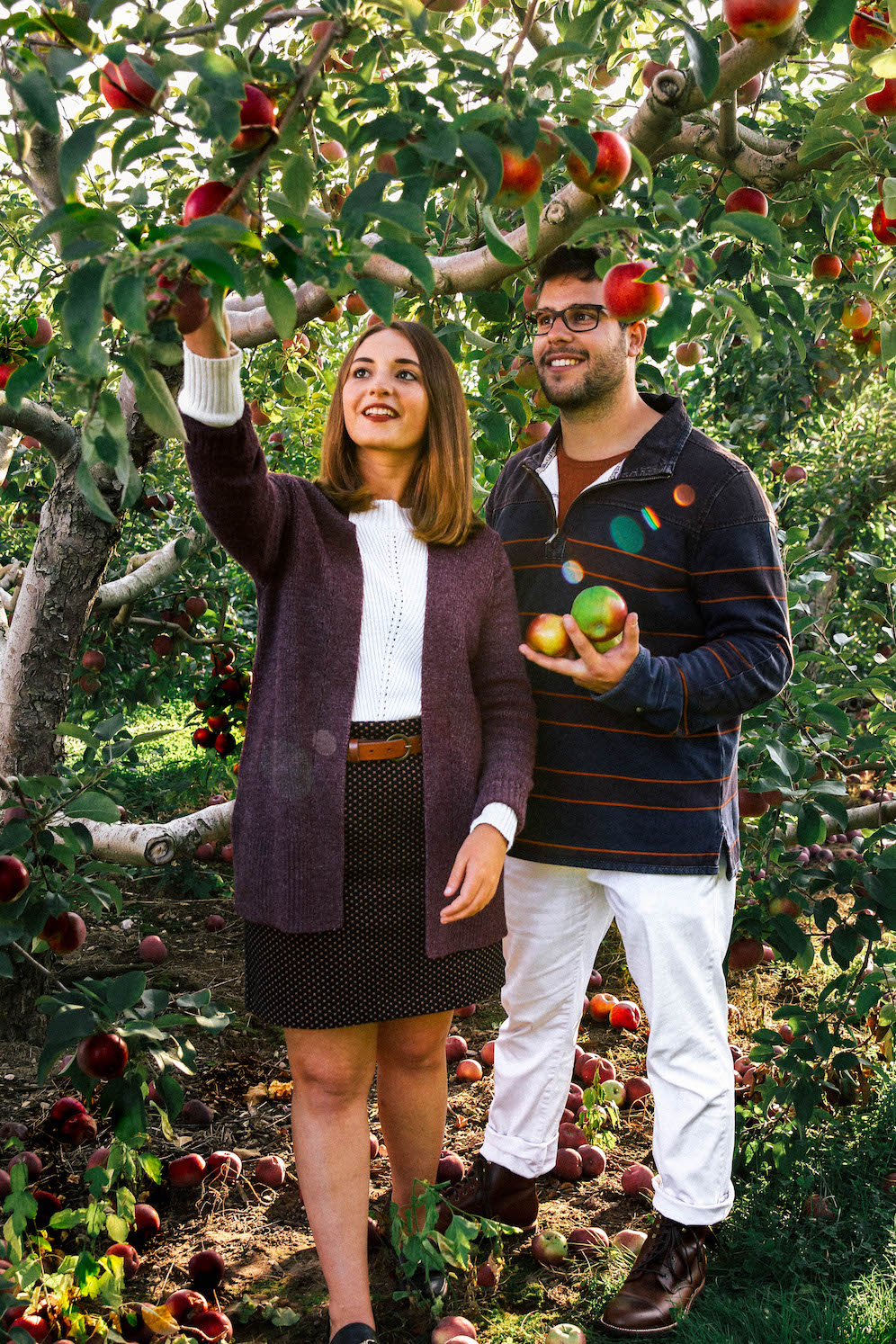
<p>As our significant others scoured the farm&rsquo;s various other goods (jams, butters, donuts), the two of us admired the vast green-and-red foliage blanketing the hills in the distance. Beside us were net bags filled with the dozens of apples we had collected by hand from the property&rsquo;s dozens of rows of trees &mdash; a ritual and scene familiar to many Americans. My friend looked at the bags and gestured toward the sprawl of plants behind him. As enjoyable as the day had been, he found the activity a little weird. &ldquo;In Spain, we have a lot of fruit,&rdquo; he said of Europe&rsquo;s top produce exporter. &ldquo;But we don&rsquo;t have anything like <em>this</em>.&rdquo;</p>

<p>Through fresh eyes, the whole thing indeed seemed strange. Quality apples are generally easily available at grocery stores, and it&rsquo;s not as though such heavily romanticized traditions are built around gathering other foods. (To wit, a <a href="https://condenaststore.com/featured/a-family-picks-apples-right-from-the-tree-emily-flake.html">2015 New Yorker cartoon</a> depicted a family picking apples with the caption: &ldquo;Maybe next time we can go mine our own salt.&rdquo;)&nbsp;</p>

<p>Yet apple picking has become an essential, Instagram-friendly element of America&rsquo;s ever-expanding autumn industrial complex, alongside cable-knit sweaters and <a href="https://www.vox.com/culture/2018/8/29/17791082/pumpkin-spice-latte-starbucks-backlash-explained">pumpkin-spice-everything</a>. It&rsquo;s a central seasonal activity among many American farms&rsquo; so-called &ldquo;agritourism&rdquo; or &ldquo;agritainment&rdquo; offerings, including hayrides, corn mazes, and petting zoos; between 2012 and 2017, the total US agritourism industry <a href="https://www.ers.usda.gov/amber-waves/2019/november/agritourism-allows-farms-to-diversify-and-has-potential-benefits-for-rural-communities/">grew 35 percent to nearly $950 million a year</a>. Farms from Washington state to&nbsp;Anchorage to the <a href="http://www.appleofjoy.com/">New Mexican desert fringe</a> and beyond allow visitors to pick their own apples, a practice that&rsquo;s become the subject of annual online guides (<a href="https://www.whowhatwear.com/apple-picking-outfits">What to wear</a>! <a href="https://bestlifeonline.com/apple-picking-quotes/">What to post</a>! How to <a href="https://thetakeout.com/apple-picking-recipes-ideas-1838264746">actually make use</a> of your bounty!) and <a href="https://www.youtube.com/watch?v=WkFhx%E2%80%94p2ow"><em>SNL</em> parodies</a> (&ldquo;Come cosplay outdoorsiness with us&rdquo;). Conan O&rsquo;Brien <a href="https://www.youtube.com/watch?v=WHGH83i_c-Q">once even took Mr. T</a>.</p>

<p>The practice defies the prevailing shifts of modern American society and its endless push toward the efficient, frictionless, and remote. At a time when so many activities are mediated through devices, picking apples offers a tactile pastime without any pressure for productivity.&nbsp;</p>

<p>For city-dwellers like my Spanish friend and me, it offered an excuse to leave our hurried urban confines for an expansive environment where time seemed welcomely slow. We watched a parade of flat clouds float over the valley. We tracked a bristly lump of a caterpillar creeping its way between gourds. We ate cider donuts, petted some goats. The picking offered a purpose to our afternoon escape, but only a loose one. That none of us expected to actually eat all the apples we had tucked into our bags was beside the point. The fruit had already given us a day of deep breaths of clean air under an open sky.</p>

<p>Our experience that day, like those of thousands&nbsp;like us each year, obscures harsh truths about how most of the approximately <a href="https://twitter.com/USDA/status/1306247636870033409">30 billion apples</a> grown annually in the US get picked. At large, commercial orchards, picking is no stroll spent watching insects inch around.&nbsp;It is done rapidly and tactically &mdash; often with multiple fruits grasped with each swipe of the hand &mdash; at a grueling pace that can make for staggering scale. &ldquo;If you are an experienced picker and you&rsquo;re in good physical condition &#8230; you should not pick less than 12 boxes in a day,&rdquo; one professional <a href="https://www.npr.org/sections/thesalt/2015/10/23/448579214/inside-the-life-of-an-apple-picker">told NPR</a> in 2015 &mdash; a &ldquo;box&rdquo; being a container that holds about 1,000 pounds of fruit.  Climbing and balancing upon ladders, even in adverse weather, can leave workers prone to spinal and musculoskeletal injuries,&nbsp;says Elizabeth Strater of United Farm Workers, as well as&nbsp;expose them to potentially dangerous pesticides.</p>
<img src="https://platform.vox.com/wp-content/uploads/sites/2/chorus/uploads/chorus_asset/file/22873173/GettyImages_866711946.jpg?quality=90&#038;strip=all&#038;crop=0,0,100,100" alt="" title="" data-has-syndication-rights="1" data-caption="Steve Scott, a migrant worker from Jamaica, reaches for a jonamac apple at Ricker Hill Orchard in Maine in this 2017 photo. Farm tourism as a leisure activity grew in popularity as America industrialized. | Ben McCanna/Portland Press Herald via Getty Images" data-portal-copyright="Ben McCanna/Portland Press Herald via Getty Images" /><img src="https://platform.vox.com/wp-content/uploads/sites/2/chorus/uploads/chorus_asset/file/22873177/GettyImages_856716884.jpg?quality=90&#038;strip=all&#038;crop=0,0,100,100" alt="" title="" data-has-syndication-rights="1" data-caption="Workers pick gala apples at the Rasch Family Orchards farm in Grand Rapids, Michigan, in 2017. An estimated 30 billion apples are plucked in the US each year. Agritourism has brought in new revenue sources for farmers. | Daniel Acker/Bloomberg via Getty Images" data-portal-copyright="Daniel Acker/Bloomberg via Getty Images" />
<p>This reality contrasts sharply with Instagrammed images of leisurely orchard strolls on leafy, sun-kissed weekends. Many professional apple pickers are migrant workers, often from outside the US. A substantial share are brought in through H-2A visa programs. According to the <a href="https://www.theatlantic.com/business/archive/2017/06/apple-pickers-yakima-photo-essay/530967/">Atlantic</a>, Washington state &mdash; the nation&rsquo;s leader in apple production &mdash; increased its use of such workers by 1,600 percent between 2006 and 2016.</p>

<p>For decades, Northeastern orchards, too, have relied on seasonal laborers <a href="https://www.northcountrypublicradio.org/news/story/38443/20190412/the-story-of-champlain-valley-s-jamaican-apple-pickers-comes-to-canton">from Jamaica</a>. Though many of these workers earn more money than at home, the Southern Poverty Law Center has <a href="https://www.splcenter.org/20130218/close-slavery-guestworker-programs-united-states">likened guest worker programs such as H-2A to a modern form of slavery</a>. Workers required to remain at their jobs to remain in the country can be without recourse or leverage when enduring harassment and other forms of mistreatment. Undocumented workers, whose immigration status is even more tenuous, have even less standing.</p>

<p>&ldquo;The apex labor issue on any farm in the US right now is immigration,&rdquo; says Strater. &ldquo;Any worker that is undocumented or living in a mixed-status community is that much more likely to be exploited.&rdquo;</p>

<p>All the while, apple pickers wrestle with problems common to even US-born workers, such as compensation. A 1990s dispute over pay in Washington grew so dire that the United Farm Workers and the Teamsters &mdash;&nbsp;<a href="https://www.rollingstone.com/culture/culture-news/the-battle-of-coachella-valley-cesar-chavez-and-ufw-vs-teamsters-71968/">once heated rivals</a> &mdash; considered <a href="https://www.latimes.com/archives/la-xpm-1996-02-21-fi-38258-story.html">organizing the industry jointly</a>. (The unions&rsquo; union did not come to fruition.)&nbsp;</p>

<p>These issues add a special absurdity to the optics of tourists paying to do labor for which professionals are so meagerly paid. Over the last 150 years, however, a gap has been forged between the apple&rsquo;s gathering and its consumption. The ways America picks its most popular fruit, and why, are a product of changes in where Americans live, how we farm, how we have fun, and how we see &mdash;&nbsp;and perform as &mdash; ourselves.</p>
<hr class="wp-block-separator" /><img src="https://platform.vox.com/wp-content/uploads/sites/2/chorus/uploads/chorus_asset/file/22873178/GettyImages_1228714351.jpg?quality=90&#038;strip=all&#038;crop=0,0,100,100" alt="An apple tree with apple on it, seen from inside the canopy." title="An apple tree with apple on it, seen from inside the canopy." data-has-syndication-rights="1" data-caption="In the early 1900s, there were around 14,000 varieties of American apples; industrialization quickly changed that. | Creative Touch Imaging/NurPhoto via Getty Images" data-portal-copyright="Creative Touch Imaging/NurPhoto via Getty Images" />
<p>Like <a href="https://www.aphis.usda.gov/aphis/ourfocus/wildlifedamage/operational-activities/feral-swine/sa-fs-history">pigs</a>, Malus pumila arrived in North America by boat in the middle of the last millennium and promptly ran wild. The species from which all of today&rsquo;s commonly consumed apples descend, it was first domesticated in Kazakhstan and eventually came to Europe by trade. Its seeds were among the many that early European colonists brought to Virginia and New England in hopes they might take hold. &ldquo;It was kind of a crapshoot,&rdquo; says John Bunker, an apple historian based in Maine.&nbsp;</p>

<p>The pumila apples, much like the four native North American species often lumped together as &ldquo;crabapples,&rdquo; thrived in their new environs. Soon, the continent was developing thousands of its own varieties, like the Newtown Pippin, so beloved by Thomas Jefferson that he requested James Madison <a href="https://founders.archives.gov/documents/Madison/01-10-02-0123">ship &ldquo;a few barrels&rdquo;</a> to Paris during his time there in the 1780s. The next century birthed an American apple legend in John Chapman, a ragtag, enterprising preacher who&nbsp;planted small orchards on Midwestern land in order to stake a claim to it, then sold the plots to settlers. Chapman&rsquo;s efforts, often distorted, later enshrined him in the young country&rsquo;s lore as Johnny Appleseed.</p>

<p>Chapman&rsquo;s orchard gambit succeeded thanks to the popularity of cider, the preeminent alcoholic beverage of the United States at the time. Easily made and in some cases safer to drink than water, cider was drunk prodigiously and widely. (Michael Pollan has described Chapman as &ldquo;an American Dionysus &#8230; bringing the gift of alcohol to the frontier.&rdquo;) Meanwhile, imported traditions and local practicality were making apples a staple component of American diets through pies, preserves, and other dishes. It became a staple, too, of the country&rsquo;s burgeoning cultural identity. Fairs featured apples in contests. Harvests became occasions for local celebration. Thoreau, in a lengthy treatise, <a href="https://www.theatlantic.com/magazine/archive/1862/11/wild-apples/411517/">anointed</a> them &ldquo;the noblest of fruits.&rdquo; This agricultural alien came to be seen as inseparable from its new land. Emerson declared apples &ldquo;our national fruit,&rdquo; gushing that &ldquo;<a href="https://www.google.com/books/edition/The_Later_Lectures_of_Ralph_Waldo_Emerso/lR89ozPDb7oC?hl=en&amp;gbpv=1&amp;dq=%22the+apple+is+our+national+fruit%22&amp;pg=PA55&amp;printsec=frontcover">the American sun paints itself in these glowing balls</a>.&rdquo;</p>

<p>But the Industrial Revolution began distancing Americans from their apples. The fruits&rsquo; region-specific diversity &mdash; the USDA once cataloged around 14,000 American varieties &mdash; consolidated as railway shipping allowed growers to sell to far-flung areas, and&nbsp;national standards often replaced local stocks. The shift toward industrialized, urban economies pulled most Americans away from farms and orchards altogether. By the late 1800s, historian Dona Brown writes in <em>Inventing New England: Regional Tourism in the Nineteenth Century</em>, many were so removed from the rural settings that had once defined American life that they began venturing to them for weekend and summer getaways. Such tourists, Brown writes, &ldquo;were in a position, perhaps for the first time, of being able to envision the countryside as a playground, rather than as a mass of conflicting obligations, restraints, and memories.&rdquo;</p>

<p>By the middle of the 20th century, orchards began welcoming visitors for other reasons. World War II-era labor shortages inspired growers to solicit volunteer picking help from <a href="https://www.nytimes.com/1941/09/04/archives/ask-wives-children-pick-apples.html?searchResultPosition=78">nearby families</a>, <a href="https://www.nytimes.com/1944/09/12/archives/exgirl-scouts-aid-asked-they-are-urged-to-help-pick-upstate-apple.html?searchResultPosition=144">former Girl Scouts</a>, and <a href="https://www-proquest-com.i.ezproxy.nypl.org/hnpwashingtonpost/docview/151676579/E89C5D9EF7F2453CPQ/18?accountid=35635">professional baseball teams</a>. Operations also sometimes invited locals to help scoop up their scattered remaining crop at the end of harvest season. Enterprising outfits noticed their guests&rsquo; joy and recognized an opportunity to charge for the pleasure; others, facing <a href="https://www.nytimes.com/1965/09/12/archives/apples-are-ripe-for-plucking-by-amateur-harvesters-in-the-hudson.html?searchResultPosition=63">further worker shortages in the 1960s</a>, capitalized on the same appeal as old New England farm tourism for a new way to convert their crops to cash. The so-called &ldquo;U-pick&rdquo; sector was born. Soon apple-picking season became such a public event that <a href="https://www.nytimes.com/1967/10/01/archives/field-of-travel-its-applepicking-time-again.html?searchResultPosition=9">major</a> <a href="https://www.nytimes.com/1979/09/28/archives/its-applepicking-time-again-awaiting-a-touch-of-frost.html?searchResultPosition=6">newspaper</a> <a href="https://www.nytimes.com/1983/10/02/nyregion/its-applepicking-time.html?searchResultPosition=3">headlines</a> <a href="https://www.nytimes.com/1986/09/12/arts/the-time-of-the-apple-is-here-again.html?searchResultPosition=125">regularly</a> <a href="https://www.nytimes.com/1987/09/11/arts/it-s-apple-picking-time.html?searchResultPosition=1">alerted</a> readers to its arrival.</p>

<p>For many smaller growers, the sector became a lifeline. <a href="https://www.choicesmagazine.org/choices-magazine/theme-articles/trends-and-challenges-in-fruit-and-tree-nut-sectors/challenges-for-the-us-fruit-industry-trends-in-production-consolidation-and-competition">Industry consolidation</a> has made it harder to compete with massive producers&rsquo; economies of scale, thinning the margins on wholesaling to stores and distributors. Direct, on-site sales to visitors allowed orchards to restore their margins while saving on labor and shipping costs. It also lured an audience for other farm products and attractions that could boost the bottom line.</p>

<p>&ldquo;The wholesale was a lot of work without a very good return,&rdquo; says Bill Dodd, <a href="https://www.growingproduce.com/fruits/apple-grower-of-the-year/bill-dodd-the-2015-apple-grower-of-the-year/">a former Apple Grower of the Year</a>, whose <a href="https://www.hillcrestfunfarm.com/">Hillcrest Orchards</a> in Ohio began offering U-pick in 1997 and pivoted fully to the model within a decade. &ldquo;This was still a lot of work, but the return was much more viable.&rdquo; In retrospect, Dodd says he can see how he witnessed the demand for agritourism grow in his own Midwestern life. &ldquo;When I was a kid, everyone had a grandparent or an uncle or some family member that was still farming, to some degree, so they had a family farm to go to,&rdquo; he said. &ldquo;Fast-forward 35, 40 years, most of the small farms are gone. They&rsquo;ve been gobbled up by bigger ones. People just don&rsquo;t have that option. They&rsquo;ve gotten pretty far removed from their food source.&rdquo;</p>

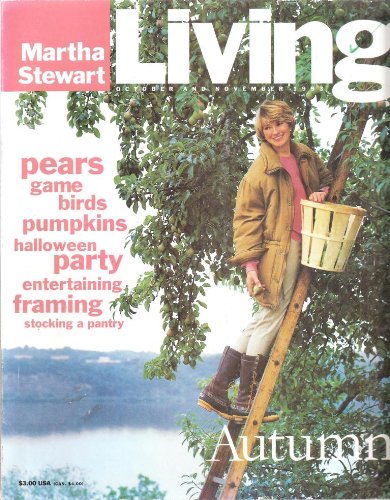
<p>America&rsquo;s embrace of apple picking may have been aided by its accelerated promotion of autumn as what Jezebel&rsquo;s Hazel Cills, in <a href="https://jezebel.com/how-america-invented-the-white-woman-who-just-loves-fal-1845301546">&ldquo;How America Invented the White Woman Who Just Loves Fall,&rdquo;</a> described as &ldquo;a season for the nation to collectively get nostalgic for its own beginnings.&rdquo; Twentieth-century cultural arbiters from <a href="https://www.amazon.com/Norman-Rockwell-Autumn-Harvest-Encore/dp/B015ONQM8Q">Norman Rockwell</a> to <a href="https://images-na.ssl-images-amazon.com/images/I/61Q8cxh0ocL.jpg">Martha Stewart</a> helped fashion the season&rsquo;s trappings into a <a href="https://www.meremart.com/image/cache/covers/Martha_Stewart_Living_Magazine_October_1995-2014_03_28_08_36_45-1000x1400.jpg">celebrated aesthetic</a> of <a href="https://prints.nrm.org/detail/480520/rockwell-grandpa-and-me-raking-leaves-1948">rustic simplicity</a>. Activities like apple picking, Cills wrote, allow &ldquo;white-collar city dwellers to play-act a pastoral fantasy.&rdquo; (As Cills notes, much of this aesthetic is rooted in a nostalgia for the whiteness of a certain era.)</p>
<img src="https://platform.vox.com/wp-content/uploads/sites/2/chorus/uploads/chorus_asset/file/22873179/GettyImages_1228706050.jpg?quality=90&#038;strip=all&#038;crop=0,0,100,100" alt="" title="" data-has-syndication-rights="1" data-caption="Visitors wearing protective masks pick apples at Owen Orchards in Weedsport, New York, in September 2020. Amid the pandemic, apple picking became a hot fall activity — thanks to being outdoors, mostly socially distant, and highly Instagrammable. | Bloomberg via Getty Images" data-portal-copyright="Bloomberg via Getty Images" />
<p>In the social media era, this phenomenon has grown common enough to inspire tropes such as <a href="https://www.vox.com/culture/2019/8/14/20804030/christian-girl-autumn-meme-hot-girl-summer-explained">Christian girl autumn</a>, <a href="https://www.theonion.com/mr-autumn-man-walking-down-street-with-cup-of-coffee-1819574012">Mr. Autumn Man</a>, and <a href="https://shop.reductress.com/products/fall-is-my-whole-personality-sweatshirt">&ldquo;Fall is my Whole Personality!&rdquo; sweatshirts</a>. For people looking for fresh, relevant environs to showcase themselves, seasonal settings like apple picking can offer a solution with additional benefits.&nbsp;</p>

<p>&ldquo;Influencers have to toe this line between aspirational and relatable,&rdquo; says Cornell professor Brooke Erin Duffy, who studies social media and promotional culture. &ldquo;Apple picking and these other rustic activities fit very neatly into this. It&rsquo;s a beautiful, stage-worthy backdrop and always looks fun, but they&rsquo;re not at the five-star restaurant or drinking fancy champagne or whatever it may be. A key part of it is that it straddles various class positions.&rdquo;</p>

<p>The resulting images, from influencers and civilians alike, have developed a set of curated cliches: the <a href="https://www.usmagazine.com/wp-content/uploads/2020/10/Jana-Kramer-and-More-Parents-Visiting-Pumpkin-Patches-With-Kids.jpg?w=800&amp;quality=86&amp;strip=all">family pose on bales of hay</a>, the <a href="https://www.stocksy.com/316367/pumpkin-patch-love">pumpkin-patch kiss</a>, the <a href="https://www.thecoastalconfidence.com/wp-content/uploads/2019/10/What-To-Wear-Apple-Picking-IG-STORY-C-The-Coastal-Confidence-by-Aubrey-Yandow-3276.jpg">apple picker contemplating their next pluck</a>. Like many of the pictures posted online, these may <a href="https://www.theverge.com/tldr/2018/2/2/16963698/instagram-video-photos-homogenous-photogenic-mass-tourism-experience">lack originality</a>, but they can serve to connect us to the social whole.&nbsp;</p>

<p>&ldquo;It&rsquo;s not like you go and are like, &lsquo;I&rsquo;m gonna emulate these photos,&rsquo;&rdquo; Duffy says. &ldquo;But they become part of the popular imagination. It reaffirms this as an activity &mdash; as something to do.&rdquo;</p>
<hr class="wp-block-separator" />
<p>As many an Instagram scroller could tell you, picking apples seemed especially like something to do last fall. With most indoor recreation barred in large swaths of the US due to the Covid-19 pandemic, many saw outdoor entertainment as especially attractive. Dodd, the apple grower in Ohio, saw turnout to his orchard increase upward of 20 percent. &ldquo;We had the best year we&rsquo;ve ever had,&rdquo; he says. &ldquo;Ridiculous numbers.&rdquo;</p>

<p>To some, the optics also lent themselves to the pandemic&rsquo;s fraught social conditions. Duffy notes that, at a time when many influencers <a href="https://www.vox.com/the-highlight/2020/4/22/21228696/celebrity-quarantine-coronavirus-influencer-instagram-ellen-degeneres-arielle-charnas-class-wealth">were scolded for risky behaviors</a> amid a highly contagious viral outbreak, an orchard trip &mdash; outdoors and generally socially distant &mdash; allowed a poster to &ldquo;perform for a public audience in a way that is less likely to generate critical blowback.&rdquo; Also, she points out, day-tripping apple pickers were &ldquo;not showcasing excessive levels of consumption and capital at a moment when the economy is collapsing.&rdquo;&nbsp;</p>
<img src="https://platform.vox.com/wp-content/uploads/sites/2/chorus/uploads/chorus_asset/file/22873181/GettyImages_1156584275.jpg?quality=90&#038;strip=all&#038;crop=0,0,100,100" alt="A tractor pulls a cart of tourists down a lane between apple orchards." title="A tractor pulls a cart of tourists down a lane between apple orchards." data-has-syndication-rights="1" data-caption="U-pick farms have turned apple picking — the hard work of farming, really — into a contrived exercise in nostalgia, complete with tractor rides, cider, and faux labor. | Bruce Bisping/Star Tribune via Getty Images" data-portal-copyright="Bruce Bisping/Star Tribune via Getty Images" />
<p>For those who pick for their living, the past year and a half also brought changes. Undocumented farm laborers were among those officially <a href="https://www.nytimes.com/2020/04/02/us/coronavirus-undocumented-immigrant-farmworkers-agriculture.html">labeled &ldquo;essential workers,&rdquo;</a> a status of predictable hollowness: a letter from the federal government permitting violations of stay-at-home orders, but <a href="https://www.nytimes.com/2020/04/02/us/coronavirus-undocumented-immigrant-farmworkers-agriculture.html">no actual protections against deportation</a>. In March, Congress passed the bipartisan <a href="https://www.congress.gov/bill/117th-congress/house-bill/1603">Farm Workforce Modernization Act</a>, which would provide paths to legal residency for undocumented agricultural workers and <a href="https://www.farmworkerjustice.org/wp-content/uploads/2021/03/FarmWorkforceModernizationAct-FactSheet-FJ-2021.pdf">establish new protections</a> for those in the US on H-2A visas. (The bill has not yet been voted on by the Senate.)&nbsp;</p>

<p>Less hospitable have been longer-term global trends. The relentless heat waves caused by climate change have forced some harvesting to be done at night, when Strater, of United Farm Workers, says workers in the Pacific Northwest must contend with hazards like rattlesnakes. (Strater also says that some parents, lacking child care at such hours, bring their children to the fields.) Then there is the advent of apple-picking robots, which <a href="https://www.geekwire.com/2019/apple-picking-robots-gear-u-s-debut-washington-state/">debuted stateside</a> in 2019, drafting yet another battlefield in the escalating war between human labor &mdash; and the jobs it provides &mdash; and automation.</p>

<p>For most casual apple pickers, such developments are unlikely to be given much thought. But the further erosion of human connection to American apples aligns with the post-industrialization trends that helped cast apple picking as leisure in the first place. By now, the activity is firmly rooted in a culture where sensory, tactile &ldquo;experiences&rdquo; (and the performance thereof) seem positioned to retain or even grow their allure.&nbsp;</p>

<p>The social and personal forces that have for decades been propelling millions of Americans to spend their free time hand-selecting their own apples are not going anywhere. Animating it is the same simple idea that ultimately made my Spanish friend &mdash; a stranger to Martha Stewart, free of Americana&rsquo;s contrived nostalgic pull &mdash;&nbsp;an easy apple-picking convert: Sometimes it&rsquo;s just nice to get away from everything, and even better to come back with something sweet.</p>

<p><em>Dan Greene is a writer based in New York. </em></p>
						]]>
									</content>
			
					</entry>
			<entry>
			
			<author>
				<name>Dan Greene</name>
			</author>
			
			<title type="html"><![CDATA[The erosion of personal ownership]]></title>
			<link rel="alternate" type="text/html" href="https://www.vox.com/the-goods/22387601/smart-fridge-car-personal-ownership-internet-things" />
			<id>https://www.vox.com/the-goods/22387601/smart-fridge-car-personal-ownership-internet-things</id>
			<updated>2021-04-20T10:03:18-04:00</updated>
			<published>2021-04-21T09:20:00-04:00</published>
			<category scheme="https://www.vox.com" term="Money" /><category scheme="https://www.vox.com" term="Technology" />
							<summary type="html"><![CDATA[Several months ago, as we began mentally preparing to move apartments, my girlfriend nodded toward two gray linen boxes that had long sat untouched at the base of our TV stand. &#8220;What&#8217;s in those?&#8221; she asked. I told her they held my DVDs. &#8220;When have you ever watched those?&#8221; she asked, rhetorical and correct. She [&#8230;]]]></summary>
			
							<content type="html">
											<![CDATA[

						
<figure>

<img alt="" data-caption="" data-portal-copyright="Getty" data-has-syndication-rights="1" src="https://platform.vox.com/wp-content/uploads/sites/2/chorus/uploads/chorus_asset/file/22454449/internet_feature.jpg?quality=90&#038;strip=all&#038;crop=0,0,100,100" />
	<figcaption>
		</figcaption>
</figure>
<p>Several months ago, as we began mentally preparing to move apartments, my girlfriend nodded toward two gray linen boxes that had long sat untouched at the base of our TV stand. &ldquo;What&rsquo;s in those?&rdquo; she asked. I told her they held my DVDs. &ldquo;When have you ever watched those?&rdquo; she asked, rhetorical and correct. She wanted to know if, in the name of optimizing space in our next home, we could dump both the boxes and their contents.</p>

<p>It was a reasonable ask. I couldn&rsquo;t remember the last time I had even thought about my DVDs; if quizzed on the boxes&rsquo; inventories, I might have struggled for a passing grade. Whatever was in there could surely be streamed via some subscription service we already held or else replaced with a digital purchase, and in either case could be flexibly enjoyed on more devices than just the living room TV connected to my Xbox One.&nbsp;</p>

<p>Still, something more than nostalgia made me balk. Streaming requires continued payments to rent access to a library prone to changes beyond my control. Digital purchases come with byzantine restrictions and often rely on that platform&rsquo;s continued existence and a sustained, quality internet connection. Relying even more heavily on these models felt like a further concession to the powers that already wield such outsize influence over our 21st-century lives, not only through streaming and digital goods but increasingly through the internet-embedded <em>everything</em> around us. There was something comfortingly self-sufficient about the idea that, in theory, the only thing stopping me from watching <em>Pee-wee&rsquo;s Big Adventure</em> for free whenever I damn well pleased was an act of God, or at least a power outage. And there was something uncomfortable about sacrificing that &mdash; about letting yet another aspect of life slip fully into the intangible digital ether.</p>
<hr class="wp-block-separator" />
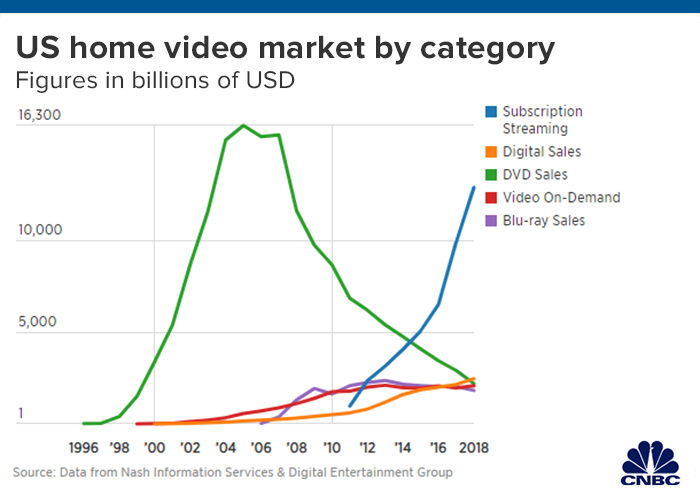
<p>Still, this miniature act of bulwarking aside, I am among the many Americans who habitually convert their property into digital forms. According to CNBC, US DVD sales<a href="https://www.cnbc.com/2019/11/08/the-death-of-the-dvd-why-sales-dropped-more-than-86percent-in-13-years.html"> declined by 86 percent between 2006 and 2019</a>, while comparatively modest Blu-ray revenues have fallen some 24 percent since their 2013 peak. At the same time, three-quarters of American households subscribe to at least one video streaming service, whose revenues now <a href="https://fm-static.cnbc.com/awsmedia/chart/2019/11/08/VIDEO%20MARKET.1573232240621.png?">dominate the home market</a>.</p>

<p>Similar trends exist in other media: Digital music sales <a href="https://business.time.com/2012/01/06/digital-music-sales-finally-surpassed-physical-sales-in-2011/">surpassed physical ones in 2011</a>, only for <a href="https://www.reuters.com/article/us-music-streaming/streaming-overtakes-u-s-digital-music-sales-for-first-time-nielsen-idUSKBN14P1YH">streaming to overtake digital purchases</a> five years later; last year, digital video game sales <a href="https://screenrant.com/digital-game-sales-consoles-outnumber-physical-first-time/">outpaced their physical counterpart</a>, while <a href="https://www.cnet.com/news/so-many-game-subscription-services-so-little-time-heres-how-to-choose/">subscription models continue to grow in popularity</a>. With the <a href="https://www.vox.com/the-goods/22313936/non-fungible-tokens-crypto-explained">advent of NFTs</a>, the art and collectibles markets are <a href="https://www.vox.com/the-goods/22358262/value-of-nfts-behavioral-expert">now exploding</a> in goods&rsquo; most aggressively impalpable form yet.</p>

<p>These dual trends &mdash;&nbsp;the rise of purchased and subscription-based non-physical media &mdash; are driven by the benefits such consumption provides, chiefly convenience. Digital and streaming media generally offer minimal effort to access and strong portability without physical degradation or the constraints imposed by taking up physical space (say, in a box on a TV stand). But such benefits do impose costs, like streaming&rsquo;s aforementioned unending billing cycles and lack of library control, or the limits a digital purchaser faces when trying to lend or resell their wares. In fact, as some digital consumers have found out firsthand, they may suddenly <a href="https://www.npr.org/templates/story/story.php?storyId=106989048">no longer have their purchases at all</a>.</p>
<figure class="wp-block-pullquote alignleft"><blockquote><p>“When we own something, it becomes us. We’ve imprinted on it.”</p></blockquote></figure>
<p>On a larger scale, these trends are transforming the way we relate to our possessions, and thus to ourselves and the world around us. &ldquo;I am what I have,&rdquo; Jean-Paul Sartre wrote in his essential existentialist text <em>Being and Nothingness</em> in 1949. Four decades later, York University professor Russell W. Belk coined the term &ldquo;extended self&rdquo; to describe how humans incorporate their belongings into their self-conception. &ldquo;The greater the control we exercise,&rdquo; Belk wrote, &ldquo;the more closely allied with self the object should become.&rdquo; They may also help place us within space and time, reflecting our past (a souvenir from a long-ago vacation) and our planned future (the new yoga mat meant to inspire routine practice). Thanks to what is known as the <a href="https://www.vox.com/policy-and-politics/2017/10/9/16447752/richard-thaler-nobel-explained-economics">endowment effect</a>, we tend to value these objects in our possession over their equivalents.</p>

<p>&ldquo;When we own something, it becomes us,&rdquo; Belk tells Vox. &ldquo;We&rsquo;ve imprinted on it.&rdquo; He mentions, as examples, the notes made in margins of books or the dings and dents objects gain through use. &ldquo;In that sense we&rsquo;re not only saying that it&rsquo;s ours, we&rsquo;re making it <em>uniquely</em> ours,&rdquo; he adds, &ldquo;rather than a generic, fungible object that could be replaced by another.&rdquo;</p>

<p>Now such relationships are being disrupted. For one, with streaming and other internet-based media consumption, you never even theoretically <em>have</em> anything. But even when music or a movie or book or art NFT is purchased digitally, it never holds a physical presence in its owner&rsquo;s life; one imagines it is quite common for, say, a modern music fan to spend a good chunk of money to stream or download their favorite artists&rsquo; work and yet never have anything in their homes indicating as much. The media is then reduced to its intangible, ephemeral consumption, rather than doubling as a real-world object accumulating what anthropologist Igor Kopytoff would have called its <a href="https://doubleoperative.files.wordpress.com/2009/12/kopytoff-1986-the-cultural-biography-of-things-commoditization-as-process-1-1.pdf">&ldquo;cultural biography.&rdquo;</a> (Imagine, as illustration, the difference in feeling between inheriting a grandparent&rsquo;s books and their ebooks.)&nbsp;</p>

<p>That lack of physical presence can also make it harder for an object to create what Sabrina V. Helm, a consumer science professor at the University of Arizona, calls &ldquo;a sense of belonging,&rdquo; as they do not offer an outward communication of their owner&rsquo;s tastes and identity. Helm suggests in an interview that media&rsquo;s intangible state can even compromise our experience of them, as myriad works are accessed through the same device and presented in a uniform manner without the unique external indicators (like book covers or varying paper textures) that can help create memory traces. As a result, our connections to such works may be weakened. &ldquo;In our mind, they don&rsquo;t have that space,&rdquo; she says.</p>

<p>In a <a href="https://phys.org/news/2018-05-decoding-digital-ownership-e-book.html">recent study</a> Helm led, some readers &mdash; particularly <em>Harry Potter</em> enthusiasts &mdash; said they kept two copies of their favorite books, one digital and one tangible. &ldquo;The digital copy is what you read,&rdquo; Helm says, paraphrasing respondents&rsquo; rationale. &ldquo;The other is what you <em>have</em>. So there is very clearly a distinct value.&rdquo;</p>
<figure class="wp-block-pullquote alignleft"><blockquote><p>“You don’t care for the actual product itself. You care for the value that it provides to you.”</p></blockquote></figure>
<p>In her classes, Helm likes to ask students what they consider their most prized possession. Reliably, many nominate their smartphones. But as Helm points out, those students will soon excitedly replace those phones with a newer model, discarding their supposedly beloved one like a stained and moth-eaten sweater. &ldquo;You don&rsquo;t care for the actual product itself,&rdquo; Helm says. &ldquo;You care for the value that it provides to you.&rdquo;</p>

<p>This dynamic hints at another shift: Even our most solid, real-world possessions are increasingly inseparable from the intangible and ephemeral digital world. Which means that as much as our relationship to digital possessions may be evolving, so is our relationship to tangible ones &mdash; and it&rsquo;s not a relationship in which the consumer holds much power.</p>
<hr class="wp-block-separator" />
<p>Imagine you&rsquo;re a farmer. You spend hundreds of thousands of dollars on a fancy new tractor that is critical to your livelihood. Embedded in the tractor is a specialized computer system that plays a role in just about everything the tractor does. Eventually, as with most machinery, something in the tractor goes awry and requires fixing. It&rsquo;s then that you might learn, as a number of <a href="https://www.bloomberg.com/news/features/2020-03-05/farmers-fight-john-deere-over-who-gets-to-fix-an-800-000-tractor">John Deere customers have in recent years</a>, that your ultra-modern vehicle comes with a far-reaching catch: Because its central software is the intellectual property of its manufacturer, said manufacturer may claim that you do not actually own your tractor outright.&nbsp;</p>

<p>Because John Deere owns the central software, only John Deere and its approved agents can repair any part connected to it, which is to say every part. Your choice is either to take your tractor to an approved shop, often at great inconvenience and personal expense, or to essentially hack it &mdash; a violation of <a href="https://www.deere.com/assets/pdfs/common/privacy-and-data/docs/agreement_pdfs/english/2016-10-28-Embedded-Software-EULA.pdf">John Deere&rsquo;s mandatory licensing agreement</a>, punishable by the company revoking your license for use. In one of society&rsquo;s oldest property arrangements, that between a farmer and their equipment, the supposed owner would have the same limited user rights as the purchaser of an ebook or digital movie.</p>

<p>These problems share a legal history. Traditionally, in US law, the so-called &ldquo;first-sale doctrine&rdquo; (also known as exhaustion) limits sellers&rsquo; ability to control what a customer does with their copy of a copyrighted work after purchase (e.g., reselling a book). But with the advent of intangible goods like software, which could be copied identically from a purchased version, rights holders grew concerned over a single sale&rsquo;s potential widespread duplication. Courts struggled to apply the laws concerning traditional property to goods that did not exist in physical space. As Washington and Lee University law professor Joshua A.T. Fairfield writes in his book <em>Owned: Property, Privacy, and the New Digital Serfdom</em>, intellectual property law filled the void.</p>
<figure class="wp-block-pullquote alignleft"><blockquote><p>“Anytime someone puts a lock on something that belongs to you, and won’t give you a key, they’re not doing it for your benefit”</p></blockquote></figure>
<p>A crucial decision came in 1993 when the Ninth Circuit of the US Court of Appeals ruled in <em>MAI Systems Corp. v. Peak Computer Inc.</em> that the local, impermanent copy of an operating system that is loaded into a computer&rsquo;s RAM upon its booting up &mdash; a necessary component of a computer&rsquo;s operation &mdash; is, by virtue of making a copy of intellectual property (the operating system), subject to copyright law. This &ldquo;<em>deeply</em> stupid ruling,&rdquo; Fairfield tells Vox, laid a trap, making the use of any software (broadly meaning nearly anything used on a computer system) a copyright violation unless the user followed rules set unilaterally by the manufacturer and/or seller. &ldquo;That was the case that handed the keys to the kingdom to these companies,&rdquo; Fairfield says.</p>

<p>These legal principles have carried over to the so-called Internet of Things, in which tangible objects are embedded with copyrighted software (a.k.a. smart devices, like smart refrigerators and televisions and cars). As discovered by those John Deere customers, even wholly purchased real-world objects are subject to user agreements imposed by the seller. Here Fairfield cites the tech principle known as <a href="https://www.publishersweekly.com/pw/by-topic/columns-and-blogs/cory-doctorow/article/44012-doctorow-s-first-law.html">Doctorow&rsquo;s First Law</a>: &ldquo;Anytime someone puts a lock on something that belongs to you, and won&rsquo;t give you a key, they&rsquo;re not doing it for your benefit.&rdquo;</p>

<p>In Fairfield&rsquo;s writing, four rights of traditional ownership are lost in this shift to a license-based system. One is a &ldquo;right to ban,&rdquo; or to exclude others from your property, as Kindle owners could not keep Amazon from removing their copies of <em>1984</em>, nor could We-Vibe sex toy owners block the company from <a href="https://www.npr.org/sections/thetwo-way/2017/03/14/520123490/vibrator-maker-to-pay-millions-over-claims-it-secretly-tracked-use">tracking data about their toys&rsquo; usage</a>. Another loss is the &ldquo;right to run,&rdquo; or to use our purchased products however we would like, as illustrated by Apple <a href="https://techcrunch.com/2019/10/21/apples-control-over-the-app-store-is-no-longer-sustainable/">regulating which applications iPhone users can install</a> or <a href="https://www.eff.org/deeplinks/2014/10/nintendo-updates-take-wii-u-hostage-until-you-agree-new-legal-terms">Nintendo blocking the use of Wii U consoles unless users agreed to a new end-user license agreement</a>. (This also applies to manufacturers requiring software updates to continue running, essentially enabling them to force consumers&rsquo; personal possessions to change under their noses.)</p>

<p>There is also the &ldquo;right to hack,&rdquo; which includes the <a href="https://www.vox.com/the-goods/2019/7/3/18761691/right-to-repair-computers-phones-car-mechanics-apple">right to repair</a>, as demonstrated in the John Deere tractor imbroglio. Then there is the &ldquo;right to sell,&rdquo; which the <a href="https://copyrightalliance.org/copyright-cases/capitol-records-v-redigi/">owner of digital media</a> and software typically lacks, both negating their ability to recoup costs and eliminating the secondary market that can make goods affordable to more consumers.&nbsp;</p>

<p>As new as these dynamics may seem, Fairfield argues that they actually hark back to an old, long-reigning system of ownership: <a href="https://www.timemaps.com/encyclopedia/medieval-europe-feudalism/">feudalism</a>. &ldquo;Fine, now it&rsquo;s not grand aristocratic families, it&rsquo;s Silicon Valley Big Tech companies,&rdquo; he says. &ldquo;But it&rsquo;s an identical system in terms of one person giving a right to another giving it to another giving it to another, who eventually hands on a little bit of it to you. And if anybody above you doesn&rsquo;t like it, or you don&rsquo;t use it the way they tell you, the whole thing goes away.&rdquo;</p>

<p>What <em>is</em> new is the ability of these supposed possessions to actually operate with a greater loyalty to their manufacturer&rsquo;s interests than their user&rsquo;s, as with Nintendo&rsquo;s forced Wii U agreement or Keurig 2.0 machines&rsquo; <a href="https://www.wired.com/2015/05/keurig-k-cup-drm/">initial refusal to brew non-Keurig coffee</a>. (Sometimes the manufacturer even abuses this primary loyalty to <a href="https://www.vox.com/2014/9/15/11630896/apple-lets-you-remove-free-u2-album-you-didnt-ask-for">force a U2 album upon the public</a>.) Worse yet, our possessions may actually actively conspire against us, as when our <a href="https://www.cbsnews.com/news/shopping-online-could-make-you-a-victim-of-price-discrimination/">browser histories help online retailers price discriminately</a>. As more of our devices interact and collect data while prioritizing the motives of their makers, Fairfield writes, consumers may be increasingly &ldquo;beaten at the economic game of poker by those who use our devices to see our cards.&rdquo; In <em>The End of Ownership: Personal Property in the Digital Economy</em>, Aaron Perzanowski and Jason Schultz argue the goal of such leverage is for companies &ldquo;to divide our lives into individual transactions and charge as much as we are willing to pay for each one.&rdquo;</p>
<figure class="wp-block-pullquote alignleft"><blockquote><p>Fairfield argues that they actually hark back to an old, long-reigning system of ownership: feudalism</p></blockquote></figure>
<p>The stakes of these issues increase the more integral &ldquo;smart&rdquo; objects become to our lives. Some cars now have devices that allow them to be <a href="https://dealbook.nytimes.com/2014/09/24/miss-a-payment-good-luck-moving-that-car/">disabled remotely in the case of missed payment</a>. Home automation systems can introduce IP rights debates into real estate. An extension of John Deere&rsquo;s tractor argument could reason that those with advanced prosthetics do not truly own their limbs. &ldquo;It&rsquo;s not just, &lsquo;Oh you get a new shiny device and it works according to the way its manufacturer wants it to,&rdquo; Fairfield says. &ldquo;It&rsquo;s that things we&rsquo;ve always relied on for our livelihoods are actively being removed from our power.&rdquo;</p>

<p>Still, Fairfield is optimistic. Market forces (read: the self-interested collaboration of music industry giants and Amazon, against Apple) have <a href="https://www.macworld.com/article/194315/drm-faq.html">freed downloaded songs from prohibitive digital rights management (DRM) restrictions</a>. &ldquo;Right to repair&rdquo; legislation has passed or gained momentum on the <a href="https://www.theverge.com/2020/11/4/21549129/massachusetts-right-to-repair-question-1-wireless-car-data-passes">state</a> and <a href="https://www.theguardian.com/world/2020/mar/11/eu-brings-in-right-to-repair-rules-for-phones-and-tablets">international</a> levels. Alliances have formed between parties as disparate as hackers and hog farmers. Among federal lawmakers, Big Tech skepticism is <a href="https://www.nytimes.com/2020/10/23/climate/right-to-repair.html">growing and bipartisan</a>. Powering these developments is the sort of intuitive logic that can shape social norms, forcing the law to follow.</p>

<p>&ldquo;People are going to use their property as property regardless of what it says on page 74 of the end-user license agreement,&rdquo; Fairfield says. &ldquo;This fight is going to be won. It&rsquo;s not just winnable. It&rsquo;s inevitable.&rdquo;</p>
<hr class="wp-block-separator" />
<p>Whatever limits our rights-holding lords may impose on accessing and using our own supposed property, the larger, growing shift to digital and software-embedded goods also makes us vulnerable to the effects of both time and progress. In the 1990s, concerns began growing around the idea of a potential &ldquo;digital dark age&rdquo;:&nbsp;a future absence of historical data and documentation caused by their storage formats becoming outdated. Anything <a href="https://www.computerhistory.org/timeline/memory-storage/">used to save and access a file</a> now would also need to be available and functional in 10, 20, 100 years in order to do so then &mdash;&nbsp;an unlikely prospect in a world where new technology accelerates rapidly, and where capitalism incentivizes devices&rsquo; and software&rsquo;s eventual obsolescence so that you may be sold a replacement. Possessions and records would then become &ldquo;trapped&rdquo; in their outmoded states; imagine, for instance, being handed a 3.5-inch floppy disk and tasked with accessing what&rsquo;s on it, but on a societal scale.</p>

<p>Thankfully, professional archivists have spent the past few decades working to address these issues. Standards have been developed governing how to migrate files, replicate records, and emulate software environments so that data may be accessed once our phones, computers, and their associated programs all become deeply outdated. Yet even such developments have their real-world limits. &ldquo;Standards are good to follow for organizations, for governments &mdash; for anybody who has money,&rdquo; says Luciana Duranti, a professor of archival sciences at the University of British Columbia. &ldquo;For private people, it&rsquo;s a lot of being proactive.&rdquo;</p>

<p>It&rsquo;s not hard to see the drawbacks of a future where the only things preserved are those that were consciously, deliberately maintained, primarily by powerful institutions. Scores of valuable cultural artifacts have survived almost incidentally, tucked away in some owner&rsquo;s closet or a collector&rsquo;s stash, and proven to have historical or educational value later; the more <a href="https://rmc.library.cornell.edu/hiphop/">marginalized</a> or <a href="https://guides.nyu.edu/riot-grrrl">niche</a> the work&rsquo;s source, the less likely it would seem to be painstakingly migrated and cataloged for future rediscovery.&nbsp;</p>
<figure class="wp-block-pullquote alignleft"><blockquote><p>An observer of my possessions might wonder, <em>What did this person have?</em></p></blockquote></figure>
<p>Now, about those DVDs: Will a cultural historian someday seek my copy of <a href="https://www.youtube.com/watch?v=ZCxBOG2WGhU"><em>The Wrestling Road Diaries</em></a> as a foundational text? Probably not. (But who&rsquo;s to say?) In fact, if my apartment were suddenly frozen, Pompeii-like, so many of my life&rsquo;s possessions &mdash; the record of my daily life &mdash; would be inaccessible to an archaeologist decades or centuries in the future. I have already gladly conceded on so many other fronts. The music I listen to (that isn&rsquo;t streamed) is tied to proprietary software on hardware that is sure to age and degrade; ditto my massive collection of personal photos and written (or typed) correspondence. A combination of the locks installed by our digital overlords to control present use and the inherent non-autonomy of digital goods would likely obstruct future access. An observer of my possessions, staring at a software-embedded object on which all my data and files are no longer accessible, might wonder, &ldquo;What did this person have?&rdquo;<strong> </strong>It would be a good question.</p>

<p>And so, yes, I still own those DVDs, though not all of them. For the eventual move, I whittled their number to one container, with room to store other rarely needed items on top. They sit idle in the same gray linen box at the base of the same TV stand, freed from the binds of software, surrounded by dozens of books, collecting dust as an afterthought, resting on stubborn, weathering principles.</p>
						]]>
									</content>
			
					</entry>
			<entry>
			
			<author>
				<name>Dan Greene</name>
			</author>
			
			<title type="html"><![CDATA[Billions of wire hangers are used in the US every year. Almost no one buys them.]]></title>
			<link rel="alternate" type="text/html" href="https://www.vox.com/the-goods/2020/2/6/21113481/wire-hangers-history-use" />
			<id>https://www.vox.com/the-goods/2020/2/6/21113481/wire-hangers-history-use</id>
			<updated>2020-01-29T17:28:40-05:00</updated>
			<published>2020-02-06T07:00:00-05:00</published>
			<category scheme="https://www.vox.com" term="Explainers" /><category scheme="https://www.vox.com" term="Money" />
							<summary type="html"><![CDATA[If you are like many Americans, you likely own or have owned a small collection of the billions (with a b) of wire hangers that are consumed in the US every year. And, also like many Americans, you probably came to your stockpile unwittingly &#8212; largely through trips to the dry cleaner &#8212; and are [&#8230;]]]></summary>
			
							<content type="html">
											<![CDATA[

						
<figure>

<img alt="" data-caption="" data-portal-copyright="" data-has-syndication-rights="1" src="https://platform.vox.com/wp-content/uploads/sites/2/chorus/uploads/chorus_asset/file/19655511/Hangers.jpg?quality=90&#038;strip=all&#038;crop=0,0,100,100" />
	<figcaption>
		</figcaption>
</figure>
<p>If you are like many Americans, you likely own or have owned a small collection of the billions (with a b) of wire hangers that are consumed in the US every year. And, also like many Americans, you probably came to your stockpile unwittingly &mdash; largely through trips to the dry cleaner &mdash; and are familiar with the fit of frustration that comes from opening your closet to find these forgotten objects somehow entangled in a metal mare&rsquo;s nest.</p>

<p>In the early 1990s, art dealer Frank Maresca had the unusual experience of such a collection being a sort of godsend. He needed a &ldquo;throwaway show&rdquo; for his New York City gallery &mdash;&nbsp;something simple and easy to occupy a fallow period on the calendar. His friend and artist-collector Harris Diamant offered an unexpected solution: his extensive reserve of vintage clothes hangers.</p>

<p>Maresca, whose Ricco/Maresca Gallery is known for showcasing contemporary outsider art, mounted one of Diamant&rsquo;s wire hangers on the white gallery wall. Encouraged, he pinned up 169 more. Soon Maresca had an exhibit (&ldquo;Out of the Closet: American Hangers&rdquo;) and an accompanying write-up in the <a href="https://www.nytimes.com/1991/01/24/garden/hangers-that-hold-history-not-clothes.html">New York Times</a>. &ldquo;Stop laughing,&rdquo; reporter N.R. Kleinfield told readers. Within a few days, thanks to, ahem, wire services picking up the story, the exhibit went the print-era equivalent of viral. Soon the office fax machine was spitting out messages until they flooded onto the floor. Daily foot traffic increased into the hundreds. The mailman dropped off entire canvas sacks of letters from citizens the world over who hoped to convert their own closets into cultural cachet and/or cash.&nbsp;</p>
<figure class="wp-block-pullquote alignleft"><blockquote><p>An inescapable part of modern life to which everyone can relate but no one pays much attention</p></blockquote></figure>
<p>&ldquo;The whole thing was funny,&rdquo; Maresca says. &ldquo;I mean, who ever gave a moment&rsquo;s thought to a hanger?&rdquo;</p>

<p>Therein lies the unusual status of the wire hanger: an inescapable part of modern life to which everyone can relate but no one pays much attention. A 2007 study by the US International Trade Commission estimated US consumption at 3.3 billion wire hangers annually, or nearly 11 per capita at the time &mdash; a figure that does not even account for the wire hangers often included with &ldquo;floor-ready&rdquo; garments imported from overseas, as long required by major retailers like Macy&rsquo;s and Lord and Taylor. Upward of 80 percent of US wire hanger consumption comes via dry cleaners (uniform rental services comprise much of the rest), which employ wire hangers as a means of garment storage and transport so cost-effective they are included with their services.</p>

<p>It is wire hangers&rsquo; very ubiquity that may have helped damn them to dangle from the lowest rung on the hanger hierarchy. Of course, it doesn&rsquo;t help that wire hangers are not particularly good at being hangers, often warping delicate garments that drape from them unevenly, nor that they are still the go-to symbol of illegal abortions in America&rsquo;s pre-Roe dark days. Their most enduring pop culture moment came in a disturbing and class-conscious depiction of child abuse, when Faye Dunaway famously shrieked <a href="https://www.youtube.com/watch?v=XOILKHmZBwc">&ldquo;NO&#8230; WIRE&#8230; HANGERS!&rdquo;</a> in the 1981 Joan Crawford biopic <em>Mommie Dearest</em> (surely undoing the goodwill engendered by <a href="https://youtu.be/b_ZinNz0s34?t=111"><em>Halloween</em>&rsquo;s closet scene</a> three years earlier). No less an authority than the so-called Hanger King himself, industry magnate Bernie Spitz, once proclaimed <a href="https://www.nytimes.com/1987/06/27/nyregion/about-new-york-a-living-legend-talking-hangers-with-the-king.html">that he would never sell them</a>.</p>

<p>And yet wire hangers pioneered the form. It is commonly held, by those who commonly hold such things, that the hanger&rsquo;s origins trace to an <a href="https://pdfpiw.uspto.gov/.piw?Docid=00085756&amp;homeurl=http%3A%2F%2Fpatft.uspto.gov%2Fnetacgi%2Fnph-Parser%3FSect1%3DPTO1%2526Sect2%3DHITOFF%2526d%3DPALL%2526p%3D1%2526u%3D%25252Fnetahtml%25252FPTO%25252Fsrchnum.htm%2526r%3D1%2526f%3DG%2526l%3D50%2526s1%3D0085756.PN.%2526OS%3DPN%2F0085756%2526RS%3DPN%2F0085756&amp;PageNum=&amp;Rtype=&amp;SectionNum=&amp;idkey=NONE&amp;Input=View+first+page">1869 patent by a Connecticut man named O.A. North</a>, who designed what he termed an &ldquo;improvement in clothes-hook&rdquo; made from &ldquo;bent-metal rod or wire.&rdquo; (This crediting is questionable: an <a href="https://pdfpiw.uspto.gov/.piw?Docid=00008858&amp;homeurl=http%3A%2F%2Fpatft.uspto.gov%2Fnetacgi%2Fnph-Parser%3FSect1%3DPTO1%2526Sect2%3DHITOFF%2526d%3DPALL%2526p%3D1%2526u%3D%25252Fnetahtml%25252FPTO%25252Fsrchnum.htm%2526r%3D1%2526f%3DG%2526l%3D50%2526s1%3D0008858.PN.%2526OS%3DPN%2F0008858%2526RS%3DPN%2F0008858&amp;PageNum=&amp;Rtype=&amp;SectionNum=&amp;idkey=NONE&amp;Input=View+first+page">1852 patent for a shoulder-shaped metal wall hanger by fellow Connecticuter W.B. Olds</a> clearly predates North&rsquo;s, while other predating patents from <a href="https://pdfpiw.uspto.gov/.piw?Docid=00071136&amp;homeurl=http%3A%2F%2Fpatft.uspto.gov%2Fnetacgi%2Fnph-Parser%3FSect1%3DPTO1%2526Sect2%3DHITOFF%2526d%3DPALL%2526p%3D1%2526u%3D%25252Fnetahtml%25252FPTO%25252Fsrchnum.htm%2526r%3D1%2526f%3DG%2526l%3D50%2526s1%3D0071136.PN.%2526OS%3DPN%2F0071136%2526RS%3DPN%2F0071136&amp;PageNum=&amp;Rtype=&amp;SectionNum=&amp;idkey=NONE&amp;Input=View+first+page">1867</a> and <a href="https://pdfpiw.uspto.gov/.piw?Docid=00079580&amp;homeurl=http%3A%2F%2Fpatft.uspto.gov%2Fnetacgi%2Fnph-Parser%3FSect1%3DPTO1%2526Sect2%3DHITOFF%2526d%3DPALL%2526p%3D1%2526u%3D%25252Fnetahtml%25252FPTO%25252Fsrchnum.htm%2526r%3D1%2526f%3DG%2526l%3D50%2526s1%3D0079580.PN.%2526OS%3DPN%2F0079580%2526RS%3DPN%2F0079580&amp;PageNum=&amp;Rtype=&amp;SectionNum=&amp;idkey=NONE&amp;Input=View+first+page">1868</a> also more closely resemble modern hangers. If at least some of these were born independent of one another, it would suggest a fitting inevitability.)&nbsp;</p>
<img src="https://platform.vox.com/wp-content/uploads/sites/2/chorus/uploads/chorus_asset/file/19655487/GettyImages_576831594.jpg?quality=90&#038;strip=all&#038;crop=0,0,100,100" alt="" title="" data-has-syndication-rights="1" data-caption="A pro-choice protestor’s sign featuring a wire hanger. | Viviane Moos/CORBIS/Corbis via Getty Images" data-portal-copyright="Viviane Moos/CORBIS/Corbis via Getty Images" />
<p>It is no coincidence that this time of more obviously groundbreaking invention is what also produced the humble hanger. Not until the Industrial Revolution streamlined the manufacturing and shipping processes did most Americans even own enough garments to warrant considerable storage. Homes built in that era did not typically include closets; most Americans kept unworn clothes folded in chests or hung on wall-mounted rods. (Or, in the case of Thomas Jefferson, on a <a href="https://www.monticello.org/site/research-and-collections/clothes-rack">personal contraption dubbed a &ldquo;turning-machine.&rdquo;</a>)</p>

<p>Once people had clothes, they soon had hangers, and once they had hangers they soon had them in excess. As far back as the 1960s, the Times was advising its readers on using wire hangers to construct <a href="https://www.nytimes.com/1964/11/29/archives/around-the-garden.html?searchResultPosition=9">bird feeders</a> or <a href="https://www.nytimes.com/1964/04/20/archives/food-news-cooking-trout-outdoors-suggestions-are-given-for.html?searchResultPosition=6">a skillet to cook fish</a> over a fire. Other extracurricular uses became more common: replacing or augmenting <a href="https://blog.solidsignal.com/reviews/can-use-coat-hanger-antenna/">TV antennae</a>, <a href="https://www.wikihow.com/Use-a-Coat-Hanger-to-Break-Into-a-Car">breaking into cars</a>, rescuing misplaced keys and rings and baseballs from sewer grates. Wire hangers have even become a <a href="https://inhabitat.com/david-mach-creates-enormous-sculptures-from-coat-hangers-and-matches/">medium</a> <a href="http://jameswelling.net/video-sculpture-and-photoworks-los-angeles/1073">for</a> <a href="https://vimeo.com/23411674">artworks</a> and accessory to a <a href="https://www.insider.com/moschino-dry-cleaning-bag-dress-2017-11">$900 Moschino dress</a> mimicking dry cleaner packaging, while the internet&rsquo;s <a href="https://www.pinterest.com/YouWantJustMe/wire-coat-hanger-crafts/">DIY economy</a> has reliably employed them as easy fodder for <a href="https://feltmagnet.com/crafts/wire-coat-hanger-crafts">listicles</a> and <a href="https://www.youtube.com/watch?v=_PkgyF9pToY">lifehack</a> <a href="https://www.youtube.com/watch?v=jCrjqkIoLBY">videos</a>. The premise of these how-tos is familiar: Of course you have wire hangers and of course they are awaiting better use. They are, always, just sort of there.</p>
<hr class="wp-block-separator" />
<p>When Milton Magnus III was a boy in Alabama, a friend asked what his father did. Magnus told his friend that his father, just like his father before him, manufactured and sold wire hangers. His friend was taken aback. In his childhood naivete, he had never considered that they were manufactured or sold at all. &ldquo;Everybody doesn&rsquo;t think about it until someone says, &lsquo;I make hangers,&rsquo;&rdquo; Magnus says, &ldquo;and then: &lsquo;Oh my goodness, I guess somebody has to.&rsquo;&rdquo;</p>

<p>Magnus is now president of <a href="https://mbhangers.com/">M&amp;B Hangers</a>, the company his grandfather, also named Milton Magnus, co-founded in 1943 after a local dry cleaner complained that the war effort&rsquo;s steel consumption had led to a shortage of wire hangers. (The eldest Milton and his business partner, Roy Brekle, had previously been reselling used bottle caps to soda makers.) Magnus III had at first pursued a veterinary career until in college, he says, &ldquo;chemistry and biology and I didn&rsquo;t really agree.&rdquo; He began loading M&amp;B trucks during summer breaks and has been with the company since; his son, Milton IV, is now an M&amp;B sales associate, the fourth generation in America&rsquo;s preeminent wire hanger dynasty.&nbsp;</p>
<figure class="wp-block-pullquote alignleft"><blockquote><p>“Everybody doesn’t think about it until someone says, ‘I make hangers.’ And then: ‘Oh my goodness, I guess somebody has to.’”</p></blockquote></figure>
<p>&ldquo;We don&rsquo;t worship them or anything like that,&rdquo; says Magnus III, whose email signature touts M&amp;B&rsquo;s &ldquo;unbending commitment.&rdquo; &ldquo;We just know that our livelihood depends on it.&rdquo;</p>

<p>Not long ago, the Magnuses had more domestic company in the industry. As recently as the mid-2000s, the US boasted seven major wire hanger manufacturers; by the end of that decade, M&amp;B was the last such company standing. (At least two others, <a href="http://www.indyhanger.com/">Indy Hanger</a> and <a href="http://www.ushangerco.com/">U.S. Hanger Co.</a>, have since emerged.) In a common story of modern capitalism, the wire hanger industry&rsquo;s contraction is tied to increased global competition. In the early 2000s, Chinese manufacturers began flooding the market with cheaper products &mdash; priced lower by an average of 30 percent compared to domestic hangers &mdash; that many feared were intended to drive out US competitors, a process known as &ldquo;dumping.&rdquo;&nbsp;</p>

<p>In 2007, M&amp;B successfully petitioned the US International Trade Commission to issue a report recommending tariffs on Chinese imports. The ITC&rsquo;s findings were stark: between 2005 and 2007, Chinese wire hanger imports had increased from one billion hangers annually to 2.7 billion, bringing their share of the US market up from 36 percent to 81 percent. At the same time, as stateside manufacturers folded, the domestic industry&rsquo;s production capacity halved; during the course of the investigation alone, two US companies shuttered their factories and pivoted to importing.&nbsp;</p>

<p>The George W. Bush administration, which had declined such action in its first term, imposed tariffs on Chinese wire hanger imports. That drove up prices &mdash;&nbsp;an imported box of 500 lept from around $17.50 to nearly $40 &mdash; and triggered a rare wave of media attention concerning its potential effects on dry cleaners and their customers. Although, as Magnus III <a href="https://www.npr.org/templates/story/story.php?storyId=90259986&amp;ft=1&amp;f=1003?storyId=90259986&amp;ft=1&amp;f=1003">argued to NPR at the time</a>, &ldquo;If I pay $12.95 to have my suit cleaned and that hanger cost [the cleaner] a cent and a half more, that&rsquo;s $12.96 and a half. It&rsquo;s not a factor.&rdquo;</p>
<img src="https://platform.vox.com/wp-content/uploads/sites/2/chorus/uploads/chorus_asset/file/19655395/GettyImages_145716911.jpg?quality=90&#038;strip=all&#038;crop=0,0,100,100" alt="wire hangers hanging in a dry cleaner" title="wire hangers hanging in a dry cleaner" data-has-syndication-rights="1" data-caption="Whoever thinks about wire hangers? | Justin Sullivan/Getty Images" data-portal-copyright="Justin Sullivan/Getty Images" />
<p>A follow-up report from the ITC last year illustrated the tariffs&rsquo; effects. In 2018, just 25.9 million wire hangers were imported from China, or less than 1 percent of the pre-tariff total. Yet imports themselves still totaled a sizable 1.45 billion, and their shifting sources over the preceding decade had produced a game of regulatory whack-a-mole: There are now also Obama-era tariffs on hangers imported from Taiwan and Vietnam, where it was determined that Chinese products were being shipped and repackaged to evade US customs. In 2011, two Tijuana-based importers <a href="https://www.lexology.com/library/detail.aspx?g=91f09535-c251-4922-97d6-08e2e5ff9b40">received jail time</a> in California for similarly rebranding Chinese-made, US-bound hangers as products of Mexico.</p>

<p>Two years ago, a crackdown on one such fraudulent manufacturer in Southeast Asia disrupted the usual supply chain. Suddenly without a significant source, importers flooded legitimate makers with orders, creating months-long shipment backups. &ldquo;It was panic time,&rdquo; says Mike Ross, owner of Massachusetts-based dry cleaner supplier AristoCraft. Did prices go up as a result? &ldquo;They did,&rdquo; Ross says. &ldquo;Not dramatically, though.&rdquo; In other words, it&rsquo;s unlikely anyone else noticed.</p>
<hr class="wp-block-separator" />
<p>Despite their seeming disposability, discarding wire hangers can be complicated. One estimate from the US Department of Commerce puts the annual number deposited in landfills at 3.5 billion, which equates to nearly 200 million pounds of steel. There are ways to reduce consumption (many dry cleaners accept customers&rsquo; hangers for re-use, and companies like Pennsylvania&rsquo;s Allied Services have collected, cleaned, and re-circulated millions) and ways to recycle (Magnus, whose company uses recycled steel to make its hangers, sells his extras to a scrap company). But doing so on a mass scale is difficult given that they are so often consumed incidentally and that their shape and coating can be problematic for the machines often used in mass recycling programs.</p>
<figure class="wp-block-pullquote alignleft"><blockquote><p>The US Department of Commerce puts the annual number of hangers deposited in landfills at 3.5 billion</p></blockquote></figure>
<p>In an increasingly eco-conscious consumer culture, this has created an opening for competition. In the late 2000s, an entrepreneur named J.D. Schulman continued Connecticut&rsquo;s tradition of hanger innovation by <a href="https://www.nytimes.com/2008/05/11/nyregion/nyregionspecial2/11hangersct.html">offering dry cleaners free biodegradable paper hangers</a> emblazoned with corporate ads, but his company&rsquo;s website is no longer online. At times, others have cropped up made from <a href="https://www.treehugger.com/style/merricks-earthsaver-corn-hangers.html">corn</a> and <a href="https://www.treehugger.com/culture/grabbin-green-swag-at-the-50th-grammy-awards.html">wheat</a>. Yet all have failed to displace the wire hanger for the same reasons that wood and plastic varieties are not your dry cleaner&rsquo;s choice: Wire ones do the job as cheaply as possible.</p>

<p>Which is not to say that wire hangers are completely insulated from outside pressures. Beginning about 20 years ago, 18-inch hangers supplanted 16-inchers as the industry standard, in accordance with the American masses&rsquo; increasing masses. Around the same time, M&amp;B debuted a more rounded &ldquo;knit shirt hanger&rdquo; for polos and the like, now one of three-dozen varieties (along with the Ultimate King Shirt Hanger and Extreme Ultimate Shirt Hanger) that can be ordered <a href="https://mbhangers.com/products/">or, more entertainingly, viewed in 3-D animations on the company&rsquo;s website</a>. Among the industry&rsquo;s biggest threats, says Magnus, are the Silicon Valley-driven trends of casual workplaces and working from home, which reduce the demand for dry cleaning and in turn wire hangers.</p>

<p>One unlikely place wire hangers have maintained their appeal is the well-appointed country residence of former D.C. Comics president Jenette Kahn (located, appropriately, in Connecticut). Kahn attended the Ricco/Maresca gallery show in 1991 and was reminded of the <a href="http://www.calder.org/work/by-category/wire-sculpture">wire sculptures made by Alexander Calder</a>. Smitten, she forked over a now-forgotten sum &mdash; according to the Times, a quarter of the collection was listed for $15,000 &mdash; in order to own them for herself.&nbsp;</p>
<img src="https://platform.vox.com/wp-content/uploads/sites/2/chorus/uploads/chorus_asset/file/19655413/GettyImages_829922108.jpg?quality=90&#038;strip=all&#038;crop=0,0,100,100" alt="" title="" data-has-syndication-rights="1" data-caption="ECKOW by David Mach is one of many art pieces made out of wire coat hangers. | David Cheskin - PA Images/PA Images via Getty Images" data-portal-copyright="David Cheskin - PA Images/PA Images via Getty Images" />
<p>Nearly three decades on, some two dozen hangers remain displayed on a white wall above a colorful Godley-Schwan sideboard, opposite <a href="https://www.artic.edu/artworks/154354/hangers">Sandy Skoglund&rsquo;s 1979 photo &ldquo;Hangers.&rdquo;</a> &ldquo;I&rsquo;ve always been known for my very personal taste,&rdquo; explains Kahn, whose <a href="https://www.groundswellbyjo.com/snowbirds">decorative flourishes</a> also include <a href="https://www.artsy.net/artwork/jean-cocteau-cat">Jean Cocteau plates</a> and works by Sots Art pioneers <a href="http://sloanegalleryofart.com/artists/Komar_Melamid">Komar and Melamid</a>.&nbsp;</p>

<p>But even Kahn&rsquo;s appetite had its limit; she bought but a fraction of the 170 in the original gallery exhibition. Says Kahn, &ldquo;I don&rsquo;t know what I would have ever done with 170.&rdquo;</p>

<p><a href="http://vox.com/goods-newsletter"><em>Sign up for The Goods&rsquo; newsletter.</em></a><em> Twice a week, we&rsquo;ll send you the best Goods stories exploring what we buy, why we buy it, and why it matters.&nbsp;</em></p>
						]]>
									</content>
			
					</entry>
	</feed>