<?xml version="1.0" encoding="UTF-8"?><feed
	xmlns="http://www.w3.org/2005/Atom"
	xmlns:thr="http://purl.org/syndication/thread/1.0"
	xml:lang="en-US"
	>
	<title type="text">Joseph Winters | Vox</title>
	<subtitle type="text">Our world has too much noise and too little context. Vox helps you understand what matters.</subtitle>

	<updated>2025-05-23T15:55:58+00:00</updated>

	<link rel="alternate" type="text/html" href="https://www.vox.com/author/joseph-winters" />
	<id>https://www.vox.com/authors/joseph-winters/rss</id>
	<link rel="self" type="application/atom+xml" href="https://www.vox.com/authors/joseph-winters/rss" />

	<icon>https://platform.vox.com/wp-content/uploads/sites/2/2024/08/vox_logo_rss_light_mode.png?w=150&amp;h=100&amp;crop=1</icon>
		<entry>
			
			<author>
				<name>Joseph Winters</name>
			</author>
			
			<title type="html"><![CDATA[The GOP says states’ rights matter — unless it’s California]]></title>
			<link rel="alternate" type="text/html" href="https://www.vox.com/climate/414243/senate-california-electric-vehicles-gas-car-ban-repeal" />
			<id>https://www.vox.com/?p=414243</id>
			<updated>2025-05-23T11:55:58-04:00</updated>
			<published>2025-05-23T12:00:00-04:00</published>
			<category scheme="https://www.vox.com" term="Climate" /><category scheme="https://www.vox.com" term="Energy" /><category scheme="https://www.vox.com" term="Politics" />
							<summary type="html"><![CDATA[This story was originally published by Grist and is reproduced here as part of the Climate Desk collaboration. For nearly 60 years, California has enjoyed the ability to set its own standards governing air pollution from automobiles, as long as they’re more stringent than the federal government’s. This rule, written into the Clean Air Act, [&#8230;]]]></summary>
			
							<content type="html">
											<![CDATA[

						
<figure>

<img alt="Park EV cars getting charged" data-caption="California’s current standards require 35 percent of new cars sold in the state to be zero-emissions by 2026, and 100 percent by 2035. | Justin Sullivan/Getty Images via Grist" data-portal-copyright="Justin Sullivan/Getty Images via Grist" data-has-syndication-rights="1" src="https://platform.vox.com/wp-content/uploads/sites/2/2025/05/EV-charging-only.webp?quality=90&#038;strip=all&#038;crop=0,0,100,100" />
	<figcaption>
	California’s current standards require 35 percent of new cars sold in the state to be zero-emissions by 2026, and 100 percent by 2035. | Justin Sullivan/Getty Images via Grist	</figcaption>
</figure>
<p class="has-text-align-none"><em>This story was originally published by </em><a href="https://grist.org/regulation/senate-rescinds-californias-ev-rules-congressional-review-act/">Grist</a><em> and is reproduced here as part of the <a href="https://www.climatedesk.org/">Climate Desk</a> collaboration. </em></p>

<p class="has-text-align-none">For nearly 60 years, California has enjoyed the ability to set its own standards governing air pollution from automobiles, as long as they’re more stringent than the federal government’s. This rule, written into the Clean Air Act, was meant to recognize the state’s long-standing leadership in regulating air emissions.</p>

<p class="has-text-align-none">The US Senate undermined that authority on Thursday when it voted 51-44 to revoke a waiver the Environmental Protection Agency approved allowing the Golden State to implement and enforce a de facto ban on the sale of gasoline-powered cars by 2035. The Senate also rescinded waivers allowing California to set stricter emissions standards for new diesel trucks and mandating the adoption of zero-emission trucks.</p>

<p class="has-text-align-none">Environmental groups quickly decried the votes, saying that California’s standards are essential to protecting public health and achieving nationwide emissions reduction targets. The rules are seen as a sort of national benchmark since automakers don’t create separate product lines: one for California and another for everyone else. A provision in the Clean Air Act also allows other states to adopt the Golden State’s standards; 16 states and the District of Columbia have adopted many of the rules established by the California Air Resources Board.</p>

<p class="has-text-align-none">“These standards are vital in protecting people from the vehicle pollution which causes asthma attacks and other serious health problems,” Dan Lashof, a senior fellow at the nonprofit World Resources Institute, said in a statement.</p>

<p class="has-text-align-none">On a wonkier level, however, legal and policy experts objected to the way senators rescinded California’s waiver: They used the 1996&nbsp;<a href="https://uscode.house.gov/view.xhtml?path=/prelim@title5/part1/chapter8&amp;edition=prelim" rel="noreferrer noopener" target="_blank">Congressional Review Act</a>, or CRA, a law enacted to allow Congress to overturn some federal actions with a simple majority rather than the usual 60 votes. Two government watchdogs said the act did not apply to the state’s waiver.</p>

<p class="has-text-align-none">“Republicans twisted the Senate’s own rules,” Joanna Slaney, vice president for political and government affairs at the nonprofit Environmental Defense Fund, said in a statement. <a href="https://legal-planet.org/2025/05/19/why-you-should-care-that-congress-might-use-the-cra-to-overturn-california-waivers/">UCLA law professor Ann Carlson warned</a> in a blog post ahead of the vote that Congress “may be opening up a Pandora’s box it can’t close” and that “there will be no limit on using the CRA to overturn all kinds of actions that the act doesn’t cover.”</p>

<p class="has-text-align-none">At the heart of the controversy is whether the <a href="https://www.thecentersquare.com/california/article_9bb5aac2-bd5b-11ef-be65-1322f8962652.html">air pollution waiver that the EPA granted to California</a> last year qualifies as a “rule” under the CRA. Both the Government Accountability Office, a nonpartisan oversight agency, and the Senate parliamentarian, a nonpartisan appointee tasked with interpreting congressional rules and procedures, issued <a href="https://www.padilla.senate.gov/newsroom/press-releases/padilla-schiff-whitehouse-welcome-senate-parliamentarians-reaffirmation-that-californias-clean-air-act-waivers-not-subject-to-congressional-review-act/" target="_blank" rel="noreferrer noopener">advisory opinions</a> earlier this year <a href="https://www.gao.gov/products/b-337179" target="_blank" rel="noreferrer noopener">saying that</a> <a href="https://www.hklaw.com/en/insights/publications/2025/04/up-in-the-air-challenges-to-californias-clean-air-act-preemption" target="_blank" rel="noreferrer noopener">it doesn’t</a>. Sen. Mike Lee (R-Utah)  appeared to agree with this interpretation: A one-pager on a bill he proposed to <a href="https://www.lee.senate.gov/services/files/D7060B80-6E13-4481-8EC6-63155F546C1A">repeal California’s waiver</a> said that the exemptions “cannot be reviewed under the Congressional Review Act because the waiver granted by EPA is not a rule as that term is defined in the CRA.” </p>
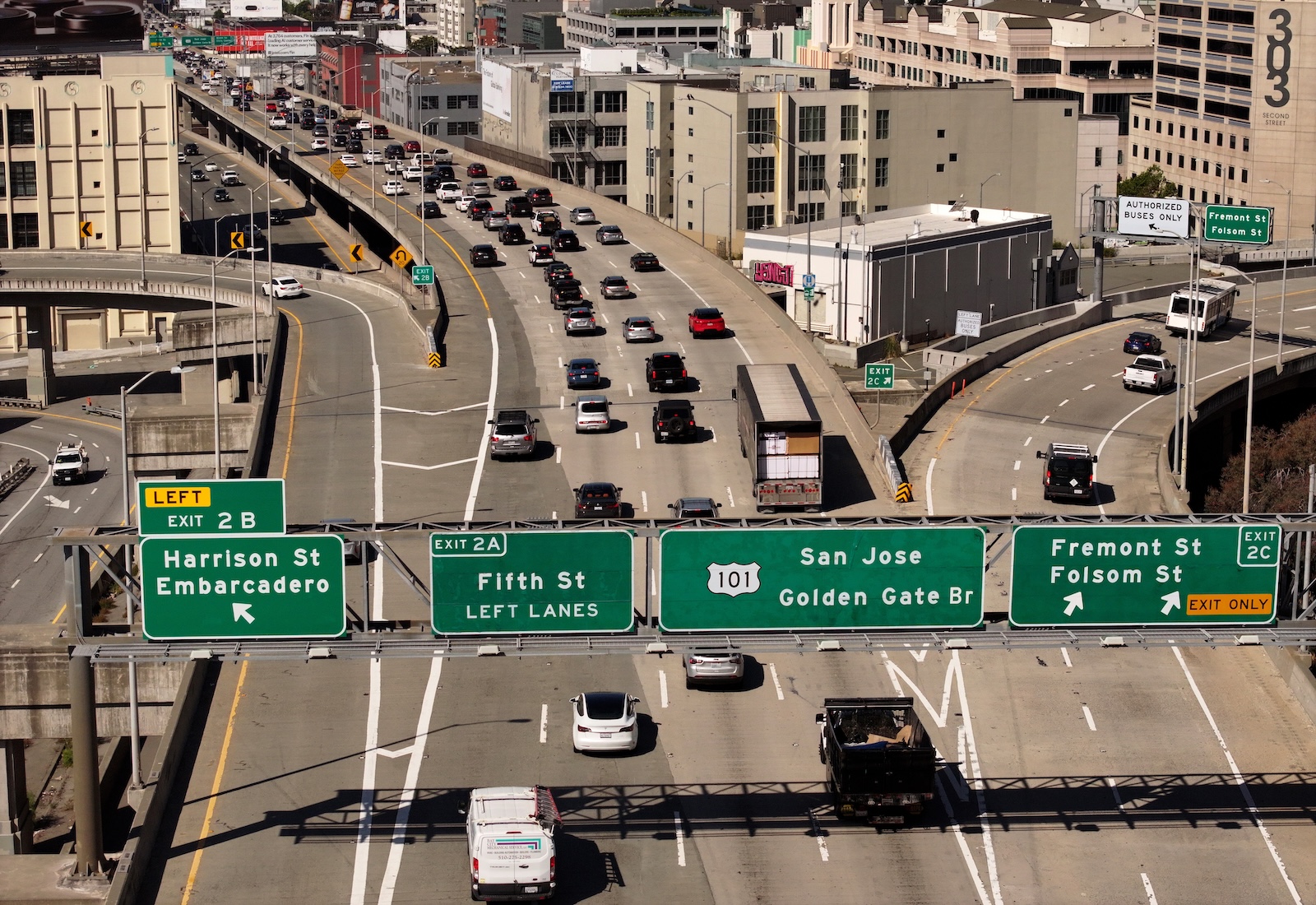
<figure class="wp-block-image alignnone"><img src="https://grist.org/wp-content/uploads/2025/05/highway-california.jpg?quality=75&amp;strip=all" alt="Aerial view of a highway with many cars and green signs pointing the way to various California destinations" /><figcaption class="wp-element-caption">Traffic on I-80 in San Francisco.<br>Justin Sullivan / Getty Images</figcaption></figure>

<p class="has-text-align-none">Party leaders don’t usually contravene the parliamentarian’s guidance. If they do, they run the risk of their opponents doing the same when they are in power. “Republicans should tread carefully today,” Senate Minority Leader Chuck Schumer, a Democrat from New York, <a href="https://www.npr.org/2025/05/22/nx-s1-5387729/senate-california-ev-air-pollution-waiver-revoked" target="_blank" rel="noreferrer noopener">told NPR</a> on Thursday. Sen. Alex Padilla (D-CA) said in a statement that “radical Republicans” had “gone nuclear on the Senate rule book.”</p>

<p class="has-text-align-none">“It won’t be long before Democrats are back in the driver’s seat again,” Padilla added. “When that happens, all bets will be off. Every agency action that Democrats don’t like — whether it’s a rule or not — will be fair game, from mining permits and fossil fuel projects to foreign affairs and tax policies.”&nbsp;</p>

<p class="has-text-align-none">Dan Farber, a professor at UC Berkeley Law, told Grist that the Senate’s capricious interpretation of the CRA means it could be used to rescind waivers from the Department of Health and Human Services allowing states to modify Medicaid requirements or broadcasting licenses issued by the Federal Communications Commission. The act could also be used to revoke pollution permits that the EPA grants to states.</p>

<p class="has-text-align-none">He clarified, however, that the Senate only nullified specific waivers in California affecting the sale of gasoline-powered cars. It did not repeal provisions in the Clean Air Act that allow the EPA to issue new waivers, as long as they’re not “substantially the same” as the rescinded ones. “I think that California still has the power to put forward, and EPA has the power to approve, different emissions regulations in the future,” Farber said. “Changing the deadlines by a few years could be enough.”&nbsp;</p>

<p class="has-text-align-none">California’s current standards require 35 percent of new cars sold within the state to be zero-emissions by 2026, ratcheting up to 100 percent of new sales by 2035. President Donald Trump&nbsp;<a href="https://www.bbc.com/news/world-us-canada-49746701" rel="noreferrer noopener" target="_blank">revoked California’s</a>&nbsp;<a href="https://www.federalregister.gov/documents/2013/01/09/2013-00181/california-state-motor-vehicle-pollution-control-standards-notice-of-decision-granting-a-waiver-of" rel="noreferrer noopener" target="_blank">waiver</a>&nbsp;allowing such regulations in 2019 during his first term, but that move was challenged in court and the waiver was restored by Joe Biden’s administration.</p>

<p class="has-text-align-none">Although automakers have previously backed California’s air pollution standards, industry groups cheered the vote on Thursday. <a href="https://www.autosinnovate.org/posts/press-release/senate-repeal-california-gas-vehicle-ban">John Bozzella</a>, president and CEO of the Alliance for Automotive Innovation, a trade group, said in a statement that the Senate deserved “enormous credit.” </p>

<p class="has-text-align-none">“The fact is these EV sales mandates were never achievable,” he said. “Automakers warned federal and state policymakers that reaching these EV sales targets would take a miracle, especially in the coming years when the mandates get exponentially tougher.”</p>

<p class="has-text-align-none">California Attorney General Rob Bonta objected to the Senate vote and vowed to challenge it in court. “Reducing emissions is essential to the prosperity, health, and well-being of California and its families,” he said in a statement. Gov. Gavin Newsom said undoing his state’s air pollution rules risked “<a href="https://www.gov.ca.gov/2025/05/20/governor-newsom-to-u-s-senate-will-you-side-with-china-or-america/" target="_blank" rel="noreferrer noopener">ced[ing] American car-industry dominance to China</a>.” </p>
						]]>
									</content>
			
					</entry>
			<entry>
			
			<author>
				<name>Naveena Sadasivam</name>
			</author>
			
			<author>
				<name>Joseph Winters</name>
			</author>
			
			<title type="html"><![CDATA[What did Trump just do to the environment?]]></title>
			<link rel="alternate" type="text/html" href="https://www.vox.com/climate/395897/trump-executive-orders-climate-paris-agreement-oil-gas" />
			<id>https://www.vox.com/?p=395897</id>
			<updated>2025-01-21T12:50:57-05:00</updated>
			<published>2025-01-21T12:35:00-05:00</published>
			<category scheme="https://www.vox.com" term="Climate" /><category scheme="https://www.vox.com" term="Donald Trump" /><category scheme="https://www.vox.com" term="Politics" /><category scheme="https://www.vox.com" term="Trump Administration" />
							<summary type="html"><![CDATA[This story was originally published by Grist and is reproduced here as part of the Climate Desk collaboration. Within hours of being sworn into office on Monday, President Donald Trump announced a spate of executive orders and policies to boost oil and gas production, roll back environmental protections, withdraw from the Paris climate accord, and [&#8230;]]]></summary>
			
							<content type="html">
											<![CDATA[

						
<figure>

<img alt="Donald Trump is shown with blue and red lighting behind him and a smirk on his face, from the shoulders up." data-caption="Donald Trump attends a private party ahead of his inauguration ceremony on January 20." data-portal-copyright="" data-has-syndication-rights="1" src="https://platform.vox.com/wp-content/uploads/sites/2/2025/01/GettyImages-2194071518.jpg?quality=90&#038;strip=all&#038;crop=0,0,100,100" />
	<figcaption>
	Donald Trump attends a private party ahead of his inauguration ceremony on January 20.	</figcaption>
</figure>
<p class="has-text-align-none"><em>This story was originally published by <a href="https://grist.org/article/trump-climate-actions-day-one-energy-emergency/">Grist</a> and is reproduced here as part of the <a href="https://www.climatedesk.org/">Climate Desk</a> collaboration. </em></p>

<p class="has-text-align-none">Within hours of being sworn into office on Monday, President Donald Trump announced a spate of executive orders and policies to boost oil and gas production, roll back environmental protections, withdraw from the Paris climate accord, and undo environmental justice initiatives enacted by former President Joe Biden.</p>

<p class="has-text-align-none">Trump has called climate change a “<a href="https://www.politico.com/news/2024/11/10/trump-withdrawal-paris-agreement-different-00188002" target="_blank" rel="noreferrer noopener">hoax</a>,” and appointed<strong> </strong>fossil fuel&nbsp;<a href="https://grist.org/politics/trump-cabinet-nominees-lead-key-departments-climate-agenda/">industry executives and climate skeptics to his Cabinet</a>. His first-day actions represent a complete remaking of the country’s climate agenda, and set the tone for his administration’s approach to energy and the environment over the next four years.&nbsp;</p>

<h2 class="wp-block-heading has-text-align-none"><strong>“Drill, baby, drill”</strong></h2>

<p class="has-text-align-none">Among the most significant actions Trump took Monday was declaring “an energy emergency,” which he framed as part of his effort to rein in inflation and reduce the cost of living. He&nbsp;<a href="https://www.whitehouse.gov/briefings-statements/2025/01/president-trumps-america-first-priorities/" target="_blank" rel="noreferrer noopener">pledged</a>&nbsp;to “use all necessary resources to build critical infrastructure,” an unprecedented move that&nbsp;<a href="https://www.npr.org/2025/01/20/nx-s1-5268653/energy-emergency-trump-oil-evs" target="_blank" rel="noreferrer noopener">could grant the White House</a>&nbsp;greater authority to expand fossil fuel production. He also signed an executive order “to&nbsp;<a href="https://www.whitehouse.gov/presidential-actions/2025/01/unleashing-american-energy/" target="_blank" rel="noreferrer noopener">encourage energy exploration and production</a>&nbsp;on federal lands and waters,”<strong> </strong>and another&nbsp;<a href="https://www.whitehouse.gov/presidential-actions/2025/01/unleashing-alaskas-extraordinary-resource-potential/" target="_blank" rel="noreferrer noopener">expediting permitting and leasing in Alaska</a>, including in the Arctic National Wildlife Refuge.&nbsp;</p>

<p class="has-text-align-none">“We will have the largest amount of oil and gas of any country on Earth, and we are going to use it,” Trump said during his&nbsp;<a href="https://www.youtube.com/watch?v=IFvLorAL5-8&amp;t=3s&amp;ab_channel=ABCNews" rel="noreferrer noopener" target="_blank">inaugural address</a>. “We are going to drill, baby, drill.”</p>

<p class="has-text-align-none">The <a href="https://www.energy.gov/ceser/spr-quick-facts">US Strategic Petroleum Reserve</a> can store 714 million barrels of crude oil, but currently holds about 395 million. Under his administration, he said, the cache will be filled “up again right to the top.” He also said the country will export energy “all over the world.”</p>

<p class="has-text-align-none">“We will be a rich nation again,” he said, standing inside the Capitol Rotunda, “and it is that liquid gold under our feet that will help.”</p>

<p class="has-text-align-none"><a href="https://www.sei.org/people/richard-j-t-klein/">Richard Klein</a>, a senior research fellow for the international nonprofit Stockholm Environment Institute, noted that fossil fuel companies extracted&nbsp;<a href="https://www.vox.com/climate/24098983/biden-oil-production-climate-fossil-fuel-renewables" target="_blank" rel="noreferrer noopener">record-high amounts of oil and gas</a>&nbsp;during the Biden administration. Even if it is technologically possible to boost production further,&nbsp;it’s unclear whether that will reduce prices.&nbsp;</p>

<p class="has-text-align-none"><a href="https://erg.berkeley.edu/people/kammen-daniel-m/">Dan Kammen</a>, a professor of energy at the University of California Berkeley, said it is a “direct falsehood” that increasing fossil fuel extraction would drive down inflation. He agreed that the US should declare a national energy emergency — but for reasons exactly the opposite of what Trump had in mind. “We need to quickly move to clean energy, to invest in new companies across the US,” Kammen told Grist.</p>

<h2 class="wp-block-heading has-text-align-none"><strong>Exiting the Paris agreement (again)</strong></h2>

<p class="has-text-align-none">Trump delivered on his promise to once again&nbsp;<a href="https://www.ft.com/content/cc7f60ea-6f42-49d0-8fde-5151e170c780" target="_blank" rel="noreferrer noopener">withdraw from the 2015 Paris climate agreement</a>, the United Nations pact agreed upon by 195 countries to limit global warming, which the new president referred to on Monday as a “rip-off.” In addition to signing an executive order saying&nbsp;<a href="https://www.whitehouse.gov/presidential-actions/2025/01/putting-america-first-in-international-environmental-agreements/" target="_blank" rel="noreferrer noopener">the US would leave the agreement</a>&nbsp;— titled “Putting America First in International Environmental Agreements” — Trump also signed a letter to the United Nations to set the departure in motion. Due to the rules governing the accord, it will take&nbsp;<a href="https://www.politico.com/news/2024/11/10/trump-withdrawal-paris-agreement-different-00188002" target="_blank" rel="noreferrer noopener">one year</a>&nbsp;to formally withdraw, meaning US negotiators will participate in the next round of talks in Brazil at the end of the year. By this time next year, however, the US could join Iran, Libya, and Yemen as the only nations that aren’t part of the accord.&nbsp;</p>

<p class="has-text-align-none">“It simply makes no sense for the United States to voluntarily give up political influence and pass up opportunities to shape the exploding green energy market,” Ani Dasgupta, president and CEO of the nonprofit World Resources Institute, <a href="https://www.wri.org/statement-paris-agreement-withdrawal-erodes-americas-standing-world" target="_blank" rel="noreferrer noopener">said in a statement</a>. Only two in 10 Americans support quitting the Paris agreement, according to a <a href="https://apnews.com/article/trump-poll-pardons-tariffs-taxes-drilling-climate-7fa453197520f091feb8956737feb278" target="_blank" rel="noreferrer noopener">poll</a> by the Associated Press.</p>

<p class="has-text-align-none">Trump’s announcement came just 10 days after the National Oceanic and Atmospheric Administration declared 2024 Earth’s&nbsp;<a href="https://www.noaa.gov/news/2024-was-worlds-warmest-year-on-record" target="_blank" rel="noreferrer noopener">hottest year on record</a>, one marked by&nbsp;<a href="https://academic.oup.com/bioscience/article/74/12/812/7808595?login=false" target="_blank" rel="noreferrer noopener">life-threatening heat waves</a>, wildfires, and flooding around the world. Experts say things will only get worse unless the US and other countries do more to limit greenhouse gas emissions.&nbsp;</p>

<p class="has-text-align-none">“Much of the very fabric of life on Earth is imperiled,”&nbsp;<a href="https://academic.oup.com/bioscience/article/74/12/812/7808595?login=false" rel="noreferrer noopener" target="_blank">climate scientists wrote</a>&nbsp;last October. They noted then, even before Trump’s election, that global policies were expected to cause temperatures to climb 2.7 degrees Celsius (6.9 degrees Fahrenheit) by 2100. One&nbsp;<a href="https://www.carbonbrief.org/analysis-trump-election-win-could-add-4bn-tonnes-to-us-emissions-by-2030/" rel="noreferrer noopener" target="_blank">analysis by Carbon Brief</a>&nbsp;estimated that a second Trump administration would result in an extra 4 billion metric tons of climate pollution, negating all of the emissions savings from the global deployment of clean energy technologies over the past five years — twice over.</p>

<h2 class="wp-block-heading has-text-align-none"><strong></strong><strong>Reversing course on electric vehicles&nbsp;</strong></h2>

<p class="has-text-align-none">Trump also took action to&nbsp;<a href="https://www.whitehouse.gov/presidential-actions/2025/01/unleashing-american-energy/" rel="noreferrer noopener" target="_blank">revoke “the electric vehicle mandate,”</a>&nbsp;in keeping with his campaign promise to support autoworkers.</p>

<p class="has-text-align-none">“In other words, you’ll be able to buy the vehicle of your choice,” he said during his inaugural address — even though there is <a href="https://electrek.co/2024/07/18/after-musk-commits-180m-trump-says-hell-end-ev-mandate-that-doesnt-exist/" target="_blank" rel="noreferrer noopener">no national mandate</a> requiring the sale of electric vehicles and consumers are free to purchase any vehicle of their liking. The Biden administration did promote the technology by finalizing rules that limit the amount of <a href="https://www.cnn.com/2024/03/20/climate/epa-biden-electric-cars/index.html" target="_blank" rel="noreferrer noopener">tailpipe pollution over time so that</a> electric vehicles make up the majority of automobiles sold by 2032. Under Joe Biden, the US also launched a <a href="https://grist.org/transportation/ev-tax-credit/">$7,500 tax credit</a> for consumer purchases of EVs manufactured domestically and planned to funnel roughly <a href="https://grist.org/cities/numbers-americans-want-drive-ev-rises/">$7.5 billion</a> toward building charging infrastructure across the country. </p>

<p class="has-text-align-none">“Rolling back incentives to build electric vehicles in the United States is going to cost jobs as well as raise the price of travel,” said <a href="https://cee.engineering.cmu.edu/directory/bios/samaras-costa.html">Costa Samaras</a>, a professor of civil and environmental engineering at Carnegie Mellon University who served as a senior policy leader in the Biden White House. “Fueling up an electric vehicle costs between one-third and one-half as much as driving on gasoline, not to mention the benefits for reducing air pollution. Ultimately, to lower the price of energy for US consumers, we need to diversify the sources of energy that we’re using and ensure that these are clean, affordable, and reliable.”</p>

<h2 class="wp-block-heading has-text-align-none"><strong>Rescinding environmental justice initiatives</strong></h2>

<p class="has-text-align-none">Trump&nbsp;<a href="https://www.whitehouse.gov/presidential-actions/2025/01/initial-rescissions-of-harmful-executive-orders-and-actions/" rel="noreferrer noopener" target="_blank">signed a single executive order</a>&nbsp;undoing nearly 80 Biden administration initiatives, including rescinding a directive to federal agencies to incorporate environmental justice into their missions. The Biden-era policy protected communities overburdened by pollution and directed agencies to work more closely with them.&nbsp;&nbsp;</p>

<p class="has-text-align-none">That move was part of a broader push that Trump described in <a href="https://www.youtube.com/watch?v=IFvLorAL5-8&amp;t=3s">his inaugural address</a> as an attempt to create a “color-blind society” by stopping the government from “trying to socially engineer race and gender into every aspect of public and private life.”<strong> </strong>Klein said the objective was “embarrassing.” Kammen said it was a “huge mistake” to move away from environmental justice priorities.</p>

<h2 class="wp-block-heading has-text-align-none"><strong>Blocking new wind energy&nbsp;</strong></h2>

<p class="has-text-align-none">Trump officially&nbsp;<a href="https://www.whitehouse.gov/presidential-actions/2025/01/temporary-withdrawal-of-all-areas-on-the-outer-continental-shelf-from-offshore-wind-leasing-and-review-of-the-federal-governments-leasing-and-permitting-practices-for-wind-projects/" rel="noreferrer noopener" target="_blank">barred new offshore wind leases</a>&nbsp;and will review federal permitting of wind projects, making good on a promise to “end leasing to massive wind farms that degrade our natural landscapes and fail to serve American energy consumers.” The move is likely to be met with resistance from members of his own party. The&nbsp;<a href="https://www.eia.gov/energyexplained/wind/where-wind-power-is-harnessed.php" rel="noreferrer noopener" target="_blank">top four states for wind generation</a>&nbsp;— Texas, Iowa, Oklahoma, and Kansas — are solidly red, and unlikely to acquiesce. Even Trump’s pick for Interior secretary, Doug Burgum,&nbsp;<a href="https://www.eenews.net/articles/where-is-doug-burgum-on-wind-power/" rel="noreferrer noopener" target="_blank">refused to disavow wind power</a>&nbsp;during a hearing last week, saying he would pursue an “all of the above” energy strategy.</p>

<p class="has-text-align-none">Many state and local policymakers, including the members of America Is All In, a climate coalition made up of government leaders and businesses from all 50 states, pledged to take up the mantle of climate action in the absence of federal leadership. </p>

<p class="has-text-align-none">“Regardless of the federal government’s actions, climate<strong> </strong>mayors are not backing down on our commitment to the Paris Agreement,” said Phoenix Mayor Kate Gallego,&nbsp;<a href="https://www.americaisallin.com/america-all-doubles-down-commitment-paris-agreement-despite-trump-withdrawal" target="_blank" rel="noreferrer noopener">in a statement</a>. “Our constituents are looking to us to meet the moment and deliver meaningful solutions.”</p>
						]]>
									</content>
			
					</entry>
	</feed>
