<?xml version="1.0" encoding="UTF-8"?><feed
	xmlns="http://www.w3.org/2005/Atom"
	xmlns:thr="http://purl.org/syndication/thread/1.0"
	xml:lang="en-US"
	>
	<title type="text">Maria Teresa Hart | Vox</title>
	<subtitle type="text">Our world has too much noise and too little context. Vox helps you understand what matters.</subtitle>

	<updated>2020-08-10T13:07:11+00:00</updated>

	<link rel="alternate" type="text/html" href="https://www.vox.com/author/maria-teresa-hart" />
	<id>https://www.vox.com/authors/maria-teresa-hart/rss</id>
	<link rel="self" type="application/atom+xml" href="https://www.vox.com/authors/maria-teresa-hart/rss" />

	<icon>https://platform.vox.com/wp-content/uploads/sites/2/2024/08/vox_logo_rss_light_mode.png?w=150&amp;h=100&amp;crop=1</icon>
		<entry>
			
			<author>
				<name>Maria Teresa Hart</name>
			</author>
			
			<title type="html"><![CDATA[The best $295 I ever spent: Spanish classes as a Latina in Trump’s America]]></title>
			<link rel="alternate" type="text/html" href="https://www.vox.com/the-goods/2020/8/4/21348704/spanish-classes-latina-trump-america-english" />
			<id>https://www.vox.com/the-goods/2020/8/4/21348704/spanish-classes-latina-trump-america-english</id>
			<updated>2020-08-10T09:07:11-04:00</updated>
			<published>2020-08-04T08:00:00-04:00</published>
			<category scheme="https://www.vox.com" term="Money" />
							<summary type="html"><![CDATA[From the outside I looked like a carefree shopper, arriving at Idlewild Books last summer to peruse its memoirs and guidebooks, iced tea in hand. But my real business was in the back, where two classrooms were letting out and new sessions were about to start. I was jittery, trying to tune out the racing [&#8230;]]]></summary>
			
							<content type="html">
											<![CDATA[

						
<figure>

<img alt="" data-caption="" data-portal-copyright="Dana Rodriguez for Vox" data-has-syndication-rights="1" src="https://platform.vox.com/wp-content/uploads/sites/2/chorus/uploads/chorus_asset/file/20909318/Workbook.jpg?quality=90&#038;strip=all&#038;crop=0,0,100,100" />
	<figcaption>
		</figcaption>
</figure>
<p>From the outside I looked like a carefree shopper, arriving at Idlewild Books last summer to peruse its memoirs and guidebooks, iced tea in hand. But my real business was in the back, where two classrooms were letting out and new sessions were about to start. I was jittery, trying to tune out the racing backbeat of my heart. I ran my fingertips over an adventure tale showing daredevils hanging from a cliff face. These guys fearlessly climbed Everest, I thought. Surely I can summon the courage to scale the Spanish language again.</p>

<p>I&rsquo;d grown up speaking <em>buen castellano</em>, bouncing between North and South America. In my early childhood my family lived in Seattle, then moved to Chile (where my mother&rsquo;s relatives were), and then back to Seattle, all before I was 8 years old. Once we resettled in the US, my Spanish became warped and weak. Now, like many second-generation kids, my Spanish is a wonky, lopsided thing.</p>

<p>Language comprehension is often thought of as a ladder, where the bottom rung is &ldquo;hello,&rdquo; &ldquo;please,&rdquo; and &ldquo;thank you.&rdquo; One step up is &ldquo;how much is this?&rdquo; and &ldquo;where is the bathroom?&rdquo; The middle rungs are herky-jerky conversations about where you&rsquo;re from and what your job is, and the top rung is fluency, an observation point where you can see as far as philosophical conversations about spirituality, politics, and business.</p>

<p>However, in practice I find my Spanish is more like Chutes and Ladders. Watch a <em>telenovela</em> on Netflix? Jump up five rungs. Avoid speaking it for a month? Slide back 12 squares. Land on the spot where you need to explain a medical condition? Tumble back to square one, flapping your hands to fill in missing words or falling back on English.</p>

<p>There are no &ldquo;winners&rdquo; because unlike a game, fluency doesn&rsquo;t have a finish line. No triple-word score will get you to the end. You are forever bumping around the board. But there are plenty of &ldquo;losers&rdquo; &mdash; those who give up trying to learn altogether, which is where I was for quite some time. (Pour one out for the Duolingo owl.)</p>

<p>Throughout my life, I&rsquo;ve made several scrambling attempts to level up my proficiency. There were the workbooks my mother would push on me in grade school (&ldquo;<em>El gato est&aacute; encima de la mesa</em>&rdquo;), the translated edition of Harry Potter (&ldquo;<em>Harry Potter y la piedra filosofal</em>&rdquo;) I thumbed through along with copies of Teen Vogue, and the class I took as a college sophomore wherein I struggled through Federico Garc&iacute;a Lorca (&ldquo;<em>La poes&iacute;a no quiere adeptos, quiere amantes</em>&rdquo;).</p>

<p>It was during the last attempt that my professor pulled me aside to tell me I would never improve. According to her, half-fluent native kids like me were linguistically askew, learning by ear, not by rote. We could speak melodically, but our foundations were uneven because they had never been leveled out by stacks of grammar rulebooks. You can&rsquo;t ascend a ladder that&rsquo;s propped on a warped floor without falling.</p>

<p>As an adult, I packed away my Spanish in deep storage, busting it out only on the rare occasions when I traveled or saw family. Still, I got frustrated and defensive when the subject would come up, citing arguments I&rsquo;d read on the site Remezcla about how <a href="https://remezcla.com/features/culture/opinion-leave-ted-cruz-spanish-alone/">language doesn&rsquo;t define your Latinidad</a>. I would parade around the names of famed Latinx people who didn&rsquo;t speak Spanish fluently. &ldquo;See?&rdquo; I&rsquo;d shout to my mom, my coworkers, the supermarket checkout lady, &ldquo;Selena Gomez is the poster girl for Latino achievement, and her Spanish is almost <em>nada!&rdquo;</em></p>

<p>All this was before the 2016 presidential election.</p>

<p>After that, words <em>en</em> <em>espa&ntilde;ol</em> became a tripwire that set off some ugly confrontations. I&rsquo;m reminded of viral videos in which restaurant employees or JC Penney shoppers speaking Spanish to each other are terrorized by hate speech from an onlooker. &ldquo;Speak English!&rdquo; or &ldquo;Go back to where you came from!&rdquo; are the usual refrain. It&rsquo;s a climate of fear, of slogans about America that read as implicit threats, of &ldquo;wait &rsquo;til Trump gets to you.&rdquo;</p>

<p>I made a decision &mdash; I was heading back to the classroom. Learning my mother tongue was no longer a way to shore up my own shortcomings; it had transformed into an act of resistance. If they&rsquo;re coming for the bilinguals, I thought grimly, they can come for me <em>primero</em>.</p>

<p>I&rsquo;d heard about Idlewild from various friends who had picked out guidebooks or taken a class there. After spending an afternoon reading Yelp reviews from former students, I enrolled in its top-level Spanish class: Film and Conversation. It was described on Idlewild&rsquo;s website as the &ldquo;most advanced class, for those who can speak and understand at a high level.&rdquo; I still felt the old trepidation around attending class and opening myself up to critique and embarrassment &mdash; the Latina who could falter on the basics, such as the correct pronoun.</p>

<p>My first class, I arrived 15 minutes early. After browsing the bookstore&rsquo;s titles, I migrated to the back of the shop that held two windowed classrooms anchored by large rectangular tables. There I met my instructor, Juan Vallejo, a spectacled documentary filmmaker from Colombia. He explained the class structure to me: Every week we&rsquo;d watch a Spanish-language movie, then come together to discuss it, read interviews with the directors, and review words used in the films.</p>

<p>&ldquo;You can say if you liked the movie or not,&rdquo; Juan explained, &ldquo;but we&rsquo;re extending our conversations <em>m&aacute;s all&aacute;</em>.&rdquo; He gestured to some distant horizon line &mdash; that illusive lookout point of fluency.</p>

<p>Ah, yes, I thought with a sigh, my goal is always <em>m&aacute;s all&aacute;</em>. Sure enough, our first assignment was the Argentine film <em>Medianeras</em> (already a word of the day, meaning &ldquo;sidewalls&rdquo;) and our class conversation touched on psychotherapy, soul mates, and the recession in Argentina. Sometimes I felt like the star student, other times the class dunce, but I was welcomed as my wobbly linguistic self, hobbling around in circles with one leg in Spanish 101 and the other in Spanish 400.</p>

<p>There were four of us in total: Margaret, a steely, silver-haired globetrotter with a knowledge of Spanish cinema that rivaled that of our professor; Thomas, the Theodore Roosevelt of our gang, who spoke softly and carried a big cane; Addy, a mush-hearted romantic who could roll her Rs like a pro; and me, the Latina trying to retrace her steps back to her roots. For seven Fridays in a row, we strapped ourselves together in our ascent up Mount Espa&ntilde;ol, trying to pull each other along. Not that we worked in harmony. We argued about love at first sight (a three-to-one split) and Catalan independence (a stalemate).&nbsp;But even our tug-of-wars provided opportunities to yank each other up to the next ledge.</p>

<p>I wish I could say that by the end of class, I&rsquo;d ascended to the tippy-top of fluency. Not quite. I still fumbled through words written on the whiteboard and read slowly, occasionally sounding things out. As I said <em>adios</em> to my classmates and packed up my notepad and pen on our last session, Juan took me aside. My stomach dropped to my shoes. <em>Here it comes.</em> I thought. <em>The moment where he tells me I&rsquo;m a lost cause.</em></p>

<p>&ldquo;Your Spanish is fine,&rdquo; Juan said, nodding as if agreeing with himself. &ldquo;Really. Just keep reading, and it&rsquo;ll come along. Don&rsquo;t give up.&rdquo;</p>

<p>&ldquo;I won&rsquo;t,&rdquo; I replied. Still, I wasn&rsquo;t entirely sure. I wanted to improve, but I was also pretty tired of climbing.</p>

<p>Yet post-class, I found small ways to keep the lessons going, whether it was binge-watching <em>Los Espookys</em> or reading an Argentine fashion blog. Nothing I did created change on a larger scale; every day, the border wall went up, immigrant families got separated, DREAMers were threatened with deportation. But I was doing the one tiny thing in my control: removing the invisible &ldquo;English only&rdquo; sign from whatever space I occupied.</p>

<p>Three months after my last class ended, my husband and I went to Mexico City on vacation. Putting my Spanish to the test, I ordered churros, hailed taxis, and bought aguas frescas. I also went <em>m&aacute;s all&aacute;</em> in my conversations with locals, discussing LGBTQ rights, climate change, and the political strife in Chile. At the end of my week there, I hitched a ride to Valle de Bravo with a local. It was going to be a hilly drive, past several mountainous areas. As I loaded my suitcases in the trunk, I asked the driver about the route.</p>

<p>&ldquo;Is there a pretty, scenic place to pull over and take photos?&rdquo; I asked her. &ldquo;A high point?&rdquo;</p>

<p>She considered for a moment and replied, &ldquo;The whole trip is scenic, if you keep your eyes open for the beauty along the way.&rdquo;</p>

<p><a href="https://www.mariateresahart.com/"><em>Maria Teresa Hart</em></a><em> is a travel editor and writer with work published in The Atlantic, The New York Times, and Teen Vogue.</em></p>
						]]>
									</content>
			
					</entry>
			<entry>
			
			<author>
				<name>Maria Teresa Hart</name>
			</author>
			
			<title type="html"><![CDATA[How the scrunchie rose and fell and rose again in popularity]]></title>
			<link rel="alternate" type="text/html" href="https://www.vox.com/the-goods/2019/11/1/20937109/scrunchie-history" />
			<id>https://www.vox.com/the-goods/2019/11/1/20937109/scrunchie-history</id>
			<updated>2019-11-01T12:23:03-04:00</updated>
			<published>2019-11-01T07:00:00-04:00</published>
			<category scheme="https://www.vox.com" term="Money" />
							<summary type="html"><![CDATA[The Netflix movie, To All the Boys I&#8217;ve Loved Before, had a scene-stealing cameo: a scrunchie. The fabric-covered hair tie is the centerpiece in a power tug-of-war between the protagonist, Lara Jean, and her former BFF turned mean girl, Genevieve.&#160;(&#8220;We used to be best friends,&#8221; Lara Jean explains in voiceover, &#8220;but post-middle school, for reasons [&#8230;]]]></summary>
			
							<content type="html">
											<![CDATA[

						
<figure>

<img alt="" data-caption="The scrunchie was the cool-girl accessory in the aughts, and now it’s back. | Getty Images/iStockphoto" data-portal-copyright="Getty Images/iStockphoto" data-has-syndication-rights="1" src="https://platform.vox.com/wp-content/uploads/sites/2/chorus/uploads/chorus_asset/file/19326363/GettyImages_1130114575.jpg?quality=90&#038;strip=all&#038;crop=0,0,100,100" />
	<figcaption>
	The scrunchie was the cool-girl accessory in the aughts, and now it’s back. | Getty Images/iStockphoto	</figcaption>
</figure>
<p>The Netflix movie, <em>To All the Boys I&rsquo;ve Loved Before</em>, had a scene-stealing cameo: a scrunchie. The fabric-covered hair tie is the centerpiece in a power tug-of-war between the protagonist, Lara Jean, and her former BFF turned mean girl, Genevieve.&nbsp;(&ldquo;We used to be best friends,&rdquo; Lara Jean explains in voiceover, &ldquo;but post-middle school, for reasons having to do with her popularity and my lack thereof, we are now decidedly not.&rdquo;)&nbsp;</p>

<p>The scrunchie in question passes as a kind of love token from Lara Jean to her pseudo-boyfriend, but Genevieve intercepts it and later flashes it in front of Lara Jean as a show of domination.</p>

<p>&ldquo;Peter gave this to me. Isn&rsquo;t it cute?&rdquo; Genevieve says, making a show of tying up her hair. &ldquo;I love the colors in it.&rdquo;</p>
<img src="https://platform.vox.com/wp-content/uploads/sites/2/chorus/uploads/chorus_asset/file/19326330/MV5BMTVhMDRlNzktYjRjYy00ZjdkLThjZTYtNGNlZDA0Y2IwOTkwXkEyXkFqcGdeQXVyMjI0Mjg2NzE_._V1_SX1777_CR0_0_1777_999_AL_.jpg?quality=90&#038;strip=all&#038;crop=0,0,100,100" alt="" title="" data-has-syndication-rights="1" data-caption="&lt;em&gt;To All the Boys I’ve Loved Before&lt;/em&gt;’s Peter (Noah Centineo) and Genevieve (Emilija Baranac) with the all-important scrunchie. | IMDb" data-portal-copyright="IMDb" />
<p>Thirty years ago, this hair accessory was a similar talisman in the movie <em>Heathers</em>. It was the physical marker of who ruled the school, stolen off the reigning alpha-girl by a challenger. Director Michael Lehmann wasn&rsquo;t subtle about its significance: In the <a href="https://www.youtube.com/watch?v=kupuUVYxZxU">opening shot</a>, a red scrunchie is passed through the blond ringlets of queen bee Heather Chandler. From there, it passes from one Heather to another, as the social standings in the school shuffle, until the main character, Veronica, yanks it from Heather Duke&rsquo;s hair at the end, declaring, &ldquo;There&rsquo;s a new sheriff in town!&rdquo;&nbsp;</p>

<p>The scrunchie was so critical to the plot that when <em>Heathers</em> was adapted as a musical in 2014, costume designer Amy Clark made <a href="https://fashionista.com/2014/04/heathers-musical-costumes">custom jumbo ones</a> that could be seen from the back of the house.&nbsp;</p>

<p>Why is it that this fabric ponytail-holder is always shown ensnarled in power struggles? Could it be that it&rsquo;s not only depicting the swings from friendship to frenemy but also the seesaw of trend cycles themselves? After all, if this type of bullying had a catchphrase, it could be the one from <em>Project Runway</em> describing the ruthless revolving door of fashion itself: &ldquo;One day you&rsquo;re in, and the next, you&rsquo;re out.&rdquo; And the scrunchie has most certainly been both.</p>

<p>When we think of a scrunchie, we think of a girlish, frilly doohickey commonly housed in a Caboodles. Yet impossibly, it&rsquo;s become shorthand for alpha-girl schoolyard status. Many items of women&rsquo;s apparel communicate power, but notably, they&rsquo;ve been lifted from the men&rsquo;s department. Picture the power suit, the briefcase, shoulder pads, even heels &mdash; the trademark footwear of femme fatales. As Summer Brennan writes in her book <a href="https://www.amazon.com/High-Object-Lessons-Summer-Brennan/dp/150132599X/ref=sr_1_1?crid=35JESX6TICCYZ&amp;keywords=summer+brennan+high+heel&amp;qid=1571496142&amp;sprefix=summer+brenn%2Caps%2C147&amp;sr=8-1"><em>High Heel</em></a>, &ldquo;history&rsquo;s first true high heel &mdash; a 16th-century Persian man&rsquo;s cavalry shoe &mdash; was a grip for the stirrup.&rdquo; Later this footwear morphed into the <em>talons hauts</em> that stylish gentlemen peacocked around in Louis XIV&rsquo;s court to display their rank.&nbsp;&nbsp;</p>

<p>By contrast, the history of the scrunchie is short. Nightclub performer Ronny Revson patented the scrunchie in 1987, modeling it on her elastic-waisted PJs. (Several sources also credit Philips E. Meyers as the original inventor back in the &lsquo;60s, but he never secured a patent and the accessory remained largely unknown in his day.)&nbsp;</p>
<figure class="wp-block-pullquote alignleft"><blockquote><p>“Hair has been a vehicle for self-expression, especially for women.”</p></blockquote></figure>
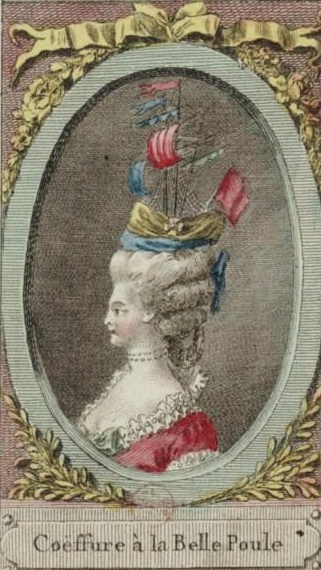
<p>But while the scrunchie&rsquo;s history is brief, the timeline of hair accessories is incredibly long. Kimberly Chrisman-Campbell, fashion historian and author of&nbsp;<a href="https://www.amazon.com/Worn-This-Day-Clothes-History/dp/0762493577/ref=sr_1_2?keywords=Kimberly+Chrisman-Campbell&amp;qid=1571072713&amp;sr=8-2"><em>Worn on This Day: The Clothes That Made History</em></a>, confirms as much. &ldquo;As long as women have had long hair,&rdquo; she says, &ldquo;there have been hair ornaments.&rdquo; Hairstyles themselves have also served as a form of communication. &ldquo;Hair has been a vehicle for self-expression, especially for women because they didn&rsquo;t have the other means of self-expression that were available to men,&rdquo; Chrisman-Campbell says.&nbsp;During the late 18th century, an era Chrisman-Campbell specializes in, women expressed their pent-up opinions in elaborate, ornamented hairdos that acted as billboards for all kinds of causes du jour<em> </em>&mdash; championing one composer over another, celebrating inoculation, even commemorating a specific French ship that won a battle against the English &mdash; using symbolic baubles woven into their <a href="https://i.pinimg.com/474x/dc/78/56/dc7856437e4527a14f4c68b8145ac580--french-salon-french-fashion.jpg">poufs</a> (<a href="https://www.theatlantic.com/entertainment/archive/2015/01/how-fashion-defeated-the-18th-century-anti-vaxxers/384696/">fake snakes</a>, olive branches, entire <a href="https://livesandlegaciesblog.files.wordpress.com/2016/09/coiffure-belle-poule-realistic.jpg">miniature ships</a> complete with sails). &ldquo;Hairstyles were relatively easy and inexpensive to update, so they were very sensitive to changes in pop culture, changes in politics, changes in the news cycle. And I think that&rsquo;s true today,&rdquo; says Chrisman-Campbell.&nbsp;</p>

<p>When it comes to the scrunchie as portrayed in <em>Heathers</em> and <em>To All the Boys I&rsquo;ve Loved Before</em>, Chrisman-Campbell compares its significance to the ultimate power accessory &mdash; the crown. She notes that in both films it&rsquo;s not just the item itself that&rsquo;s important but its lineage. &ldquo;It&rsquo;s recognizably someone else&rsquo;s scrunchie,&rdquo; she says, &ldquo;so it belonged to a certain person and took on her social power.&rdquo; Similarly, a crown&rsquo;s power is compounded by its association with all the previous monarchs who wore it. In these narratives, as is often the case with a crown, there is only one method for acquiring the scrunchie, and that&rsquo;s &ldquo;taking it by force in a very Shakespearean way,&rdquo; says Chrisman-Campbell.</p>

<p>This crown comparison brings to mind Taylor Swift&rsquo;s anti-bullying song &ldquo;You Need to Calm Down&rdquo;: &ldquo;We see you over there on the internet, comparing all the girls who are killing it. But we figured you out. We all know now; we all got crowns.&rdquo; Unfortunately, the reality is that crowns (both literal and metaphorical) are bestowed only on those with privilege and status. And the Heathers and Genevieves of the world have always conspired to snatch them, and that&rsquo;s where relational bullying can come in.</p>

<p>Signe Whitson, social worker and author of <em>Friendship and Other Weapons</em>, says traditional bullying is a one-on-one fight, &ldquo;but in relational bullying, it&rsquo;s &lsquo;I&rsquo;m mad at you, and I&rsquo;m going to get everybody else I know to be mad at you, too.&rsquo; It&rsquo;s a power-in-numbers kind of dynamic.&rdquo;</p>
<img src="https://platform.vox.com/wp-content/uploads/sites/2/chorus/uploads/chorus_asset/file/19326338/GettyImages_159841591.jpg?quality=90&#038;strip=all&#038;crop=0,0,100,100" alt="" title="" data-has-syndication-rights="1" data-caption="Although it’s not visible in this picture, a reed scrunchie is holding back the hair of queen bee Heather Chandler (second from right) in &lt;em&gt;Heathers&lt;/em&gt;. | New World Pictures/Getty Images" data-portal-copyright="New World Pictures/Getty Images" />
<p>According to Whitson, relational bullying is also defined by all kinds of physical markers. The classic example is not having a seat at the regular lunch table. But this plays out in various other exclusionary ways, such as fashion. Clothing and accessories are easy targets, she says, because they&rsquo;re so clearly loaded with class and clique symbolism.&nbsp;</p>

<p>Whitson also notes that these abusive dynamics can become cyclical &ldquo;when people never find their boundaries and never stand up for themselves.&rdquo; Kids can find themselves seesawing, either &ldquo;in&rdquo; or &ldquo;out&rdquo; with a group &mdash; friends on Tuesday and frenemies on Wednesday.</p>

<p>When the scrunchie itself was on the outs, it was labeled a look purely for bumpkins, a punchline on <em>Sex and the City</em>. In one episode, Carrie Bradshaw debates the accessory with her boyfriend as a detail in his novel. &ldquo;A scrunchie? No woman who works at <em>W</em> magazine and lives on Perry Street would be caught dead wearing a scrunchie!&rdquo; she says. Later, the couple runs into a woman wearing one &mdash; along with a grandmotherly sweater-set and a deep country accent. Carrie&rsquo;s point is proven: The scrunchie is only for the dumpy fashion-illiterate.</p>

<p>Even as a fictional character, Carrie was considered the ultimate tastemaker of the early 2000s &mdash; <em>TV Guide</em> declared her the most fashionable character on TV. Her wardrobe launched the sale of countless Manolo Blahnik heels and nameplate necklaces. When she dragged the scrunchie, she slashed its credibility to ribbons.</p>

<p>The scrunchie went from queen bee status symbol to fashion roadkill and then, in another tilt of the seesaw, it rose again to rule the school. Of course, as Chrisman-Campbell notes, fashion trends are generally cyclical, marked by various moments of &ldquo;minimalism and maximalism going back and forth.&rdquo; But the swings of the scrunchie are strikingly extreme: from the throne to the gutter and back again.</p>
<figure class="wp-block-pullquote alignleft"><blockquote><p>Fashion trends are generally cyclical, marked by various moments of “minimalism and maximalism going back and forth.”</p></blockquote></figure>
<p>Today, the scrunchie has ascended back to the top of the fashion hierarchy, and <a href="https://www.vox.com/the-goods/2019/9/24/20881656/vsco-girl-meme-what-is-a-vsco-girl">VSCO girls</a> have adopted it as a critical part of their uniform. Writer and trend-forecaster Andrew Luecke, who co-authored the book <a href="https://www.amazon.com/Cool-Style-Subversion-Greg-Foley/dp/0789332841/ref=sr_1_1?qid=1571416021&amp;refinements=p_27%3AAndrew+Luecke&amp;s=books&amp;sr=1-1&amp;text=Andrew+Luecke"><em>Cool: Style, Sound, and Subversion</em></a> that documented 100 years of teen subcultures, finds a lot to admire in the VSCO girl, calling her pseudo-preppy style a &ldquo;Trojan horse.&rdquo; &ldquo;You sneak in all of this environmental activism under the guise of a preppy style, which isn&rsquo;t necessarily always associated with rebellion or social justice,&rdquo; he says, pointing to the Hydro Flask and metal straw that are also part of their getup.&nbsp;</p>

<p>As the name implies, <a href="https://www.vox.com/the-goods/2019/9/24/20881656/vsco-girl-meme-what-is-a-vsco-girl">VSCO girls were born from the VSCO app</a> and are our particular social media moment of 2019. &ldquo;Their home is YouTube and TikTok,&rdquo; says Luecke. &ldquo;Greater society or older people look at these platforms as superficial. But if you look at the VSCO girl, you see a really interesting sort of element of social awareness popping up.&rdquo; According to Luecke, the style element &mdash; tossing on a scrunchie and a pair of dolphin shorts &mdash; can be &ldquo;a great gateway for getting young women interested in social activism.&rdquo;&nbsp;</p>

<p>Yet it&rsquo;s hard to tell if the scrunchie&rsquo;s association with VSCO girls is a sign of its apex or its decline back down to pass&eacute;. So many of the VSCO girl videos online have one thing in common: They&rsquo;re trying on the look as part of an experiment or a joke &mdash; &ldquo;Becoming the Ultimate VSCO Girl&rdquo; or &ldquo;Transforming Myself Into a VSCO Girl&rdquo; are common titles &mdash; and they&rsquo;re overloaded with self-deprecating humor. &ldquo;I&rsquo;m already pretty basic,&rdquo; <a href="https://www.youtube.com/watch?v=vVcyrgQ7hJk">vlogger Kenna Marie</a> says. Kenna Marie also clarifies in a note below &ldquo;Please don&rsquo;t take the amount of scrunches I put on seriously. That&rsquo;s the point of the joke.&rdquo;</p>

<p>There is one sad constant between the VSCO girls&rsquo; scrunchies and the Heathers of yore, and that&rsquo;s how bullying is still present. Skimming the comments on these VSCO girl videos, it&rsquo;s easy to spot a thrumming backbeat of negging, one where girls are being teased for everything from their voices to their hair to their bedrooms&rsquo; wallpaper.&nbsp;&nbsp;</p>

<p>How do you combat toxic bullying when it&rsquo;s so entangled in girlhood? Whitson sees one emotion as the solution &mdash; anger. She feels it&rsquo;s critical that all kids, especially girls, understand that anger is OK. &ldquo;Girls are still more socialized [to believe] that anger equals bad, and that a good girl wouldn&rsquo;t be angry at her friend,&rdquo; she says. Standing up for yourself, setting boundaries, and acknowledging your feelings are ways of ending any abusive cycle.&nbsp;</p>

<p>Thirty years ago, <em>Heathers</em> ended much this way. Veronica emerges from the scorched earth, defiant. She crowns herself with the red scrunchie, announcing that this era of abuse is over. Today, VSCO girl videos tend to end with the usual chorus of &ldquo;like and subscribe&rdquo; but there are also sign-offs like <a href="https://www.youtube.com/watch?v=-QIUut1RgM4">vlogger Bailey Dedrick</a>&rsquo;s. With hair half up in a scrunchie, she closes with, &ldquo;I don&rsquo;t know if this video is bad &#8230; I wish it was probably better,&rdquo; possibly anticipating the mix of praise and snark that unrolls in the comment section below.&nbsp;</p>

<p><a href="http://vox.com/goods-newsletter"><em>Sign up for The Goods newsletter.</em></a><em> Twice a week, we&rsquo;ll send you the best Goods stories exploring what we buy, why we buy it, and why it matters.&nbsp;</em></p>
						]]>
									</content>
			
					</entry>
			<entry>
			
			<author>
				<name>Maria Teresa Hart</name>
			</author>
			
			<title type="html"><![CDATA[The case for caseless iPhones]]></title>
			<link rel="alternate" type="text/html" href="https://www.vox.com/the-goods/2019/5/30/18644637/iphone-no-case-caseless-design" />
			<id>https://www.vox.com/the-goods/2019/5/30/18644637/iphone-no-case-caseless-design</id>
			<updated>2019-05-30T09:16:29-04:00</updated>
			<published>2019-05-30T07:30:00-04:00</published>
			<category scheme="https://www.vox.com" term="Money" /><category scheme="https://www.vox.com" term="Technology" />
							<summary type="html"><![CDATA[The first person I ever met who was fiercely anti-smartphone case was my boss at an old startup job.&#160; &#8221;This,&#8221; he said, pinching his thin iPhone between his thumb and pointer finger, &#8220;involved hours of effort. People worked to get this phone as slim as possible, and now I&#8217;m going to slap a thick case [&#8230;]]]></summary>
			
							<content type="html">
											<![CDATA[

						
<figure>

<img alt="" data-caption="Some iPhone users eschew the protective case. | Neil Godwin/Future Publishing via Getty Images" data-portal-copyright="Neil Godwin/Future Publishing via Getty Images" data-has-syndication-rights="1" src="https://platform.vox.com/wp-content/uploads/sites/2/chorus/uploads/chorus_asset/file/16306882/GettyImages_1125671891.jpg?quality=90&#038;strip=all&#038;crop=0,0,100,100" />
	<figcaption>
	Some iPhone users eschew the protective case. | Neil Godwin/Future Publishing via Getty Images	</figcaption>
</figure>
<p>The first person I ever met who was fiercely anti-smartphone case was my boss at an old startup job.&nbsp;</p>

<p>&rdquo;This,&rdquo; he said, pinching his thin iPhone between his thumb and pointer finger, &ldquo;involved hours of effort. People worked to get this phone as slim as possible, and now I&rsquo;m going to slap a thick case over it?&rdquo; He shook his head.&nbsp;</p>

<p>Most of the staff followed his lead, bravely carrying their phones naked as the day they were unboxed. I was the holdout. I&rsquo;d just bought a new phone for this job at a price that made my eyes water, and I cocooned it in a rubber bumper. Given their rising expense and fragile nature (iPhones have jumped <a href="https://www.businessinsider.com/apple-price-hikes-2018-2018-12#in-2017-the-starting-price-of-the-most-affordable-new-iphone-the-iphone-8-moved-up-to-699-a-7-increase-from-the-year-prior-3">15 percent in price</a> since 2016, and Americans spent more than <a href="https://www.marketwatch.com/story/americans-spent-over-3-billion-last-year-fixing-their-smartphone-screens-2018-11-20">$3 billion</a> on cracked screens last year), smartphones almost require being covered in a case like this so they can hold up to everyday life and everyday clumsiness. My boss&rsquo;s attitude seemed so counterintuitive. He was acting against his best interests for some powerful reasons I didn&rsquo;t entirely understand, and I&rsquo;m not sure he did either.</p>
<figure class="wp-block-pullquote alignleft"><blockquote><p>Americans spent more than $3 billion on cracked screens last year</p></blockquote></figure>
<p>My boss wasn&rsquo;t a pioneer. Caseless crusaders are everywhere, and soon after our chat, I spotted them all over. It&rsquo;s like that moment when you learn a new word and then you read it constantly. Writers on <a href="https://gizmodo.com/despite-overwhelming-evidence-that-this-is-foolish-i-r-1821100565">Gizmodo</a> and <a href="http://www.cultofmac.com/15645/please-dont-put-your-iphone-in-a-case/">Cult of Mac</a> came out swinging for case-free phones. The Reddit group <a href="https://www.reddit.com/r/iphone/comments/4jqicm/case_or_caseless/">iPhone</a> had threads urging fans to ditch the &ldquo;crappy plastic&rdquo; wrapper. And at <a href="https://www.theverge.com/circuitbreaker/2018/2/18/17021710/apple-iphone-x-smartphone-case-design-dangers-caseless">The Verge</a>, despite tallying potential repairs in the hundreds of dollars and debating whether caselessness is foolish, Nick Statt admitted to keeping his iPhone X bare: &ldquo;It feels like a crime to put a case on the nicest smartphone Apple&rsquo;s ever made.&rdquo;</p>

<p>Why do these superfans invite so much risk to such a defenseless item? &ldquo;They don&rsquo;t want to sully the beautiful hardware,&rdquo; says Leander Kahney, publisher of Cult of Mac and author of a recent biography of <a href="https://www.amazon.com/Tim-Cook-Genius-Apple-Level/dp/0525537600/ref=sr_1_fkmrnull_1?crid=M049Z5U41DEO&amp;keywords=tim+cook+the+genius+who+took+apple+to+the+next+level&amp;qid=1558193342&amp;s=gateway&amp;sprefix=tim+cook%2Caps%2C134&amp;sr=8-1-fkmrnull">Apple CEO Tim Cook</a>. Kahney notes that even Jony Ive, Apple&rsquo;s chief design officer, seemed to resist cases. &ldquo;[When I met him,] he had a case on his phone, and he was kind of apologetic about it. I think he must have preferred to go caseless, to go pure.&rdquo;</p>

<p>Cliff&nbsp;Kuang, a UX designer and author of the upcoming book <a href="https://www.amazon.com/User-Friendly-Hidden-Design-Changing/dp/0374279756/ref=sr_1_fkmrnull_1?crid=OXZABWPBTPUQ&amp;keywords=user+friendly+cliff+kuang&amp;qid=1558193697&amp;s=gateway&amp;sprefix=user+friendly+cliff%2Caps%2C139&amp;sr=8-1-fkmrnull"><em>User Friendly</em></a>, sees it as a disconnect between marketing and design. &ldquo;You have marketing and ease of use that are now at odds with each other,&rdquo; he says. Phone commercials in the past decade flaunt their pencil-thin profiles, with current models twirling like a ballerina on pointe. For many consumers, that&rsquo;s the vision they cling to, even when that object is collecting scratches bumping around in their bag. &ldquo;We tend to want that idealized version of a product without necessarily thinking about what it&rsquo;s going to be like to live with every day,&rdquo; says Kuang.</p>

<p>One obvious question: Why not create a phone that doesn&rsquo;t need a separate case? A cynic would argue that phone manufacturers aren&rsquo;t interested in this solution. After all, a dropped caseless phone is just a future sale, a variation on frequently theorized <a href="https://www.vice.com/en_us/article/j5kd7x/iphone-slow-planned-obsolescence-ios-12-wwdc">planned obsolescence</a>. Kit&nbsp;Yarrow, a consumer psychologist and author of <a href="https://www.amazon.com/Decoding-New-Consumer-Mind-Shop/dp/1118647688/ref=sr_1_1?crid=1ZEORH7RSHU5R&amp;keywords=decoding+the+consumer+mind&amp;qid=1558270953&amp;s=gateway&amp;sprefix=decoding+the+consumer%2Caps%2C130&amp;sr=8-1"><em>Decoding the New Consumer Mind</em></a>, takes this point of view. Far from being a conspiracy theory, she says, the tech industry pushes us to level up our phones every few years, and they&rsquo;re all too happy to shorten the cycle. She notes that when she takes her products to the Apple Store to be repaired, the common reply is consumers aren&rsquo;t expected to keep laptops or phones more than <a href="https://www.businessinsider.com/trends-in-cracked-iphone-repairs-2017-5">three or four years</a>.&nbsp;</p>
<figure class="wp-block-pullquote alignleft"><blockquote><p>“They don’t want to sully the beautiful hardware”</p></blockquote></figure>
<p>But Kahney doesn&rsquo;t think Apple or other manufacturers pull these &ldquo;cynical games.&rdquo; &ldquo;There&rsquo;s more profit in them being longer-lasting,&rdquo; he says, explaining that &ldquo;because Apple has trade-in programs now, there&rsquo;s a huge secondary market for phones.&rdquo;</p>

<p>Kuang believes companies are simply responding to our own desires for something that&rsquo;s increasingly more slender, more delicate. &ldquo;They are not designing in a vacuum,&rdquo; he says. &ldquo;I can guarantee there have been versions and concepts that were more durable.&rdquo; But they didn&rsquo;t make it to market, he insists, because models that aren&rsquo;t &ldquo;stone-cold beautiful&rdquo; are far harder to sell.</p>

<p>In several ways, the arc of cellphone design has curved toward the increasingly fragile. Kahney reflects on the first iPhone: &ldquo;That was definitely a tough device. But over the years, they&rsquo;ve tried to make it slimmer and sleeker and sexier.&rdquo; He notes that the iPhone X &ldquo;was like a slippery bar of soap. Of course, the first day I had it, it went flying out of my hands and onto the concrete.&rdquo;</p>

<p>You have to wonder where the desire for something thinner and thinner comes from. If you listen to the vocabulary of case-free fanatics, you might be fooled into thinking they&rsquo;re talking about something else altogether. Encased phones are &ldquo;clunky,&rdquo; &ldquo;bulky,&rdquo; &ldquo;thick,&rdquo; even &ldquo;fat.&rdquo; Caseless ones are &ldquo;slim,&rdquo; &ldquo;sleek,&rdquo; &ldquo;thin,&rdquo; and &ldquo;naked.&rdquo; It&rsquo;s almost the language of a before-and-after ad for a 30-day diet plan. Are we body-shaming ourselves through our phones? Kahney laughs at that question but says the hardware has always been fetishized as &ldquo;sexy&rdquo; and &ldquo;salacious.&rdquo;</p>
<img src="https://platform.vox.com/wp-content/uploads/sites/2/chorus/uploads/chorus_asset/file/16307034/GettyImages_1139417663.jpg?quality=90&#038;strip=all&#038;crop=0,0,100,100" alt="" title="" data-has-syndication-rights="1" data-caption="The “sexy” Apple iPhone XS Max smartphone with a gold finish. | Neil Godwin/T3 Magazine" data-portal-copyright="Neil Godwin/T3 Magazine" />
<p>Yarrow takes this thought a step further. &ldquo;The phone really is, for a lot of people, an extension of themselves,&rdquo; she says, even to the point of associating its measurements with your idealized physique. If that sounds far-fetched, consider that companies already tap into that bodily identification for their advertising. Just look at <a href="https://www.youtube.com/watch?v=CRiv2lgaX_U">Dove&rsquo;s ad campaign</a> where it released a variety of bottles meant to represent various women&rsquo;s bodies, which was met with <a href="https://www.youtube.com/watch?v=RMo-DzEem6k">criticism</a> because no one wants to see themselves as the squat circular bottle. Thinness also has <a href="https://www.psychologytoday.com/us/blog/the-gravity-weight/201809/the-body-metaphor-social-class-and-obesity">class connotations</a>. (The infamous quote attributed to Wallis Simpson, &ldquo;You can never be too rich or too thin,&rdquo; could be shorthand for this.)</p>

<p>Whatever stokes our desire for a paper-thin phone, it makes the act of going caseless all the more daring. As Yarrow puts it, you&rsquo;re paying not only with money for the possible repairs but also with the increased attention and thoughtfulness this unprotected item demands. Countless times a day, you&rsquo;ll have to hold, retrieve, or stow your caseless phone with conscious care and alertness. &ldquo;That&rsquo;s a hard price to pay,&rdquo; she says.</p>

<p>This kind of fussy handling feels more appropriate for a Faberg&eacute; egg, or 16th-century Dutch lace ruffs, or some other precious museum <em>objets </em>&mdash; not with the item we use to text friends when we&rsquo;re running late. But that&rsquo;s not an inaccurate comparison when it comes to caseless phones.</p>

<p>In the case of Dutch lace ruffs &mdash; giant pleated accordions the upper classes wore around their necks &mdash; the point was to show off not just expensive lace but also the hours it took to assemble the ruffs, stitch them together, and iron and starch them. (As my boss said about his phone&rsquo;s slimness: It &ldquo;involved hours of effort.&rdquo;) The ruffs were impractical, impeding movement, but they were also the ultimate status symbol of their time. And people are willing to endure a lot to communicate status.</p>
<figure class="wp-block-pullquote alignleft"><blockquote><p>“The phone really is, for a lot of people, an extension of themselves”</p></blockquote></figure>
<p>Today, status symbols can be tricky to nail down, particularly in the tech industry. Big, flashy displays of wealth are frowned on in Silicon Valley. In a place where jeans and hoodies pass for workwear, there&rsquo;s &ldquo;no bling here,&rdquo; as one <a href="https://www.quora.com/What-are-some-status-symbols-in-Silicon-Valley">Quora thread</a> notes. Wealth is communicated in quieter, subtler ways: investment, philanthropy. But the latest gadgets still make the list because they draw attention and impart cachet, particularly when they&rsquo;re tossed around and treated casually.</p>

<p>According to <a href="http://www.singlesinamerica.com/2017/#technicallydating">a study</a> by Research Now and Match.com, 86 percent of women negatively judge dates who have a cracked phone screen. The opposite could be true as well &mdash; people admire a person who shows they clearly have the means to play pavement roulette with their four-figure, case-free phone. Yarrow sees the caseless phone as a way to quietly signal your affluence. The message, she says, is &ldquo;I&rsquo;m above the possibility of damaging my phone, and if I do, no big deal because I can shell out for a new screen.&rdquo; Or as <a href="https://www.theverge.com/circuitbreaker/2018/2/18/17021710/apple-iphone-x-smartphone-case-design-dangers-caseless#464012085">one commenter</a> said at The Verge, &ldquo;If I made $500,000 a year, I think I could allow myself a naked iPhone X.&rdquo;</p>

<p>There was a time when simply having a smartphone was a surefire sign of disposable income, but no longer. &ldquo;There are more smartphones in the United States than there are people,&rdquo; Kuang says. Nowadays, having a smartphone isn&rsquo;t an indicator of affluence any more than having a toothbrush is.</p>

<p>The mania surrounding phones has also died down. &ldquo;Innovation has slowed down around them,&rdquo; Yarrow says. You won&rsquo;t find an around-the-block line for a new phone with a camera that&rsquo;s marginally better. &ldquo;I think we&rsquo;ve reached a tipping point where I don&rsquo;t know what else we could do to a phone,&rdquo; she says.</p>
<figure class="wp-block-pullquote alignleft"><blockquote><p>“If I made 500,000 a year, I think I could allow myself a naked iPhone X”</p></blockquote></figure>
<p>All of which could be why we&rsquo;ve arrived at a place where being reckless with your phone and rejecting a case is the ultimate indication of means. Of course, that may change because status symbols are always in flux. Given that <a href="https://www.thecut.com/article/best-ugly-sneakers.html">giant honking sneakers</a> have come into fashion, for example, who is to say giant honking phone cases won&rsquo;t be next? &nbsp;</p>

<p>Kuang presents another idea for where we&rsquo;re heading. Given the wellness push to unplug, he says, &ldquo;the biggest luxury in the world right now is to be that person that doesn&rsquo;t need a phone.&rdquo; In this scenario, technology is something delegated to someone else. &ldquo;Super-important people, when you go into their office, it&rsquo;s spotless. There&rsquo;s nothing on the desk except a sheet of paper and a pen,&rdquo; he says. The message here: &ldquo;I&rsquo;m too important to use <em>stuff</em>. I just make decisions.&rdquo;</p>

<p>In other words, today&rsquo;s status symbol might be subtracting your phone&rsquo;s case; tomorrow&rsquo;s might be subtracting the phone itself.</p>

<p><a href="http://vox.com/goods-newsletter"><em>Sign up for The Goods&rsquo; newsletter.</em></a><em> Twice a week, we&rsquo;ll send you the best Goods stories exploring what we buy, why we buy it, and why it matters.&nbsp;</em></p>
						]]>
									</content>
			
					</entry>
	</feed>