<?xml version="1.0" encoding="UTF-8"?><feed
	xmlns="http://www.w3.org/2005/Atom"
	xmlns:thr="http://purl.org/syndication/thread/1.0"
	xml:lang="en-US"
	>
	<title type="text">Mark Galeotti | Vox</title>
	<subtitle type="text">Our world has too much noise and too little context. Vox helps you understand what matters.</subtitle>

	<updated>2019-03-06T07:20:29+00:00</updated>

	<link rel="alternate" type="text/html" href="https://www.vox.com/author/mark-galeotti" />
	<id>https://www.vox.com/authors/mark-galeotti/rss</id>
	<link rel="self" type="application/atom+xml" href="https://www.vox.com/authors/mark-galeotti/rss" />

	<icon>https://platform.vox.com/wp-content/uploads/sites/2/2024/08/vox_logo_rss_light_mode.png?w=150&amp;h=100&amp;crop=1</icon>
		<entry>
			
			<author>
				<name>Mark Galeotti</name>
			</author>
			
			<title type="html"><![CDATA[Why Putin might be trying to recreate the Soviet-era KGB — and why he might regret it]]></title>
			<link rel="alternate" type="text/html" href="https://www.vox.com/2016/9/20/12988138/vladimir-putin-kgb-intelligence-agencies-russia" />
			<id>https://www.vox.com/2016/9/20/12988138/vladimir-putin-kgb-intelligence-agencies-russia</id>
			<updated>2016-09-20T13:30:08-04:00</updated>
			<published>2016-09-20T13:30:08-04:00</published>
			<category scheme="https://www.vox.com" term="Politics" /><category scheme="https://www.vox.com" term="World Politics" />
							<summary type="html"><![CDATA[A well-connected Russian newspaper is reporting that Vladimir Putin plans to unite his domestic security, foreign espionage, and counterintelligence agencies into one superagency, in effect recreating the old Soviet KGB. If true, it suggests Putin is seriously worried about his future &#8212; and that he dramatically misunderstands the risks in this maneuver. The circumstantial evidence [&#8230;]]]></summary>
			
							<content type="html">
											<![CDATA[

						
<figure>

<img alt="" data-caption="Russian President Vladimir Putin salutes officers on February 18, 2004, shortly after his arrival at the observation point of the Artic cosmodrome in Plesetsk, where he came to watch the launch of the spacecraft Molnia, carrying a military spy satellite on board.  | MAXIM MARMUR/AFP/Getty Images" data-portal-copyright="MAXIM MARMUR/AFP/Getty Images" data-has-syndication-rights="1" src="https://platform.vox.com/wp-content/uploads/sites/2/chorus/uploads/chorus_asset/file/7133739/GettyImages-2992273.jpg?quality=90&#038;strip=all&#038;crop=0,0,100,100" />
	<figcaption>
	Russian President Vladimir Putin salutes officers on February 18, 2004, shortly after his arrival at the observation point of the Artic cosmodrome in Plesetsk, where he came to watch the launch of the spacecraft Molnia, carrying a military spy satellite on board.  | MAXIM MARMUR/AFP/Getty Images	</figcaption>
</figure>
<p>A well-connected Russian newspaper is <a href="http://kommersant.ru/doc/3093174">reporting</a> that Vladimir Putin plans to unite his domestic security, foreign espionage, and counterintelligence agencies into one superagency, in effect recreating the old Soviet KGB. If true, it suggests Putin is seriously worried about his future &mdash; and that he dramatically misunderstands the risks in this maneuver.</p>

<p>The circumstantial evidence that this or a similar measure is in the works has been steadily growing. The Federal Security Service (FSB), the agency likely to dominate this new body, has been acting with unusual confidence, even arresting <a href="https://themoscowtimes.com/news/russian-investigator-nikandrov-claims-his-arrest-is-result-of-conflict-with-fsb-54822">senior figures</a> from other services. Russia&rsquo;s chief investigator, Alexander Bastrykin, who has opposed this plan, is reportedly <a href="https://www.opendemocracy.net/od-russia/mark-galeotti/goodbye-bastrykin">about to be sacked</a>.</p>

<p>Besides, this fits a wider picture of a drift toward authoritarianism. The last time the creation of a security superagency was raised was in 2012, in parallel with the proposal to form a National Guard to control the streets.</p>

<p>At that time, Putin shelved both ideas. In April, though, he unexpectedly announced the <a href="https://inmoscowsshadows.wordpress.com/2016/04/05/putins-new-national-guard-what-does-it-say-when-you-need-your-own-personal-army/">formation of the National Guard</a>, a force of 200,000 riot police and security troops and another 200,000 security guards, under one of his closest allies, Gen. Viktor Zolotov. It will be fully operational within a year and has units across the country, ready to respond to any signs of protest.</p>

<p>Now independent commentators and opposition figures alike are <a href="http://www.rferl.org/content/russia-kremlin-mulls-reforming-kgb/28000802.html">sure the changes to the security services are also happening</a> &mdash; and even more tellingly, Putin&rsquo;s spokesperson <a href="https://regnum.ru/news/polit/2182020.html">refused</a> to rule out the idea when given the perfect opportunity to kill the story.</p>
<h2 class="wp-block-heading">Putin has many reasons to want a “Ministry of State Security”</h2>
<p>The plan purportedly under discussion would merge the FSB, the Foreign Intelligence Service (SVR) and the Federal Guard Service (FSO) &mdash; very broadly analogous to the FBI, CIA, and Secret Service, respectively &mdash; into a new Ministry of State Security (MGB). Only military intelligence would be spared assimilation into this ministry, which would essentially have the same breadth of powers and duties as the KGB.</p>

<p>Indeed, the MGB was also the name of one of the KGB&rsquo;s predecessors, which functioned as Joseph Stalin&rsquo;s murderous secret police agency between 1946 and 53.</p>

<p>The new ministry would handle everything from espionage abroad to suppressing opposition at home. What&rsquo;s more, it would do so pretty much without any oversight, responsible only to the president.</p>

<p>From Putin&rsquo;s point of view, that would be a win on multiple levels.</p>

<p>It brings all the security agencies under one man. In the past, Putin governed through a kind of royal court, with multiple organizations with overlapping responsibilities constantly in competition. Increasingly, though, he is now relying on a handful of<strong> </strong>his closest allies instead.</p>

<p>This is because he simply doesn&rsquo;t seem to trust the elite as a whole and instead is <a href="https://www.opendemocracy.net/od-russia/mark-galeotti/putin-s-incredible-shrinking-circle">elevating a handful of people he does trust</a>. The MGB would also be a powerful tool to control them and head off any political coups or conspiracies. In particular, it would gain lead responsibility for investigating allegations of corruption and economic crimes, and these have become to <a href="http://www.theatlantic.com/international/archive/2013/07/how-putin-uses-money-laundering-charges-to-control-his-opponents/277903/">main weapon</a> the Kremlin uses to intimidate and eliminate its enemies these days.</p>

<p>Third, it would allow even more intensive and aggressive espionage overseas. At present the SVR and FSB both run spy networks, and they and the FSO all have their own electronic and cyber operations. Bringing them all into one agency could be a way to use them most effectively and avoid them working at cross-purposes. In the <a href="http://motherboard.vice.com/read/all-signs-point-to-russia-being-behind-the-dnc-hack">Democratic National Committee hacking case</a>, for example, there were two parallel operations from different Russian agencies, neither apparently even aware of the other.</p>

<p>That should send alarm bells ringing across the West. <a href="http://www.ecfr.eu/publications/summary/putins_hydra_inside_russias_intelligence_services">Russia&rsquo;s intelligence community</a> is already as extensive and aggressive as it was at the <a href="https://www.theguardian.com/world/2010/jun/29/russian-spies-cold-war-levels">height of the Cold War</a>. It&rsquo;s involved in everything from old-fashioned human intelligence (recruiting local agents such as the infamous &ldquo;<a href="http://www.nytimes.com/2010/06/30/world/europe/30sleepers.html?_r=0">illegals&rdquo; ring</a> exposed in the US in 2010) to cutting edge cyber espionage that has stolen secrets from systems across the world, from <a href="http://www.computerworld.com/article/2996039/application-security/oracle-slams-door-on-russian-cyberspies-who-hacked-nato-pcs-through-java.html">NATO</a> to the US <a href="http://www.theverge.com/2015/9/17/9342287/russia-cyber-espionage-malware-attack-duke">State Department</a>. It is also heavily engaged in so-called &ldquo;active measures&rdquo; such as <a href="http://blogs.ft.com/beyond-brics/2015/04/15/russias-silent-war-against-the-west/">supporting</a> divisive political movements and <a href="https://www.theguardian.com/world/2016/jan/10/murder-istanbul-chechen-kremlin-russia-abdulvakhid-edelgireyev">assassinating</a> Chechen rebel sympathizers.</p>

<p>The fact that sometimes the various intelligence agencies often operate at cross-purposes or duplicate the others&rsquo; efforts<strong> </strong>has been one of the few pieces of good news for the West. Creating the MGB will, Moscow must hope, help eliminate this edge.</p>
<h2 class="wp-block-heading">But Putin might come to regret it</h2>
<p>Putin has been trying to make the security apparatus more loyal and efficient, less prone to turf wars and corruption. The irony is that while creating the MGB might look like a step forward for him, it is likely actually to make things worse.</p>

<p>There will be even more scope for turf wars inside a superagency than before, as everything from budgets to responsibilities will be up for grabs. Meanwhile, it will be harder to control corruption. All the recent cases of corrupt security officials being caught have been the result of investigations from outside security agencies. Under this plan, there would be no outside security agencies.</p>

<p>The security agencies&rsquo; affairs divisions have tended to become nothing more than the protection racketeers&rsquo; protection racketeer, skimming their share from scams they uncover. For example, Mikhail Maximenko, head of internal affairs for the Investigations Committee &mdash; another security agency likely to lose its independence &mdash; was <a href="https://themoscowtimes.com/articles/hunter-becomes-prey-the-fall-of-a-russian-attack-dog-investigator-54772">recently arrested by the FSB</a> while arranging for a wanted gangster to walk free. &nbsp;With no outside bodies able to investigate the MGB, the opportunities for embezzlement and shakedowns will be greater than ever.</p>

<p>Meanwhile, Putin will be creating an agency that could ultimately come to challenge his quasi-dictatorial rule.</p>

<p>Putin is clearly concerned about the possibility of a <a href="http://www.vox.com/2015/1/5/7482441/how-putin-lose-power">conspiracy within the elite</a> to oust him: This is a perennial topic of discussion in Moscow. He appears to see agencies like the National Guard and MGB as the guarantors of his power. However, the old model did at least mean any coup would have to involve many different groups. Ironically, Putin might be creating for the first time a single agency with enough power to topple him.</p>

<p>While that is unlikely, there is another way this agency will <a href="http://www.vox.com/2016/4/19/11459034/putin-myth">limit Putin&rsquo;s power</a>. Already, the intelligence he receives is dangerously politicized, slanted in ways designed to please him. There is no Russian equivalent of congressional oversight, not even an independent national security adviser to warn him when he is being fed slanted and partial data.</p>

<p>At least when several different agencies are briefing him, he may get multiple perspectives. The more Putin depends on just one agency, the more he may find himself free to make decisions &mdash; but always based on what the MGB tells him. Being the power behind the throne, after all, is often just as good as being on the throne.</p>

<p><em>Mark Galeotti is an incoming senior research fellow at the&nbsp;</em><a href="http://www.iir.cz/en/"><em>Institute of International Relations Prague</em></a><em>, a visiting fellow with the European Council on Foreign Relations, and the director of&nbsp;</em><a href="https://mayak-intelligence.com/"><em>Mayak Intelligence</em></a><em>. He blogs at&nbsp;</em><a href="https://inmoscowsshadows.wordpress.com/"><em>In Moscow&rsquo;s Shadows</em></a><em>&nbsp;and tweets as </em><a href="https://twitter.com/MarkGaleotti"><em>@MarkGaleotti</em></a><em>.</em></p>
						]]>
									</content>
			
					</entry>
			<entry>
			
			<author>
				<name>Mark Galeotti</name>
			</author>
			
			<title type="html"><![CDATA[Russia is massing thousands of troops on Ukraine’s border. Here’s why we shouldn’t panic.]]></title>
			<link rel="alternate" type="text/html" href="https://www.vox.com/2016/9/1/12729426/russia-troops-ukraine-border" />
			<id>https://www.vox.com/2016/9/1/12729426/russia-troops-ukraine-border</id>
			<updated>2016-09-01T14:29:17-04:00</updated>
			<published>2016-09-01T10:00:07-04:00</published>
			<category scheme="https://www.vox.com" term="Criminal Justice" /><category scheme="https://www.vox.com" term="Policy" /><category scheme="https://www.vox.com" term="Politics" /><category scheme="https://www.vox.com" term="Russia" /><category scheme="https://www.vox.com" term="World Politics" />
							<summary type="html"><![CDATA[Russia is sending tens of thousands of troops to military installations near its border with Ukraine and holding snap military drills, sparking fears that a Russian invasion is imminent. These fears are overblown, however, for one major reason that everyone seems to have overlooked: The Ukrainian military of today is very different from the ramshackle, [&#8230;]]]></summary>
			
							<content type="html">
											<![CDATA[

						
<figure>

<img alt="" data-caption="Russian President Vladimir Putin addresses students during his visit to German Embassy school in Moscow, Russia, on June 29, 2016. | AP Photo/Alexander Zemlianichenko" data-portal-copyright="AP Photo/Alexander Zemlianichenko" data-has-syndication-rights="1" src="https://platform.vox.com/wp-content/uploads/sites/2/chorus/uploads/chorus_asset/file/7023857/AP_16186402183207.jpg?quality=90&#038;strip=all&#038;crop=0,0,100,100" />
	<figcaption>
	Russian President Vladimir Putin addresses students during his visit to German Embassy school in Moscow, Russia, on June 29, 2016. | AP Photo/Alexander Zemlianichenko	</figcaption>
</figure>
<p>Russia is sending tens of thousands of troops to military installations near its border with Ukraine and holding snap military drills, sparking fears that a Russian invasion is imminent.</p>

<p>These fears are overblown, however, for one major reason that everyone seems to have overlooked: The Ukrainian military of today is very different from the ramshackle, demoralized force of 2014.</p>

<p>In 2014, Ukraine&rsquo;s pro-Moscow government, led by Viktor Yanukovych, collapsed as pressure grew for the country decisively to ally itself with the West. In response, Russia seized the Crimean Peninsula and <a href="http://uaposition.com/analysis-opinion/english-translation-audio-evidence-putins-adviser-glazyev-russian-politicians-involvement-war-ukraine/">stirred up</a> a phony anti-Kiev rebellion in the southeastern Donbas region. The Kremlin thought the new Ukrainian government would quickly accept that it was in Russia&rsquo;s sphere of influence, but instead it resisted.</p>

<p>Yet the Ukrainian military was weak: Every time it looked as if its forces were about to make some inroads into the Donbas, Russia would surge in some of its own troops and shatter their attack.</p>

<p>But that was then. In part thanks to US help, Ukraine&rsquo;s military is now larger, tougher, and more ready than ever. If Putin did decide on some major military adventure now, he would get much more than he bargained for.</p>

<p>The Russians know this, and their military moves are instead meant to ratchet up the <a href="http://en.hromadske.ua/en/articles/show/This_Strategy_Tension_Galeotti_FSB_Statement%20">political pressure</a> on Kiev &mdash; and to prepare just in case some day Ukraine feels strong enough to try to take back the Donbas by force.</p>
<h2 class="wp-block-heading">Back in 2014, the Ukrainian military was a mess</h2>
<p>After two decades of <a href="https://newrepublic.com/article/117710/ukraines-army-small-sovietized-underfunded-and-poorly-trained">underfunding and industrial-scale corruption</a>, Ukraine&rsquo;s military was backward, divided, and demoralized. Much of it was still making do with Soviet-era equipment dating back to the 1990s or even the 1980s.</p>

<p>Then when the regime of disgraced President Yanukovych fell in 2014, not only was the high command torn apart by internal disagreements, but it became clear just how much it was <a href="http://euromaidanpress.com/2016/06/18/ukraines-deputy-chief-of-staff-was-a-russian-spy/">riddled with Russian agents</a> and sympathizers.</p>

<p>This helps explains why Ukraine&rsquo;s military didn&rsquo;t fight when Russia&rsquo;s &#8220;little green men&#8221; &mdash; commandos deployed without their insignia, allowing Moscow to pretend they were not Russian soldiers &mdash; were taking over Crimea in 2014. (Indeed, the head of the Ukrainian navy <a href="http://www.bbc.com/news/world-europe-26410431">defected</a>.) Although on paper Ukraine had 125,000 soldiers, <a href="http://ukrainianweek.com/Politics/115444">according</a> to acting Defense Minister Adm. Ihor Tenyukh &#8220;only 6,000 [were] in combat readiness.&#8221;</p>

<p>It also explains why initially the war against Russia&rsquo;s proxies in the Donbas was largely fought by a ragtag collection of <a href="https://medium.com/@Hromadske/ukraines-shadow-army-b04d7a683493#.yy6jyuo5m">militias</a>, often supported by <a href="https://warisboring.com/ukraine-is-crowdfunding-its-army-f819fa24353#.1qzk9rlrd">public donations</a> or local oligarchs.</p>

<p>Some proved deeply dysfunctional, though many fought fiercely and bravely. Either way, they filled the initial void in 2014 when the regular Ukrainian military was in disarray. Officially subordinated to the interior or defense ministries, in practice they were virtually independent private armies.</p>

<p>Over time, though, the situation in Kiev stabilized, and by the beginning of 2015 they had essentially been <a href="http://www.rferl.org/content/ukraine-kolomoyskiy-deputies-obstructing-justice/26916252.html">integrated</a> into the regular command structures, albeit not without a willful streak in some cases.</p>

<p>Overall, while 2015 began badly for Ukraine, with defeat at the bloody battle for <a href="https://www.theguardian.com/world/2015/feb/18/ukrainian-soldiers-share-horrors-of-debaltseve-battle-after-stinging-defeat">Debaltseve</a>, this was a year in which its forces began to <a href="http://www.mcclatchydc.com/news/nation-world/world/article43759791.html">turn the corner</a>.</p>
<h2 class="wp-block-heading">Ukraine’s military today is bigger, stronger, and more experienced<strong> </strong></h2>
<p>Ukraine&rsquo;s armed forces now number some <a href="http://www.mil.gov.ua/content/files/whitebook/WB_2015_eng_WEB.PDF">250,000, of whom just over 40,000 are civilians</a>. Of the soldiers, <a href="http://www.ukrweekly.com/uwwp/poroshenko-greets-ukraine-on-25th-anniversary-in-kyiv/">75 percent are volunteers</a>, and although Kiev is having <a href="http://uk.reuters.com/article/uk-ukraine-crisis-military-idUKKCN0VD21Q">trouble</a> making up the numbers of conscripts, nonetheless that provides a central core of veterans.</p>

<p>About <a href="http://www.unian.info/politics/1083363-about-50000-ukrainian-soldiers-serve-in-ato-zone-now-poroshenko.html">50,000</a> of these soldiers are deployed around the &#8220;anti-terrorist operation&#8221; area, as Kiev calls the Donbas, and they could surge perhaps another 50,000 in time of need. In addition, Ukraine has paramilitary forces attached to the interior ministry, the border guard, and the Ukrainian Security Service (SBU); together, they account for perhaps another 40,000 troops.</p>

<p>There is also a reserve some 80,000 strong that Kiev could mobilize in a time of outright war, along with some 15,000 riot police, SWAT teams, and similar armed police officers who could be deployed if needed.</p>

<p>But it&rsquo;s not just about numbers of fighters. Ukraine now spends <a href="http://www.mil.gov.ua/content/files/whitebook/WB_2015_eng_WEB.PDF">just over 2.5 percent</a> of its GDP on defense, compared with 1 percent before the war. Of course, that&rsquo;s 2.5 percent of what is still a pretty low GDP, but nonetheless it says something about Kiev&rsquo;s priorities.</p>

<p>Ukraine has also been learning. Ukraine can truthfully claim to have the only army with recent experience in fighting tank battles with the Russians, and it is learning the hard way how well Moscow has taken to <a href="http://breakingdefense.com/2015/10/russian-drone-threat-army-seeks-ukraine-lessons/">drones</a> and modern <a href="http://www.defensenews.com/story/defense/policy-budget/warfare/2015/08/02/us-army-ukraine-russia-electronic-warfare/30913397/">electronic warfare</a>.</p>

<p>While US and NATO advisers have been giving the Ukrainians valuable advice, they freely admit they also are <a href="http://www.military.com/daily-news/2015/07/27/ukrainians-training-with-us-forces-have-lessons-to-share.html">learning</a> from the combat lessons fighters bring back from the front lines.</p>

<p>As well as training, the US has been providing all kinds of equipment short of weapons, from body armor and night-vision goggles to Humvees. In total, Washington has provided <a href="http://uatoday.tv/politics/media-name-the-country-which-provides-largest-military-support-to-ukraine-708977.html">more than $117.5 million</a> in direct aid to Ukraine, and still reserves the option to send weapons such as the <a href="http://www.defensenews.com/story/defense/land/weapons/2016/04/21/eucom-nominee-scaparrotti-javelin-ukraine-russia-weapons/83336854/">lethal Javelin anti-tank missile</a> if Moscow escalates.</p>
<h2 class="wp-block-heading">A Russian invasion would quickly turn into a bloody stalemate</h2>
<p>To be clear, this is not an army that could go on the offensive against the Russians. But it is a very different force from that of 2014, where a Russian &#8220;shock and awe&#8221; offensive that could have pushed all the way to the Crimean land bridge or even Kiev was <a href="https://inmoscowsshadows.wordpress.com/2014/03/28/what-would-a-russian-invasion-of-ukraine-look-like/">not inconceivable</a>.</p>

<p>And it&rsquo;s looking much more like a force that could use the defender&rsquo;s advantage to hold the line against a Russian invasion. Kiev &mdash; which has an incentive to keep hyping the threat to keep the aid coming &mdash; has said that Moscow has massed <a href="http://www.bbc.com/news/world-europe-37049313">40,000 troops</a> in Crimea as a potential invasion force. This is likely something of an exaggeration, but regardless, Ukraine could deploy as many troops into a defense without depleting its other forces in the region.</p>

<p>Even if the Russians could break through, it would not be quick, or easy. The Russians also tend to rely on <a href="http://www.thepotomacfoundation.org/russias-new-generation-warfare-2/">massive, high-intensity bombardments</a>, but it is questionable whether they could keep such a large army supplied for a prolonged campaign.</p>

<p>This would be a &#8220;proper&#8221; war, not a quick fait accompli. Moscow would find itself bogged down in hostile terrain &mdash; seizing territory is easier than holding and pacifying it &mdash; and facing renewed Western sanctions. If anything would finally convince Washington to <a href="http://www.unian.info/politics/1337429-new-saceur-to-look-into-what-weapons-ukraine-needs-for-defense.html">send Ukraine lethal weapons</a>, especially aircraft- and tank-killing missiles, it would be such an attack.</p>

<p>The Russians know this. There is little evidence they are planning any major offensive. If anything, they are responding to Ukraine&rsquo;s growing capabilities. As Michael Kofman of the Wilson Center <a href="https://russianmilitaryanalysis.wordpress.com/2016/08/22/russian-units-on-ukraines-borders-second-look-with-updates/comment-page-1/">puts it</a>, Moscow &#8220;likely fears a &lsquo;Croatia scenario&rsquo; whereby Ukraine cordons off the separatist republics and then builds up an army large enough to wipe them out in a few years.&#8221;</p>

<p>A few years &mdash; that gives us a sense of how Moscow is now coming to look at the war in the Donbas. It thought this would be a quick military adventure, a short demonstration of the trouble it could cause, followed by a political capitulation as Ukraine accepted it was part of Russia&rsquo;s sphere of influence.</p>

<p>But the Ukrainians refused to fold, and they are looking increasingly confident militarily. Russia&rsquo;s military will remain bigger and more powerful, but it is also stretched in different directions, from fighting a vicious civil war in Syria to guarding borders that stretch from Finland to North Korea.</p>

<p>So far, Russia has only sent professional soldiers to Ukraine. But the larger Russian army is half manned by conscripts, and even Russians convinced Kiev is in the wrong don&rsquo;t want to see sons and brothers coming home in body bags.</p>

<p>So the good news is that despite the alarmist claims of imminent offensives, Moscow seems to have given up on any thought of winning this war militarily.</p>

<p>The bad news, though, is that Moscow is certainly not yet willing to concede defeat. Instead, it is digging in, hoping to exhaust Ukraine with more of the same. Barring any unexpected political changes, expect the current bloody status quo &mdash; not quite war but certainly not peace &mdash; to continue for the foreseeable future.</p>

<p><em>Mark Galeotti is a senior research fellow at the </em><a href="http://www.iir.cz/en/"><em>Institute of International Relations Prague</em></a><em>, a visiting fellow with the European Council on Foreign Relations, and the director of </em><a href="https://mayak-intelligence.com/"><em>Mayak Intelligence</em></a><em>. He blogs at </em><a href="https://inmoscowsshadows.wordpress.com/"><em>In Moscow&rsquo;s Shadows</em></a><em> and tweets </em><a href="https://twitter.com/MarkGaleotti"><em>@MarkGaleotti</em></a><em>.</em></p>
<hr class="wp-block-separator" /><h2 class="wp-block-heading">The historical roots of the recent conflict in Ukraine</h2><div class="video-container"><iframe src="https://volume.vox-cdn.com/embed/0aed981b5?player_type=youtube&#038;loop=1&#038;placement=article&#038;tracking=article:rss" allowfullscreen frameborder="0" allow=""></iframe></div>
						]]>
									</content>
			
					</entry>
			<entry>
			
			<author>
				<name>Mark Galeotti</name>
			</author>
			
			<title type="html"><![CDATA[Putin’s perverse win-win in the Olympic doping scandal]]></title>
			<link rel="alternate" type="text/html" href="https://www.vox.com/2016/8/23/12446524/vladimir-putin-russia-olympics-doping-scandal" />
			<id>https://www.vox.com/2016/8/23/12446524/vladimir-putin-russia-olympics-doping-scandal</id>
			<updated>2016-09-01T16:06:41-04:00</updated>
			<published>2016-08-23T10:10:02-04:00</published>
			<category scheme="https://www.vox.com" term="Culture" /><category scheme="https://www.vox.com" term="Politics" /><category scheme="https://www.vox.com" term="Russia" /><category scheme="https://www.vox.com" term="Sports" /><category scheme="https://www.vox.com" term="World Politics" />
							<summary type="html"><![CDATA[It looked like a disaster for Vladimir Putin&#8217;s glory-hungry Russia: On the eve of the Olympics, a massive doping scandal, involving not just athletes and trainers but the state machine itself, erupted. Doping &#8212; the use of banned performance-enhancing drugs &#8212; is part of a legacy from Soviet times that never really went away. In [&#8230;]]]></summary>
			
							<content type="html">
											<![CDATA[

						
<figure>

<img alt="" data-caption="Russian President Vladimir Putin departs after speaking to the media with Hungarian Prime Minister Viktor Orban at Parliament on February 17, 2015, in Budapest, Hungary.  | Sean Gallup/Getty Images" data-portal-copyright="Sean Gallup/Getty Images" data-has-syndication-rights="1" src="https://platform.vox.com/wp-content/uploads/sites/2/chorus/uploads/chorus_asset/file/6980787/GettyImages-463687926.jpg?quality=90&#038;strip=all&#038;crop=0,0,100,100" />
	<figcaption>
	Russian President Vladimir Putin departs after speaking to the media with Hungarian Prime Minister Viktor Orban at Parliament on February 17, 2015, in Budapest, Hungary.  | Sean Gallup/Getty Images	</figcaption>
</figure>
<p>It looked like a disaster for Vladimir Putin&rsquo;s glory-hungry Russia: On the eve of the Olympics, a massive doping scandal, involving not just athletes and trainers but the state machine itself, erupted. Doping &mdash; the use of banned performance-enhancing drugs &mdash; is part of a legacy from Soviet times that <a href="https://themoscowtimes.com/articles/traces-of-soviet-doping-culture-linger-in-russia-30243">never really went away</a>.</p>

<p>In November 2015, the World Anti-Doping Agency (WADA) published a <a href="https://www.wada-ama.org/en/resources/world-anti-doping-program/independent-commission-report-1">report</a> highly critical of Russian practices. The International Association of Athletics Federations (IAAF) then put Russia under indefinite suspension while an independent investigation commissioned by WADA looked deeper into the issue.</p>

<p>In July, the commission <a href="https://www.wada-ama.org/en/resources/world-anti-doping-program/independent-commission-report-2">reported</a> that there was not only massive, institutionalized doping in Russian sports, but that the Ministry of Sport connived in it, and even the notorious Federal Security Service (FSB), the successor to the KGB, Russia&rsquo;s powerful state security service, <a href="http://www.thedailybeast.com/articles/2016/07/24/how-vladimir-putin-s-spies-hid-athlete-doping.html">was involved</a>.</p>

<p>WADA came out in favor of an absolute ban on Russian athletes competing at the Olympics, but the International Olympic Commission (IOC) hesitated. Instead, it passed the buck onto each sport&rsquo;s governing body.</p>

<p>A mix of responses resulted, which meant that while Russia&rsquo;s entire Paralympic contingent was <a href="http://www.bbc.co.uk/sport/disability-sport/37002582">banned</a>, the majority of athletes that were supposed to compete in the main Olympics &mdash; <a href="https://www.theguardian.com/sport/2016/aug/04/thomas-bach-russians-ioc-soul-searching-rio">270 out of 437</a> &mdash; were cleared for competition.</p>

<p>At first glance, this was a tremendous embarrassment for a regime that cares a great deal about its image abroad. It also showed a government in some disarray, unsure quite how to respond. Thanks to ruthless use of its usual playbook for handling such events, though, the Kremlin has done better than one might expect. In fact, the whole scandal offers a perverse win-win opportunity for Putin.</p>
<h2 class="wp-block-heading">Following the Kremlin playbook</h2>
<p><em><strong>Step 1: Cheat if you can, because winning is what it&rsquo;s all about, whatever the price.</strong></em></p>

<p>So much of the regime&rsquo;s legitimacy has, after all, been based on this notion that under Putin, Russians come first &mdash; whether <a href="http://foreignpolicy.com/2014/04/21/putins-empire-of-the-mind/">taking Crimea</a> regardless of what international law may say, or <a href="http://blogs.reuters.com/great-debate/2016/03/15/why-and-how-russia-won-in-syria/">forcing Washington</a> to acknowledge Russia&rsquo;s role in Syria, or even that Russia has a magical <a href="http://abcnews.go.com/International/president-vladimir-putin-claims-russia-invented-worlds-effective/story?id=36266302">vaccine for Ebola</a> that&rsquo;s better than anyone else&rsquo;s.</p>

<p><em><strong>Step 2: If found out,&nbsp;deny everything, no matter what the evidence. </strong></em></p>

<p>Thus, the acting head of the Russian Athletics Federation had called the initial report <a href="https://www.washingtonpost.com/sports/olympics/russia-rejects-sports-doping-allegations-as-groundless/2015/11/10/aac4ee6e-87a1-11e5-be39-0034bb576eee_story.html">&ldquo;a political hit job&rdquo;</a> and Russian Sport Minister Vitaly Mutko <a href="http://www.interfax.ru/sport/478278">claimed</a> &mdash; falsely &mdash; that the allegations were not backed by any facts.</p>

<p><em><strong>Step 3: If that doesn&rsquo;t work, claim that you are no different from everyone else, and simply being discriminated against. </strong></em></p>

<p>Putin <a href="https://www.theguardian.com/sport/2016/jul/27/vladimir-putin-russian-president-russia-athletes-rio-olympic-games-discrimination">led the way</a>, saying that there had been a &ldquo;targeted campaign&rdquo; against Russia that was based on &ldquo;double standards, a principle of collective responsibility and a cancellation of the presumption of innocence.</p>

<p>Meanwhile, use every lever you have &mdash; overt and covert, fair and foul &mdash; to try to undermine your accusers and minimize the impact of the scandal. The refusal of the IOC, unlike the International Paralympic Committee, to impose a blanket ban (perhaps influenced by Putin&rsquo;s <a href="http://www.skynews.com.au/news/top-stories/2016/07/25/ioc-decides-against-blanket-ban-on-russia.html">threat</a> that he might instigate a split in the whole Olympic movement) was an early boon for Moscow, as it allowed it to focus on the individual bodies responsible for each sport instead of having to take on the IOC as a whole.</p>

<p>These smaller bodies found themselves facing a mix of charm offensives, threats of <a href="https://www.theguardian.com/sport/2016/jul/26/federations-fear-damage-claims-russia-olympic-games-ban">massive class-action legal cases</a>, and, according to some European counterintelligence officers, attempts to bribe or blackmail some individual officers.</p>
<h2 class="wp-block-heading">Gold medal opportunism</h2>
<p>One way or the other, Putin must presumably feel some sense of satisfaction with the outcome. If opportunism and crisis management were Olympic sports, he&rsquo;d probably be awarded a gold and maybe a bronze, respectively.</p>

<p>Most of Russia&rsquo;s Olympic athletes competed, and there are medals to dangle before the Russian public to distract them from corruption scandals and hard economic times at home. Furthermore, when Russia doesn&rsquo;t do as well as usual, this can simply be blamed on the exclusions and foreign machinations.</p>

<p>Meanwhile, Putin can be reassured that, once again, attempts by the outside world to tame or punish Russia for its misdeeds have failed, or at least have been minimized. The European Court of Human Rights has been <a href="http://www.independent.co.uk/news/world/europe/vladimir-putin-signs-law-allowing-russian-court-to-overthrow-international-human-rights-rulings-a6773581.html">sidelined</a>, OSCE observers in the Donbas are <a href="http://www.rferl.org/content/ukraine-osce-monitors-threatened-gunpoint-lukove/27890182.html">blocked or threatened</a> by Moscow&rsquo;s proxies, the United Nations Security Council is hostage to Russia&rsquo;s veto. With the IOC and other sports bodies, a combination of bluff, bluster, arm-twisting, and brinkmanship managed to avoid a humiliation for Russia.</p>

<p>Finally, thanks to this patchy response and the Kremlin&rsquo;s indefatigable propaganda machine, the bans are being used to hammer home Putin&rsquo;s message to the Russian people: that they are the <a href="https://www.bloomberg.com/view/articles/2016-05-18/the-west-shouldn-t-fear-russia-s-hybrid-warfare">targets of a Western &ldquo;hybrid war&rdquo;</a> fought on the political, economic, and even cultural battlefields. Tellingly, boxing coach Alexander Lebzyak told the Russian contingent that they were <a href="https://www.theguardian.com/sport/2016/jul/27/russia-team-rousing-sendoff-rio-battle-honour-good-name-olympics">&ldquo;heading off to war.&rdquo;</a></p>

<p>The blanket exclusion of Russia&rsquo;s Paralympians, for example &mdash; however reasonable in the circumstances &mdash; has proven a gift for propagandists. The head of the Russian Paralympic Committee called it <a href="http://www.rferl.org/content/russia-paralympic-ban-lukin-rights-abuse/27908471.html">&ldquo;a grave human rights abuse.&rdquo;</a> Russian foreign ministry spokesperson Maria Zakharova, a woman whose rhetoric is fiery at the best of times, outdid herself, <a href="https://www.theguardian.com/sport/2016/aug/07/russia-banned-outright-paralympics-ipc">calling the decision</a> &ldquo;strikingly filthy and inhumane&rdquo; and &ldquo;a betrayal of the high human rights standards that serve as the cornerstone of the modern world.&rdquo;</p>

<p>Of course, Putin would have preferred the state-run doping program to have passed undetected, and for a generation of amped-up Russian athletes &mdash; as well as those who avoided such underhand methods &mdash; to have brought home a rich crop of medals. But the counterintuitive truth is that he has found ways to work the scandal to his advantage.</p>

<p>So Putin ended up, as much through luck as cunning, snatching a victory of a sort from the jaws not just of defeat but, far more terrible for him, embarrassment.</p>

<p><em>Mark Galeotti is an incoming&nbsp;senior research fellow at the&nbsp;</em><a href="http://www.iir.cz/en/"><em>Institute of International Relations Prague</em></a><em>, a visiting fellow with the European Council on Foreign Relations, and the director of </em><a href="https://mayak-intelligence.com/"><em>Mayak Intelligence</em></a><em>. He blogs at </em><a href="https://inmoscowsshadows.wordpress.com/"><em>In Moscow&rsquo;s Shadows</em></a><em> and tweets as </em><a href="https://twitter.com/MarkGaleotti"><em>@MarkGaleotti</em></a><em>.</em></p>
						]]>
									</content>
			
					</entry>
			<entry>
			
			<author>
				<name>Mark Galeotti</name>
			</author>
			
			<title type="html"><![CDATA[Trump wants America to stop being the world&#8217;s policeman — and start being its rent-a-cop]]></title>
			<link rel="alternate" type="text/html" href="https://www.vox.com/2016/7/25/12273020/trump-russia-nato-putin" />
			<id>https://www.vox.com/2016/7/25/12273020/trump-russia-nato-putin</id>
			<updated>2016-07-25T13:10:06-04:00</updated>
			<published>2016-07-25T13:10:03-04:00</published>
			<category scheme="https://www.vox.com" term="2016 Presidential Election" /><category scheme="https://www.vox.com" term="Donald Trump" /><category scheme="https://www.vox.com" term="Politics" /><category scheme="https://www.vox.com" term="Russia" /><category scheme="https://www.vox.com" term="World Politics" />
							<summary type="html"><![CDATA[Republican presidential candidate Donald Trump clearly enjoys making headlines, and with his recent pronouncements on NATO and the limits of US support for its allies, he is making them across Europe &#8212; and in Russia. Trump&#8217;s businessman&#8217;s approach to foreign policy and reckless disregard for the international order the United States has kept in place [&#8230;]]]></summary>
			
							<content type="html">
											<![CDATA[

						
<figure>

<img alt="" data-caption="Republican presidential candidate Donald Trump delivers a speech during the evening session on the fourth day of the Republican National Convention on July 21, 2016, at the Quicken Loans Arena in Cleveland, Ohio.  | Alex Wong/Getty Images" data-portal-copyright="Alex Wong/Getty Images" data-has-syndication-rights="1" src="https://platform.vox.com/wp-content/uploads/sites/2/chorus/uploads/chorus_asset/file/6839295/GettyImages-578546776.jpg?quality=90&#038;strip=all&#038;crop=0,0,100,100" />
	<figcaption>
	Republican presidential candidate Donald Trump delivers a speech during the evening session on the fourth day of the Republican National Convention on July 21, 2016, at the Quicken Loans Arena in Cleveland, Ohio.  | Alex Wong/Getty Images	</figcaption>
</figure>
<p>Republican presidential candidate Donald Trump clearly enjoys making headlines, and with his recent <a href="http://www.vox.com/2016/7/21/12247074/donald-trump-nato-war">pronouncements on NATO</a> and the limits of US support for its allies, he is making them across Europe &mdash; and in Russia.</p>

<p>Trump&rsquo;s businessman&rsquo;s approach to foreign policy and reckless disregard for the international order the United States has kept in place for decades worries Europe, encourages Russia, and promises stability to no one.</p>
<h2 class="wp-block-heading">The Trump Doctrine: Geopolitics meets <em>The Art of the Deal</em></h2>
<p>In <a href="http://www.nytimes.com/2016/07/22/us/politics/donald-trump-foreign-policy-interview.html">an interview in the New York Times last week</a>, Trump espoused three positions that would radically shift the entire foundation of US foreign and defense policy.</p>

<p>First, he took a very clear stance in opposition to the idea of &ldquo;nation building&rdquo; and intervening in other countries&rsquo; domestic politics. &ldquo;We are going to take care of this country first before we worry about everybody else in the world&rdquo; &mdash; and not focus on spreading US values abroad, he said. In this, he was echoing one of his advisers, Carter Page, who&nbsp;<a href="https://www.washingtonpost.com/world/europe/trumps-russia-adviser-criticizes-us-for-hypocritical-focus-on-democratization/2016/07/07/804a3d60-4380-11e6-a76d-3550dba926ac_story.html">recently used to trip to Moscow to slam</a> what he called Washington&rsquo;s &ldquo;often-hypocritical focus on democratization, inequality, corruption and regime change.&rdquo;&nbsp;</p>

<p>Second, Trump continued to express a desire to work with strongmen, leaders whose commitment to democracy may be conditional or downright absent but who he felt could be useful allies. He brushed aside concerns about Turkish President Recep Tayyip Erdo&#287;an&rsquo;s far-reaching purge following the recent <a href="http://www.vox.com/world/2016/7/15/12203994/turkey-military-coup-erdogan">failed military coup</a>, for example, instead focusing on the potential for cooperation with Erdo&#287;an against ISIS.</p>

<p>Although a little less fulsome about Russia&rsquo;s Vladimir Putin than in the past, he nonetheless hoped for a better relationship, dismissing the current tensions between the two countries as &ldquo;drama.&rdquo; Even ousting Syrian leader Bashar al-Assad, for all that he is &ldquo;a bad man,&rdquo; in Trump&rsquo;s words, ought to be a lower priority than fighting ISIS.</p>

<p>Finally, as befits the co-author of <em>The Art of the Deal</em>, Trump moves America&rsquo;s treaty commitments from the realm of diplomacy to the world of business. Repeatedly, he made it clear that he felt the United States needed to be financially reimbursed for its support and protection.</p>

<p>When asked specifically about whether he would fulfill America&rsquo;s commitment to help defend the Baltic States in the case of Russian aggression, he replied: &ldquo;Have they fulfilled their obligations to us? If they fulfill their obligations to us, the answer is yes.&rdquo; In general terms, his view is that &ldquo;[i]f we cannot be properly reimbursed for the tremendous cost of our military protecting other countries &hellip; [t]hen yes, I would be absolutely prepared to tell those countries, &lsquo;Congratulations, you will be defending yourself.&rsquo;&rdquo;</p>

<p>In effect, this portends not just a return to isolationism or a desire to disentangle the United States from overseas commitments. It represents an outright repudiation of the &ldquo;Western consensus&rdquo;: the notion that unity and common defense are in everyone&rsquo;s interest. In short, the logic of the &ldquo;Trump Doctrine&rdquo; is that America is no longer the world&rsquo;s policeman and instead may become its part-time rent-a-cop.</p>
<h2 class="wp-block-heading">The prospect of a Trump presidency is alarming allies and emboldening rivals</h2>
<p>Although the odds remain against Trump winning the presidency, they were also against his becoming the Republican candidate. This is going to be an unpredictable election, and it is impossible to rule out a victory for him in November.</p>

<p>America&rsquo;s allies are clearly unsettled. NATO Secretary General Jens Stoltenberg <a href="http://www.ft.com/cms/s/0/d6b35740-4f01-11e6-8172-e39ecd3b86fc.html">stressed</a>, &ldquo;Solidarity among allies is a key value for NATO,&rdquo; and that what is &ldquo;good for European security [is] good for US security. We defend one another. &hellip; Two world wars have shown that peace in Europe is also important to the security of the United States.&rdquo;</p>

<p>But there is clearly a degree of hopeful anticipation in Moscow. After all, the essence of NATO&rsquo;s capacity to deter aggression is its demonstrable resolve. So long as it seems plausible that allies will hold together and treat an attack on one as an attack on them all, it remains the most formidable military alliance the world has ever known.</p>

<p>As soon as a degree of conditionality is introduced into the process, though, that quickly comes under question. Given that Trump has already called the alliance obsolete &mdash; and apparently doesn&rsquo;t care if his policies <a href="http://www.nytimes.com/politics/first-draft/2016/04/02/donald-trump-tells-crowd-hed-be-fine-if-nato-broke-up/">cause NATO to break up</a> &mdash; &nbsp;it&rsquo;s no wonder countries on the NATO front line against Russia are feeling worried.</p>

<p>Tiny Latvia, for example, has a large Russian-speaking population, an army of just 4,600 full-timers &mdash; equivalent to one reinforced Russian brigade &mdash; and a defense budget that&rsquo;s <a href="http://foreignpolicy.com/2016/07/21/baltic-states-come-out-swinging-after-trump-says-he-might-abandon-nato/">due to reach NATO&rsquo;s target of 2 percent of GDP by 2018</a> but is not there yet.</p>

<p>Although there is no serious suggestion Russia has any plans to intervene in Latvia (at present Putin is basically just trolling the West, hoping to force concessions in return for a quiet life), the very possibility that it could would inevitably cause some Latvians to contemplate appeasing Moscow.</p>

<p>And that&rsquo;s the greatest danger in all of this: that divisions in the West will encourage defeatism in Europe and adventurism in Moscow.</p>
<h2 class="wp-block-heading">But in the long term, even Russia has reasons to be concerned</h2>
<p>Needless to say, there is <a href="http://www.politico.com/magazine/story/2016/07/2016-trump-putin-russia-gop-platform-214074">immediate satisfaction in Moscow</a> about a Trump America abandoning its commitments and looking instead for short-term gains and value-free alliances. If anything, Trump would seem committed to making Russia great again. Given Putin&rsquo;s belief that the West is intent on regime change in Russia, a Trump presidency would also seem to take that off the table.</p>

<p>However, conversations with people within the Russian foreign policy community and deeper reading of some of the press suggest some growing concerns about the prospect. Trump as a destabilizing spoiler within US politics is an asset, but a Trump presidency is much less appealing, even to the Russians.</p>

<p>First of all, they fear unpredictability and still have no real sense of what Trump would really do. Second, for the Russian Ministry of Foreign Affairs, US disengagement from Europe might embolden the hawks and see control over foreign affairs even more firmly in the hands of Kremlin hawks. More generally, many worry about the implications for Russia in a world without the old rules and certainties.</p>

<p>In that same <a href="http://www.nytimes.com/2016/07/22/us/politics/donald-trump-foreign-policy-interview.html">New York Times interview</a>, Trump said that &ldquo;this is not 40 years ago. We are not the same country and the world is not the same world.&rdquo; That is absolutely true. However, his policies would turn America&rsquo;s geopolitical clock back 140 years, to a world before international law, where might made right and nations brawled for trade and empire.</p>

<p>Putin&rsquo;s own geopolitics are in many ways the same, but he relies on the West abiding by the very same rules be breaks with such abandon. The prospect of the United States, which for all its flaws is the linchpin of the modern global system, working according to the same cutthroat rules, is no comfort to him. Or to anyone else.</p>

<p><em>Mark Galeotti is an incoming&nbsp;senior research fellow at the&nbsp;</em><a href="http://www.iir.cz/en/"><em>Institute of International Relations Prague</em></a><em>, a visiting fellow with the European Council on Foreign Relations, and the director of </em><a href="https://mayak-intelligence.com/"><em>Mayak Intelligence</em></a><em>. He blogs at </em><a href="https://inmoscowsshadows.wordpress.com/"><em>In Moscow&rsquo;s Shadows</em></a><em> and tweets as </em><a href="https://twitter.com/MarkGaleotti"><em>@MarkGaleotti</em></a><em>.</em></p>
						]]>
									</content>
			
					</entry>
			<entry>
			
			<author>
				<name>Mark Galeotti</name>
			</author>
			
			<title type="html"><![CDATA[How Vladimir Putin is being outfoxed by a Chechen warlord]]></title>
			<link rel="alternate" type="text/html" href="https://www.vox.com/2016/7/11/12148922/vladimir-putin-ramzan-kadyrov-chechnya" />
			<id>https://www.vox.com/2016/7/11/12148922/vladimir-putin-ramzan-kadyrov-chechnya</id>
			<updated>2016-07-11T16:33:12-04:00</updated>
			<published>2016-07-11T13:10:02-04:00</published>
			<category scheme="https://www.vox.com" term="Politics" /><category scheme="https://www.vox.com" term="Russia" /><category scheme="https://www.vox.com" term="World Politics" />
							<summary type="html"><![CDATA[Ramzan Kadyrov, the 39-year-old leader of the Russian republic of Chechnya &#8212; and a man whose idea of expressing disapproval of a minister is to pummel him in a boxing ring &#8212; is looking for a new assistant. True to his flamboyant style, he will recruit one through an Apprentice-style reality TV show. Behind Kadyrov&#8217;s [&#8230;]]]></summary>
			
							<content type="html">
											<![CDATA[

						
<figure>

<img alt="" data-caption="Head of the Chechen Republic Ramzan Kadyrov attends a State Council meeting at Grand Kremlin Palace on December 27, 2012, in Moscow, Russia.  | Sasha Mordovets/Getty Images" data-portal-copyright="Sasha Mordovets/Getty Images" data-has-syndication-rights="1" src="https://platform.vox.com/wp-content/uploads/sites/2/chorus/uploads/chorus_asset/file/6772833/kadyrov.jpg?quality=90&#038;strip=all&#038;crop=0,10.753676470588,100,78.523284313725" />
	<figcaption>
	Head of the Chechen Republic Ramzan Kadyrov attends a State Council meeting at Grand Kremlin Palace on December 27, 2012, in Moscow, Russia.  | Sasha Mordovets/Getty Images	</figcaption>
</figure>
<p>Ramzan Kadyrov, the 39-year-old leader of the Russian republic of Chechnya &mdash; and a man whose idea of expressing disapproval of a minister is to pummel him in a boxing ring &mdash; is looking for a new assistant. True to his flamboyant style, he will recruit one through <a href="http://www.rferl.org/content/kadyrov-recruit-aide-apprentice-style-reality-tv-show-rossiya-chechnya/27831987.html">an <em>Apprentice</em>-style reality TV show</a>.</p>

<p>Behind Kadyrov&rsquo;s thuggish and attention-seeking antics, though, is a surprisingly effective political operator who has just pulled off another political coup &mdash; to a large extent by turning Russian President Vladimir Putin&rsquo;s own tactics against him.</p>

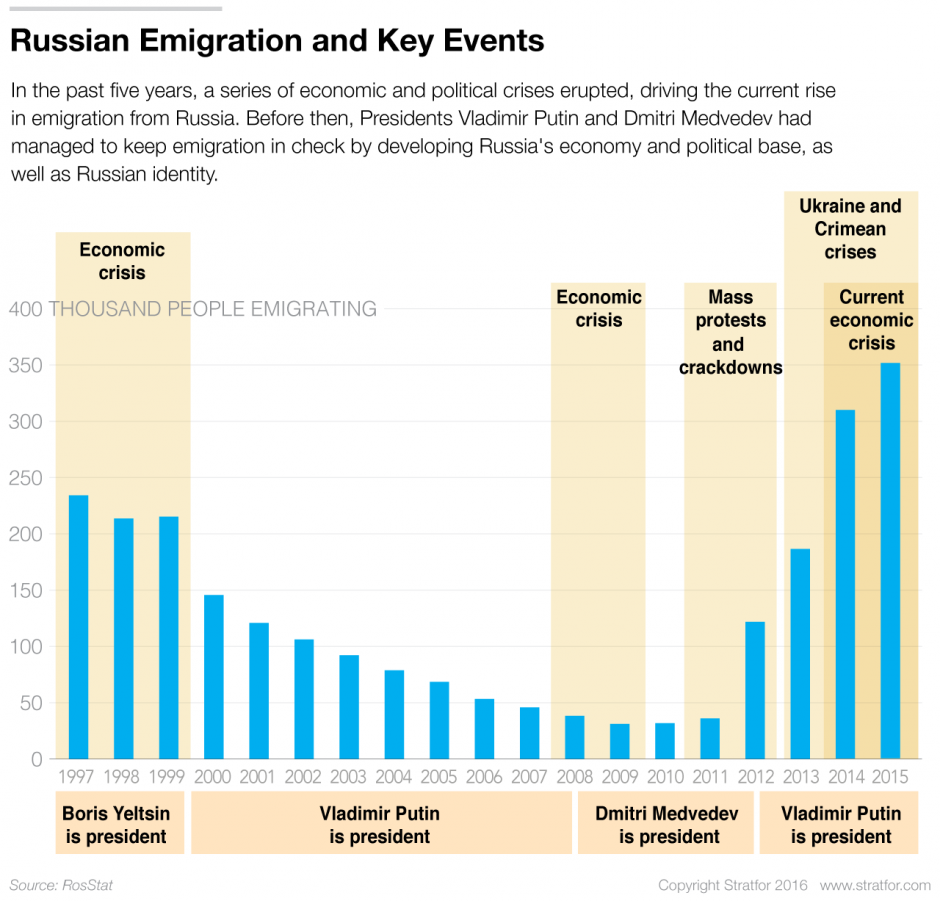
<p>For the leader of a declining country whose <a href="http://imrussia.org/en/analysis/economy/2585-sergey-aleksashenko-russian-economy-still-hasn%25E2%2580%2599t-reached-bottom">economy is shrinking</a> and whose population is <a href="https://assets.bwbx.io/images/users/iqjWHBFdfxIU/iGE69trq35ig/v0/-1x-1.png">leaving in record numbers</a>, Putin certainly punches (<a href="https://www.youtube.com/watch?v=TkpuRLJhll8">judo flips</a>?) above his weight in foreign affairs. He does this in large part through a combination of bluff, will, and outright chutzpah: a <a href="http://www.vox.com/2016/4/19/11459034/putin-myth">willingness to break the rules</a> that others still feel bound by.</p>

<p>At home, though, he seems to have met his match in Ramzan Kadyrov. While many places such as Ukraine have come under greater Russian influence in recent years, Kadyrov has managed to make the little region of Chechnya (only slightly larger than Connecticut) virtually independent from Moscow.</p>

<p>On July 2, Kadyrov formally announced &mdash; to nobody&rsquo;s surprise &mdash; that he would seek another term in office as Chechen president this September, signaling the end of a behind-the-scenes power struggle with Moscow<strong> </strong>that Kadyrov has now clearly won.</p>

<p>Kadyrov tells the world he is Putin&rsquo;s most loyal supporter, but in practice he has embarrassed his president, stolen millions from Moscow, and gotten away with it.</p>
<h2 class="wp-block-heading">Grozny vs. Moscow</h2>
<p>A small region along Russia&rsquo;s southern border, Chechnya has been a problem for the Russians ever since they conquered it in the 19th century. The Chechens took every opportunity to try to break free from Russian rule, and when the Soviet Union broke up at the end of 1991 they declared independence, something Moscow felt it could not allow.</p>

<p>A first vicious war in 1994-&rsquo;96 ended in a stalemate. A second, from 1999 to 2009, saw Chechnya brought back into the fold, but at terrible human cost &mdash; and by relying on defectors from the rebel side, led by Akhmad Kadyrov. After he was assassinated by a rebel bomb in 2004, his son, Ramzan, became first prime minister, then president of Chechnya.</p>

<p>This year has seen a sometimes bizarre <a href="http://www.ecfr.eu/article/commentary_kadyrov_the_kremlins_public_frenemy_number_one5081">battle of wills</a> between Kadyrov and the Kremlin, though. Kadyrov has been Putin&rsquo;s man in rebellious Chechnya since 2007. He has made Chechnya a haven of relative stability in the turbulent North Caucasus.</p>

<p>This is, however, a stability bought with Russian money and Chechen human rights. More than 80 percent of the Chechen Republic&rsquo;s budget is provided by subsidies from Moscow, which have turned downtown Chechnya into a shining, high-rise (and virtually empty) architectural testament to Kadyrov&rsquo;s vanity and enriched him and his cronies no end.</p>

<p>For a man whose <a href="http://adminchr.ru/Files/Structura/Dep/Gos/Korrupc/Sved_o_dohod/Dohodgossluj/income_info_2015.pdf">last income return</a> said he earned just 5 million rubles ($78,000), Kadyrov lives a high-rolling life with a stable of high-performance cars, including a $2 million <a href="http://www.autoevolution.com/news/lamborghini-reventon-for-the-chechen-republic-president-poverty-for-the-people-3340.html">Lamborghini Revent&oacute;n</a>, and his own private zoo.</p>

<p>At the same time, Chechnya is a police state controlled by the so-called &#8220;Kadyrovtsy,&#8221; security forces technically subordinated to Moscow but in practice loyal to Kadyrov. Human Rights Watch this year <a href="https://www.hrw.org/news/2016/01/28/human-rights-violations-russias-north-caucasus">warned</a> that the authorities were &#8220;viciously and comprehensively cracking down on their critics.&#8221;</p>

<p>That is hardly likely to bother Moscow. What was more alarming was Kadyrov&rsquo;s increasingly aggressive and erratic behavior. In February 2015, Boris Nemtsov, a Russian politician opposed to the government of Vladimir Putin, was murdered literally in sight of the Kremlin. It became increasingly clear that the Chechens who were behind the hit were either acting on Kadyrov&rsquo;s orders or at least subsequently <a href="https://www.theguardian.com/world/2015/mar/08/boris-nemtsov-five-suspects-appear-in-court-over-opposition-leaders-killing">protected by him</a>.</p>

<p>While Putin would hardly miss Nemtsov, this was deeply embarrassing to him. There is an unspoken rule that while small fry are fair game, opposition leaders are not to be touched without orders from the Kremlin. At a time when Russia was already being pilloried by the West, it made Putin look either clumsily murderous or unable to control his own trigger men.</p>

<p>The heads of the Russian security agencies, united in regarding Kadyrov as a threat, had hoped Kadyrov&rsquo;s actions would be enough to persuade Putin to abandon his prot&eacute;g&eacute;, but ultimately Putin <a href="http://readrussia.com/2015/04/28/whos-afraid-of-big-bad-kadyrov/">backed away</a>, lest he ignite another war in Chechnya.</p>

<p>Rather than being humbled, Kadyrov continued to up the ante. When a politician from Siberia called him <a href="http://www.rferl.org/content/russia-chechnya-kadyrov-senchenko-tirade-apology/27490227.html">&#8220;a disgrace to Russia&#8221;</a> on Facebook, a gang of &#8220;representatives of the Chechen people&#8221; visited him to hint that he could suffer the same fate as Nemtsov, unless he publicly apologized. Kadyrov then went on to post a video on <a href="https://www.instagram.com/kadyrov_95/">Instagram</a> &mdash; his <a href="http://mashable.com/2016/02/01/chechen-leader-puts-putin-critics-in-crosshairs/#K91aWvqCYgqX">favorite means of communication</a> &mdash; showing opposition politicians in a <a href="http://mashable.com/2016/02/01/chechen-leader-puts-putin-critics-in-crosshairs/#QxmmSWABDgqX">rifle&rsquo;s crosshairs</a>.</p>

<p>He even warned federal law enforcement that if they tried to come into Chechnya without his permission, his men would <a href="http://www.rferl.org/content/kadyrov-authorizes-shooting-of-security-oustide-chechnya/26974169.html">shoot to kill</a>.</p>

<p>Kadyrov&rsquo;s behavior is straight out of Putin&rsquo;s own playbook. Putin <a href="http://www.vox.com/2016/2/23/11092614/putin-army-threat">challenges and threatens NATO</a>, an alliance that outspends and outguns Russia, in the expectation that the West will back away from an open confrontation. He breaks the rules of international diplomacy, relying on his opponents not daring to call his bluff, in case matters spin out of control.</p>

<p>Likewise, Kadyrov was challenging Moscow openly, even though Moscow controls his purse strings and has 10 soldiers for every one of his. Instead, he was relying on Putin&rsquo;s unwillingness &ndash; when his forces were already mired in Ukraine and Syria &ndash; to risk a third war in Chechnya.</p>

<p>But being allowed to quite literally get away with murder is one thing. What Kadyrov really wanted was much bigger: a promise that he would also continue to get Moscow&rsquo;s money. After all, he needs that money not just for his own entertainment but also to buy off his cronies and trigger men.</p>

<p>So in February this year, he shocked everyone by <a href="http://ria.ru/politics/20160227/1381183464.html">offering to step down</a>, saying maybe it was time for Putin to pick a new leader, so he could devote himself to his family, to Islam, maybe even join the army.</p>

<p>It was a disingenuous and daring piece of blackmail. Over the years, every Chechen who posed a plausible challenge to his rule has been <a href="http://www.rferl.org/content/Kadyrov_Rival_Slain/1291594.html">murdered</a>. Chechnya&rsquo;s 30,000-strong security forces are known as the &#8220;Kadyrovtsy&#8221; precisely because they swear a personal oath to him.</p>

<p>By daring the regime to try to find a new Chechen leader, he was in effect forcing them to acknowledge that they could not. At the time, a Russian security official told me that &#8220;if anyone there even hints that he&rsquo;d be willing to take Ramzan&rsquo;s place, the Kadyrovtsy would throw his body in the Sunzha [River] next morning.&#8221;</p>
<h2 class="wp-block-heading">Advantage Kadyrov</h2>
<p>Putin had to either accept Kadyrov and all his ways &mdash; his murderous habits, his private army, his massive embezzlement &mdash; or come up with an alternative to him and be willing to do whatever it took to put him in power and keep him there. Putin took the easy way out and declined to call Kadyrov&rsquo;s bluff. Kadyrov graciously allowed himself to be convinced to stand again &mdash; for the good of the nation, of course &mdash; and because of his deep personal loyalty to the man he had just successfully blackmailed.</p>

<p>Kadyrov can assume he is all but untouchable now, and even while the federal budget is under serious pressure, and rebuilding Crimea has the highest priority, he will continue to get his money. While the headline figure for subsidies to Chechnya will appear lower, the government will find other ways to make up the shortfall.</p>

<p>Chechenneftekhimprom, the state-owned company controlling the republic&#8217;s petrochemical infrastructure, <a href="http://www.rferl.org/content/caucasus-report-chechnya-oil-refinery/27472661.html">is being transferred</a> to Kadyrov&rsquo;s control, for example, and a (redundant) new oil refinery may be built in Chechnya with federal money.</p>

<p>So his decision to stand for the Chechen presidency (which, one way or another, he will win, overwhelmingly) is really just the final expression of Kadyrov&rsquo;s triumph. Putin has been &#8220;out-Putined,&#8221; and while he has avoided an all-out clash with his Chechen warlord, he may well regret this in the future.</p>

<p>After all, not only is Kadyrov an erratic man who breaks the rules of Russian politics, he does so openly and triumphantly. He has shown that it is possible to challenge the Kremlin and win. At a time when budget pressures are increasing the tensions between have and have-not regions, and within the elite, what lessons do his triumphs offer to others looking to protect their positions and incomes?</p>

<p><em>Mark Galeotti is an incoming senior research fellow at the </em><a href="http://www.iir.cz/en/"><em>Institute of International Relations Prague</em></a><em>, a visiting fellow with the European Council on Foreign Relations, and the director of </em><a href="https://mayak-intelligence.com/"><em>Mayak Intelligence</em></a><em>. He blogs at </em><a href="https://inmoscowsshadows.wordpress.com/"><em>In Moscow&rsquo;s Shadows</em></a><em> and tweets </em><a href="https://twitter.com/MarkGaleotti"><em>@MarkGaleotti</em></a><em>.</em></p>
<hr class="wp-block-separator" /><h2 class="wp-block-heading">Ramzan Kadyrov: brutal tyrant, Instagram star</h2><!-- ######## BEGIN VOLUME VIDEO ######## -->
						]]>
									</content>
			
					</entry>
			<entry>
			
			<author>
				<name>Mark Galeotti</name>
			</author>
			
			<title type="html"><![CDATA[Why Vladimir Putin is cheering Brexit — and why he might soon regret it]]></title>
			<link rel="alternate" type="text/html" href="https://www.vox.com/2016/6/28/12031588/vladimir-putin-russia-europe-brexit" />
			<id>https://www.vox.com/2016/6/28/12031588/vladimir-putin-russia-europe-brexit</id>
			<updated>2016-06-28T08:20:06-04:00</updated>
			<published>2016-06-28T08:20:03-04:00</published>
			<category scheme="https://www.vox.com" term="Politics" /><category scheme="https://www.vox.com" term="Russia" /><category scheme="https://www.vox.com" term="World Politics" />
							<summary type="html"><![CDATA[There is no doubt that Moscow was hoping for Britain to leave the European Union. Its propaganda channels such as RT eagerly championed the &#8220;Leave&#8221; case, and following the narrow but clear vote in the UK to leave the EU, Russian newspapers and commentators were jubilant. It&#8217;s not so much Brexit itself that matters to [&#8230;]]]></summary>
			
							<content type="html">
											<![CDATA[

						
<figure>

<img alt="" data-caption="Russian President Vladimir Putin at the Saint Petersburg International Economic Forum in Saint Petersburg, Russia, on June 17, 2016. | Mikhail Svetlov/Getty Images" data-portal-copyright="Mikhail Svetlov/Getty Images" data-has-syndication-rights="1" src="https://platform.vox.com/wp-content/uploads/sites/2/chorus/uploads/chorus_asset/file/6715317/Putin%2520cheering.jpg?quality=90&#038;strip=all&#038;crop=0,16.524590163934,100,66.983606557377" />
	<figcaption>
	Russian President Vladimir Putin at the Saint Petersburg International Economic Forum in Saint Petersburg, Russia, on June 17, 2016. | Mikhail Svetlov/Getty Images	</figcaption>
</figure>
<p>There is no doubt that Moscow was hoping for Britain to leave the European Union. Its propaganda channels such as <a href="https://www.rt.com/uk/337650-project-fear-brexit-eu/">RT eagerly championed the &#8220;Leave&#8221; case</a>, and following the narrow but clear vote in the UK to leave the EU, Russian newspapers and commentators were <a href="http://www.rferl.org/content/russia-revels-in-brexit-vote/27817778.html">jubilant</a>.</p>

<p>It&rsquo;s not so much <a href="http://www.vox.com/world/2016/6/20/11977012/brexit-poll-vote-referendum-uk-news">Brexit</a> itself that matters to the Kremlin, but rather the hope that this will generate yet more division and distraction in the West. But Vladimir Putin ought not to regard this as an undiluted win, because there are some buried risks for Russia, too.</p>
<h2 class="wp-block-heading">A Europe focused on its own internal problems is one not focused on Russia’s transgressions</h2>
<p>The Kremlin&rsquo;s calculation is that the Brexit referendum will not only lead to protracted negotiations over Britain&rsquo;s withdrawal but will also encourage other fragmentary pressures.</p>

<p>Already, populists across Europe are <a href="http://www.telegraph.co.uk/news/2016/06/24/eu-faces-brexit-contagion-as-populist-parties-across-europe-call/">calling for their own referendums</a>, from France&#8217;s Front National and the Dutch Party for Freedom on the right to the Five Stars movement in Italy on the left.</p>

<p>There is also a new enthusiasm for <a href="http://www.snp.org/statement_on_euref_result_and_it_s_implications_for_scotland">secession in Scotland</a> by the Scottish Nationalists, who narrowly lost an independence referendum in 2014, and in Italy from the <a href="http://milano.corriere.it/notizie/cronaca/16_giugno_24/brexit-salvini-oggi-bel-giorno-ora-l-italia-non-sia-l-ultima-uscire-7d041142-39fa-11e6-b0cd-400401d1dfdf.shtml">Lega Nord</a>, which campaigns for the independence or autonomy of northern Italy from Rome.</p>

<p>Although there is no evidence of any meaningful Russian impact on Brexit, its propaganda machine and covert <a href="http://www.ecfr.eu/publications/summary/putins_hydra_inside_russias_intelligence_services">&#8220;active measures&#8221;</a> operations are much more active and effective in continental Europe &mdash; for example, the Front National received an $11.7 million <a href="http://www.nytimes.com/2014/12/02/world/europe/french-far-right-gets-helping-hand-with-russian-loan-.html?_r=0">loan</a> from a Russian bank in 2014.</p>

<p>Russian assets will continue to be thrown behind these various campaigns. But regardless of whether these parties and movements succeed, as long as Europe is occupied with its own internal problems, then as far as Putin is concerned, the Kremlin wins.</p>

<p>It&rsquo;s not that Putin expects or necessarily even wants the EU to fall apart. After all, he does not harbor any imperialistic designs on Europe. What he wants is a West too disunited and inward-looking to be able meaningfully to resist Russian adventurism in its self-claimed sphere of influence.</p>

<p>Already, figures such as Moscow Mayor <a href="http://www.bloomberg.com/news/articles/2016-06-24/putin-says-russia-didn-t-interfere-in-u-k-s-brexit-referendum">Sergei Sobyanin</a> have suggested that Britain&rsquo;s departure will lead to a <a href="http://www.ecfr.eu/article/commentary_what_would_brexit_mean_for_eu_sanctions_policy6046">relaxation of the sanctions regime</a> imposed on Russia since it annexed Crimea and invaded southeast Ukraine.</p>

<p>Putin is also hoping that turmoil in Europe will infect NATO, undermining its coherence. Governments needing to shore up their domestic support or facing separatist political campaigns at home may be less committed to maintaining or increasing their defense expenditure, for example, or to deploying troops to support their allies.</p>

<p>Finally, a post-Brexit Britain is likely to suffer prolonged economic troubles. Desperate to attract business, London may be tempted to ignore calls for greater transparency and accountability in its financial sector.</p>

<p>As a result, it would become a welcome hub for Russian dirty money and dubious business deals, allowing Moscow some opportunities to bypass the effects of Western sanctions.</p>
<h2 class="wp-block-heading">But there are lots of ways this could backfire on Russia</h2>
<p>For all this, there are some grounds to suggest the outlook will not be quite so purely beneficial for Russia.</p>

<p>The economic impact of Brexit is already mixed. Russia made a <a href="http://www.intellinews.com/russia-enjoys-2-4bn-windfall-from-brexit-in-the-last-24-hours-100593/?source=russia">$3.7 billion paper profit</a> on its gold reserves in the first 24 hours after the vote, as prices rose in response to global uncertainty.</p>

<p>But much of Russia&rsquo;s foreign exchange reserves were in sterling, which duly shrank in value by about $1.2 billion in the same period. Russian Energy Minister Alexander Novak is also <a href="http://www.bloomberg.com/news/articles/2016-06-24/russia-warns-oil-price-drop-may-get-serious-on-brexit-shock">worried</a> about the risks of a serious further slump in oil prices, on which the budget depends.</p>

<p>Konstantin Kosachev, chair of the Russian Senate&rsquo;s foreign affairs committee, has <a href="https://www.washingtonpost.com/news/worldviews/wp/2016/06/24/10-years-until-a-united-eurasia-how-moscow-reacted-to-brexit/?tid=a_inl">warned</a> that &#8220;if the EU gets weighed down in its own problems, and crosses the line into crisis, then it will affect our trade relations.&#8221;</p>

<p>While Britain <a href="http://www.vedomosti.ru/economics/articles/2016/06/25/646736-slabost-ekonomiki">accounts</a> for just 2.7 percent of Russia&rsquo;s exports and 1.9 percent of its imports, the EU as a whole is the country&rsquo;s main trading partner, accounting for about half of each. If Brexit has negative economic implications for the rest of the EU, then this will inevitably have knock-on effects on Russia, already stuck in a recession likely to last years.</p>

<p>The weaker the Russian economy, the harder it is to maintain the loyalty of the elites, to pacify the masses, and to keep spending on the modernized military on which Putin is <a href="http://www.vox.com/2016/2/23/11092614/putin-army-threat">relying for so much of his international clout</a> these days.</p>

<p>Furthermore, if Brexit seriously weakens the EU, it might actually make Russia&rsquo;s geopolitical position more challenging, not less.</p>

<p>In Moscow, it has become fashionable to sneer at the EU&rsquo;s sluggish and hesitant foreign policy initiatives, constrained as they are by both bureaucratic inertia and a culture of consensus and conciliation. As one Russian foreign ministry staffer put it to me, &#8220;Europe just wants to make things nice for everybody.&#8221;</p>

<p>However, there is also a growing recognition that the EU acts as a moderating influence on some of its more aggressive and ambitious members. A particular concern is Poland, a country with a growing economy, a desire to assert a strong regional role, longstanding antagonism toward Russia, and a strong, nationalist government.</p>

<p>Russia&rsquo;s business ombudsman Boris Titov <a href="http://www.intellinews.com/russian-schadenfreude-goes-into-overdrive-after-brexit-vote-100600/?inf_contact_key=aa09292605108e5580176f0d8897ea6626ef33afd9fa9c0cb1c6803f99b47eaa">called</a> Brexit &#8220;not the independence of Britain from Europe, but the independence of Europe from the US.&#8221; However, while he claimed there would be a &#8220;united Eurasia&#8221; within a decade, the more immediate likelihood is that Washington will double down, not withdraw from Russia&rsquo;s immediate strategic neighborhood.</p>

<p>If it feels that Europe is increasingly ineffective, a post-Obama White House may look more assiduously at cultivating direct regional relationships with Ukraine and in Central Asia. This would be a much more direct challenge to Moscow&#8217;s authority, forcing it to come to terms with its lack of positive support and real soft power in Eurasia.</p>

<p>Overall, then, Putin may still have reasons to regret what he wished for. His ideal is an EU that is distracted, divided, and weakened, but not mortally so. He may, however, find that he has traded a cozy and polite neighbor for an uncertain, volatile, and sometimes aggressive one.</p>

<p><em>Mark Galeotti is a senior research fellow at the Czech Institute of International Affairs, a visiting fellow with the European Council on Foreign Relations, and the director of </em><a href="https://mayak-intelligence.com/"><em>Mayak Intelligence</em></a><em>. He blogs at </em><a href="https://inmoscowsshadows.wordpress.com/"><em>In Moscow&rsquo;s Shadows</em></a><em> and tweets as </em><a href="https://twitter.com/MarkGaleotti"><em>@MarkGaleotti</em></a><em>. </em></p>
						]]>
									</content>
			
					</entry>
			<entry>
			
			<author>
				<name>Mark Galeotti</name>
			</author>
			
			<title type="html"><![CDATA[The West needs to stop panicking about Russia&#8217;s &#8220;hybrid&#8221; warfare]]></title>
			<link rel="alternate" type="text/html" href="https://www.vox.com/2016/5/4/11591172/russia-baltics-nato" />
			<id>https://www.vox.com/2016/5/4/11591172/russia-baltics-nato</id>
			<updated>2016-05-04T11:49:23-04:00</updated>
			<published>2016-05-04T13:10:02-04:00</published>
			<category scheme="https://www.vox.com" term="Politics" /><category scheme="https://www.vox.com" term="World Politics" />
							<summary type="html"><![CDATA[There is currently a great deal of alarmist concern, triggered by a recent RAND report, about Russia&#8217;s supposed ability to conquer the Baltic states &#8212; Estonia, Latvia, and Lithuania, three former Soviet republics that are now part of NATO &#8212; and thus drive a wedge into NATO without the West being able to do anything [&#8230;]]]></summary>
			
							<content type="html">
											<![CDATA[

						
<figure>

<img alt="" data-caption="Map of the Baltic states. | Shutterstock" data-portal-copyright="Shutterstock" data-has-syndication-rights="1" src="https://platform.vox.com/wp-content/uploads/sites/2/chorus/uploads/chorus_asset/file/15793103/shutterstock_252343516.0.0.1462381564.jpg?quality=90&#038;strip=all&#038;crop=0,0,100,100" />
	<figcaption>
	Map of the Baltic states. | Shutterstock	</figcaption>
</figure>
<p>There is currently a great deal of alarmist concern, triggered by a <a href="http://www.rand.org/pubs/research_reports/RR1253.html">recent RAND report</a>, about Russia&rsquo;s supposed ability to conquer the Baltic states &mdash; Estonia, Latvia, and Lithuania, three former Soviet republics that are now part of NATO &mdash; and thus drive a wedge into NATO without the West being able to do anything to stop it.</p>

<p>But before we start to panic, it&rsquo;s important to consider not just whether Moscow might ever actually want to do this, but also all the many ways in which the West could retaliate other than with military force. There are, after all, more ways to win wars than just with tanks and fighters.</p>

<p>The reality is that not only does Russia likely have zero ambitions to capture the Baltic states in the first place, but even if it did, the US and NATO could do a whole lot to punish it for doing so.</p>

<p>That&rsquo;s because for all the talk of Russia&rsquo;s brilliant use of <a href="http://www.nato.int/docu/Review/2015/Also-in-2015/hybrid-modern-future-warfare-russia-ukraine/EN/index.htm">&#8220;asymmetric&#8221; or &#8220;hybrid&#8221; warfare</a> &mdash; that is, fighting not so much on the regular battlefield but by using all kinds of sneaky and unconventional approaches, from information and cyber warfare to political manipulation &mdash; the truth is that if anyone has an &#8220;asymmetric&#8221; or &#8220;hybrid&#8221; edge, it is actually the West.</p>
<h2 class="wp-block-heading">The RAND report: Russia takes the Baltic states while NATO is caught napping</h2>
<p>The present debate was sparked by <a href="http://www.rand.org/pubs/research_reports/RR1253.html">a RAND report</a>, released earlier this year, that was based on a series of war games whose goal was to evaluate &#8220;the shape and probable outcome of a near-term Russian invasion of the Baltic states.&#8221; The report concluded that &#8220;as presently postured, NATO cannot successfully defend the territory of its most exposed members,&#8221; essentially the Baltic states, which, it claimed, Russia could conquer in at most 60 hours.</p>

<p>There are serious questions over the RAND study&rsquo;s numbers and assumptions, not least that the Russians would get pretty much everything right and NATO would be caught by surprise. Just because the Russians could take Crimea (against no opposition) and bomb rebels in Syria (who have no serious air defenses), that doesn&rsquo;t make them 10 feet tall &mdash; and any invasion would be impossible to hide from the West, even under the guise of a &#8220;military exercise.&#8221; That might have worked two and a half years ago, but since Crimea we are on the lookout for such scams.</p>

<p>The study also fails to consider the most crucial question: intent. In other words, would Russia even want to take the Baltic states in the first place?</p>
<h2 class="wp-block-heading">The Baltic states would just be a major headache for Putin</h2>
<p>The answer, in short, is probably no. Vladimir Putin is, of course, currently engaged in an aggressive campaign to raise Russia&rsquo;s international standing and undermine the West&rsquo;s will to punish him for his actions in Crimea and Ukraine. However, he is neither a lunatic nor some kind of imperialist desperate to rebuild the old Soviet Union.</p>

<p>Conquering the Baltic states may be possible, but it would win him the overt enmity of the West, the worry of his other neighbors, and three territories full of disgruntled locals with a <a href="https://en.wikipedia.org/wiki/Forest_Brothers">history of guerrilla warfare</a> against Muscovite conquerors.</p>

<p>And for what? There are no resources of the sort Russia could readily use (their real assets are their people, who would hardly be enthusiastic about their new overlords). Rather than dividing NATO, it would probably unite and galvanize it and make Moscow look dangerously erratic. Even China would be alarmed to find its neighbor and quasi-ally suddenly flirting with global war.</p>
<h2 class="wp-block-heading">The West has many ways to make Russia pay if it did take the Baltic states</h2>
<p>Even if Russia did take the Baltic states, though, the West would have plenty of ways to punish Russia short of launching a full military counterattack.</p>

<p>The first is with financial means. If Russia relies on tanks for its attack, the West could turn to banks for its response.</p>

<p>An invasion of the Baltic states would be grounds for invoking NATO&rsquo;s Article V, which treats an attack on one member as an attack on all members, thus making all NATO members at war with Russia. Member states could not only seize any Russian state assets within their jurisdictions but could &mdash; and should &mdash; extend this to Russian companies and the personal property of those Russians deemed to be significant players within the state.</p>

<p>Oligarchs and officials alike have gleefully taken advantage of Western financial openness and rule of law to <a href="http://www.themoscowtimes.com/opinion/opinion/article/russias-offshore-bandits-hypocrisy-laid-bare-by-panama-revelations/564937.html">stash their usually ill-gotten gains</a> away from the Kremlin&rsquo;s hands. That could be turned into a vulnerability, a chance to encourage dissent and division within an elite more interested in its own kleptocratic opportunism than in Putin&rsquo;s historical vision.</p>

<p>Not only could the West close its markets to Russia &mdash; and likewise ban all exports there &mdash; but it could also use its political and economic muscle to try to isolate Russia from its other trading partners. Russia <a href="http://www.rferl.org/content/russia-food-ban-explainer/26542681.html">imports almost 40 percent of its food</a>, and while countries such as Iran are unlikely to be willing to curtail exports to Russia, others without land borders with the country could be prevented from supplying the country&rsquo;s needs.</p>

<p>The West could also in effect force Russia out of SWIFT, the Society of Worldwide Interbank Financial Telecommunication. This would severely limit Russian banks&rsquo; capacity to move money and engage in economic activity, and although it&rsquo;s not the <a href="http://www.ft.com/intl/cms/s/0/7020c50c-a30a-11e4-9c06-00144feab7de.html">&#8220;nuclear option&#8221;</a> some make it out to be &mdash; in part because there are some ways around it &mdash; it would still be a severe blow to the Russian economy.</p>

<p>Another way the West can hurt Russia is through cyberattacks. While Russian cyberattacks have been most evident, this is more because Moscow has been more willing to encourage its hackers to cause mischief in the West than because it has that much greater capacity. The <a href="http://www.usatoday.com/story/news/nation/2013/04/21/pentagon-expanding-offensive-cyber-capabilities/2085135/">West could strike back</a> in kind once it was willing to take off the virtual gloves.</p>

<p>Putin may be willing to see ordinary Russians make sacrifices in the name of geopolitics, but with the ruble already having devalued by some 50 percent, and <a href="http://www.ibtimes.com/russians-spend-over-half-income-food-poverty-rises-2355941">more than half of household budgets in Russia currently being spent on food</a>, how long would they be willing and able to put up with that?</p>

<p>The old stereotypes of the fatalistic Russian peasant willing to endure any hardship for the motherland are long since out of date. Putin&rsquo;s popularity at home depends on giving the appearance of easy wins, whether in Crimea or Syria.</p>

<p>What happens to that narrative when, for example, cyber attacks crash the cellphone networks on which Russians have come to rely? How does the country function when the software behind the railways and airports becomes compromised? How do Russians buy, sell, and work when banking systems are hit and ATMs closed down?</p>

<p>There are also &#8220;non-kinetic&#8221; military options that play to Western strengths and would have a disproportionate impact on Russia. <a href="http://www.defensenews.com/story/defense/policy-budget/leaders/interviews/2016/02/13/nato-deputy-secgen-russias-anti-accessarea-denial-build-up-biggest-worry/80343130/">NATO is worried</a> about the threat of &#8220;A2/AD&#8221; &mdash; anti-access/area denial &mdash; as Russian missiles and submarines prevent NATO planes from flying in Central Europe and NATO ships from operating in the Baltic Sea.</p>

<p>But, conversely, NATO can close the Dardanelles to any Russian military or civilian shipping, locking it out of the Mediterranean, just as it can also deny Russia the Baltic, and maybe also the Barents and Okhotsk seas to the north and east. Beyond that, the West controls the global sea lanes and could impound Moscow&rsquo;s ships and cargoes, or prevent third-country trade with Russia.</p>

<p>Of course, there are limits to such indirect ways of waging war. China can hardly be leaned on &mdash; although it is unlikely to be comfortable with a Kremlin that is willing to start such a pyrrhic and dangerous war &mdash; and none of this will be easy or cheap.</p>

<p>But this is war, and if the West wants to save the lives of its soldiers, it has to spend money instead.</p>
<h2 class="wp-block-heading">To really deter Russia, the West needs to stop playing nice</h2>
<p>The West can do it, though &mdash; and Moscow knows this. While we have been <a href="http://nationalinterest.org/feature/why-america-cant-stop-russias-hybrid-warfare-13166">worrying about Moscow&rsquo;s ability</a> to wage so-called &#8220;hybrid warfare,&#8221; the truth is that this kind of warfare is actually <a href="http://strategicstudiesinstitute.army.mil/pubs/parameters/issues/Winter_2015-16/9_Monaghan.pdf">a Western strength</a>. Moscow is just hoping we don&rsquo;t notice.</p>

<p>Russia has in the past often managed to punch above its weight because it has been able to assume that West will be moderate and well-mannered. It has <a href="http://www.themoscowtimes.com/opinion/article/estonian-kidnap-is-russia-s-latest-provocation/506874.html">kidnapped an Estonian security officer</a> across the border, shielded the people who <a href="http://foreignpolicy.com/2015/10/13/russias-reality-trolls-and-the-mh17-war-of-misinformation-buk-missile/">shot down a civilian airliner</a>, <a href="http://www.vox.com/2016/4/14/11430096/russia-plane-destroyer-putin">buzzed US warships</a>, and <a href="http://www.stopfake.org/en/how-russia-s-worst-propaganda-myths-about-ukraine-seep-into-media-language/">invaded a neighbor</a>.</p>

<p>The day the West decides to be as ruthless as Russia will be a very black one for the Kremlin. However, it is vital not only that the West grow to realize this &mdash; because if we feel powerless, we become vulnerable to Putin&rsquo;s mind games and power plays &mdash; but also that we practice and posture such that the Kremlin appreciates that this is a real threat.</p>

<p>Just as Moscow puts on an exercise simulating an attack on a Western country or talks about nuclear attacks when it wants to push our buttons, we can do the same. Wargaming closing the Mediterranean or openly discussing how economic warfare could cripple an unnamed but obvious enemy will spark furious denunciations from Moscow. But the very scale of the response will indicate just how seriously the Kremlin takes such a risk.</p>

<p>The fact is that Russian security discussions are dominated by an awareness of the country&rsquo;s vulnerabilities to a stronger, richer, larger, more advanced West. Up to now, though, we have not let ourselves acknowledge our strengths.</p>

<p>The greatest risk for the West is, after all, not its weakness of means but a perception of its weakness of will, both at home and in Moscow. After all, deterrence only works when it is displayed, when the other side knows the misery and ruin it risks.</p>

<p><em>Mark Galeotti is a professor of global affairs at New York University, a visiting fellow with the European Council on Foreign Relations, and the director of </em><a href="https://mayak-intelligence.com/"><em>Mayak Intelligence</em></a><em>. He blogs at </em><a href="https://inmoscowsshadows.wordpress.com/"><em>In Moscow&rsquo;s Shadows</em></a><em> and is on Twitter as </em><a href="https://twitter.com/MarkGaleotti"><em>@MarkGaleotti</em></a><em>. </em></p>
						]]>
									</content>
			
					</entry>
			<entry>
			
			<author>
				<name>Mark Galeotti</name>
			</author>
			
			<title type="html"><![CDATA[The Putin myth: the Russian leader isn&#8217;t nearly as powerful as you think]]></title>
			<link rel="alternate" type="text/html" href="https://www.vox.com/2016/4/19/11459034/putin-myth" />
			<id>https://www.vox.com/2016/4/19/11459034/putin-myth</id>
			<updated>2016-04-19T09:57:36-04:00</updated>
			<published>2016-04-19T12:40:02-04:00</published>
			<category scheme="https://www.vox.com" term="Politics" /><category scheme="https://www.vox.com" term="World Politics" />
							<summary type="html"><![CDATA[Last week, Russian President Vladimir Putin went through one of his ritual Direct Line call-in shows: a three-hour, 40-minute marathon covering everything from the state of the roads in Omsk (they&#8217;re terrible) to whether he swears (yes, but only to himself). It was a pretty lackluster spectacle this time; Putin himself seeming bored. But the [&#8230;]]]></summary>
			
							<content type="html">
											<![CDATA[

						
<figure>

<img alt="" data-caption="A shop assistant cleans a TV screen during Russian President Vladimir Putin&#039;s nationally televised Q&amp;A session in a shop on April 17, 2014, in Moscow, Russia. | Dmitri Dukhanin/Kommersant via Getty Images" data-portal-copyright="Dmitri Dukhanin/Kommersant via Getty Images" data-has-syndication-rights="1" src="https://platform.vox.com/wp-content/uploads/sites/2/chorus/uploads/chorus_asset/file/15770779/Putin_face.0.0.1461083722.jpg?quality=90&#038;strip=all&#038;crop=0,0,100,100" />
	<figcaption>
	A shop assistant cleans a TV screen during Russian President Vladimir Putin's nationally televised Q&amp;A session in a shop on April 17, 2014, in Moscow, Russia. | Dmitri Dukhanin/Kommersant via Getty Images	</figcaption>
</figure>
<p>Last week, Russian President Vladimir Putin went through one of his ritual <em>Direct Line</em> call-in shows: a <a href="http://en.kremlin.ru/events/president/news/51716">three-hour, 40-minute marathon</a> covering everything from the state of the roads in Omsk (they&rsquo;re terrible) to whether he swears (yes, but only to himself). It was a pretty lackluster spectacle this time; Putin himself seeming bored.</p>

<p>But the event, however <a href="http://www.rbc.ru/politics/13/04/2016/570e58fa9a7947aa08d27143">staged</a> and predictable, performed a function common to his public appearances: furthering the myth &mdash; dominant in both in his own country and the West &mdash; that Putin is Russia, the unquestioned and solitary master of his realm.</p>

<p>But it&rsquo;s not true. And when we buy into this idea, we give him more power than he deserves and make it harder to predict or even influence his next move.</p>

<p>Putin is indeed the &#8220;decider&#8221; who has the final word on every major policy issue. He can make or break any minister. He can start a war or end one. Yet for all that, if we think that he can and does control everything Russia does at home and abroad, we dramatically misunderstand how the country really works.</p>

<p>First of all, Putin reigns only so long as he can pacify, balance, and over-awe Russia&rsquo;s sharp-toothed and unforgiving elite. But he can also only rule through the elite. This came up strongly during <em>Direct Line</em>. When asked about officials shaking down entrepreneurs, he condemned it, but admitted that &#8220;such is our mentality, especially when it comes to bureaucrats.&#8221;</p>

<p>That extends to Putin&rsquo;s rule over parts of Russia itself. When asked about the <a href="http://www.rferl.org/content/russia-chechnya-kadyrov-private-army-threat-opposition-report/27567375.html">violent threats</a> Chechen leader Ramzan Kadyrov made against opposition figures, he shrugged it off, saying that &#8220;people in the Caucasus are hotheads. So it is not easy for these people to learn to serve as high-ranking government officials.&#8221;</p>

<p>Time and again during the performance, Putin was in effect confessing to his own political impotence.</p>

<p>He can intervene in specific cases, sure. The very first question was about the poor state of roads in Omsk, and before the show was over local officials had <a href="http://www.themoscowtimes.com/news/article/five-rapid-results-from-putins-call-in-marathon/565961.html">pledged to repair 21 of them</a> by May 1. But Putin cannot fix his country himself, street by street, and the fact that he resorts to these sorts of case-by-case interventions shows his limits.</p>

<p>In the past, he has consolidated his legitimacy as the &#8220;good czar&#8221; through such individual cases. But after 16 years, and as life is getting harder for Russians, this is becoming an increasingly threadbare act and instead underscores the extent to which he is either not in command &mdash; or doesn&rsquo;t really care unless embarrassed on national TV.</p>

<p>This dynamic even applies to foreign policy, traditionally the preserve of the head of state. In Ukraine&rsquo;s Donbas region, for example, a recent spate of ceasefire violations is likely to have been initiated by local rebel militias rather than Moscow. Putin&#8217;s control is finite.</p>

<p>To be sure, Putin is a very powerful leader. It is not just that he is president in a hyper-presidential system, with a wide range of powers, a toothless and obedient legislature, no meaningful opposition, and <a href="http://www.economist.com/blogs/graphicdetail/2016/02/daily-chart-4">sky-high personal approval ratings</a>. Arguably he has hollowed out all Russia&rsquo;s institutions. The fact that in 2008 he could hand over the presidency to his prime minister, Dmitri Medvedev, yet remain the power behind the scenes and take back the job in 2012 demonstrates the level of his personal power.</p>

<p>After all, Putin is not powerful because he is president; he is president because he is powerful.</p>

<p>But as he demonstrated in his call-in show, Putin doesn&rsquo;t have all the answers &mdash; and the more he emphasizes his own role as the dominant leader, the more short-term and opportunistic his initiatives become.</p>

<p>This gets to something important: The Kremlin&rsquo;s policymaking can be more shortsighted and arbitrary than the myth of Putin would have us believe. Russia is not always a rigidly centralized dictatorship but is at times a marketplace of ideas in which Russia&rsquo;s oligarchs, officials, commentators, and interest groups are engaged in constant competition to pitch their ideas to Putin through the press, think tanks, reports, and personal contacts.</p>

<p>In theory this could be a form of pluralism, but in practice it is a system in which the policies that catch Putin&rsquo;s eye and imagination have the best chance of success, regardless of their true merits. Given that the real discussions over policy tend to take place behind closed doors and within a very small circle of Putin&rsquo;s closest cronies, it also means they rarely get careful and professional examination.</p>

<p>This month, for example, Putin suddenly announced the <a href="https://inmoscowsshadows.wordpress.com/2016/04/05/putins-new-national-guard-what-does-it-say-when-you-need-your-own-personal-army/">creation of a new security force, the National Guard</a>, out of security units currently controlled by the interior ministry. He seems to have done so without consulting the minister or his experts, so they are now scratching their heads over practical implications that clearly had not been thought through. The police&rsquo;s SWAT teams now work for the National Guard; if an officer is in danger, will they have to ask the Guard&rsquo;s permission to get armed response units there, or even pay them for their services?</p>

<p>The more we buy into the notion of Putin the <a href="http://www.ft.com/intl/cms/s/0/babb264e-9f75-11e5-beba-5e33e2b79e46.html">&#8220;bold strategist,&#8221;</a> who is <a href="http://www.foxnews.com/opinion/2014/02/24/putin-plays-chess-while-obama-plays-checkers.html">&#8220;acting like a grandmaster of chess while Obama stumbles at checkers,&#8221;</a> the more we empower him and disempower ourselves.</p>

<p>We need to be honest and realistic. Putin has often played a weak hand very well. But that does not always mean he gets it right. His intervention into Ukraine has become a messy, expensive stalemate; he is lucky his Syrian adventure has not blown up in his face. But in foreign affairs in particular, image and reputation matter; we hand Putin a considerable advantage by accepting his own mythmaking.</p>

<p>We also miss out on the clues pointing toward future Russian policy and the opportunities to influence it.</p>

<p>We have no way of penetrating the small circle around Putin where decisions are ultimately made. However, by better understanding the haphazard means by which elites signal their desired policies to Putin, we can watch those more public channels and, perhaps, get advance warning of what is being discussed there.</p>

<p>A <a href="http://www.novayagazeta.ru/politics/67389.html">plan</a> drawn up by people working for Kremlin-connected businessman Konstantin Malofeev in early 2014, for example, was essentially the blueprint for what became the war in Ukraine. Moscow&#8217;s <a href="http://www.voanews.com/content/russia-withdrawal-syria-put-assad-on-outs/3239140.html">rebuke of Bashar al-Assad</a> in February for speaking of fighting to a full military victory in Syria was, in hindsight, a harbinger of Russia&rsquo;s partial drawdown of Russian forces the next month.</p>

<p>Trying to make sense of all the little clues, of all the overt and covert attempts to lobby the Kremlin, is hard work. No wonder we tend instead to fixate on Putin, and the degree to which he presents himself as the sole master of Russian policy. But this leaves us prone to being wrong-footed every time.</p>

<p>Back in Soviet times, the West had armies of scholars and analysts practicing <a href="http://www.ft.com/intl/cms/s/0/8f7e778a-8c51-11d9-a895-00000e2511c8.html">&#8220;Kremlinology,&#8221;</a> the arcane arts of trying to predict shifts in Soviet policy and politics through clues from the <a href="http://www.nytimes.com/1988/11/08/world/moscow-journal-who-s-no-2-calibrating-the-red-square-lineup.html">order in which officials were seated at parades</a> to reading between the lines of editorials in Pravda, the Communist Party newspaper. These days, the ranks of such skilled practitioners of such arts have been <a href="http://www.nytimes.com/2014/03/07/world/europe/american-experts-on-russia.html?_r=0">thinned</a>, with no new generation to replace them. So instead we watch and marvel at the latest <a href="http://www.vox.com/2015/6/17/8796659/vladimir-putin-shirtless-video">macho Putin photo op</a>, and miss out on the chance to understand the politics behind the poses.</p>

<p><em>Mark Galeotti is a professor of global affairs at New York University and a visiting fellow with the European Council on Foreign Relations. He blogs at </em><a href="https://inmoscowsshadows.wordpress.com/"><em>In Moscow&rsquo;s Shadows</em></a><em> and is on Twitter as </em><a href="https://twitter.com/MarkGaleotti"><em>@MarkGaleotti</em></a><em>. </em></p>
<hr class="wp-block-separator" /><h2 class="wp-block-heading">How bizarre photos help Putin stay in power</h2><div class="video-container"><iframe src="https://volume.vox-cdn.com/embed/0ee0b877c?player_type=youtube&#038;loop=1&#038;placement=article&#038;tracking=article:rss" allowfullscreen frameborder="0" allow=""></iframe></div>
						]]>
									</content>
			
					</entry>
			<entry>
			
			<author>
				<name>Mark Galeotti</name>
			</author>
			
			<title type="html"><![CDATA[The Panama Papers show how corruption really works in Russia]]></title>
			<link rel="alternate" type="text/html" href="https://www.vox.com/2016/4/4/11360212/panama-papers-russia-putin" />
			<id>https://www.vox.com/2016/4/4/11360212/panama-papers-russia-putin</id>
			<updated>2019-03-06T02:20:29-05:00</updated>
			<published>2016-04-04T09:40:02-04:00</published>
			<category scheme="https://www.vox.com" term="Business &amp; Finance" /><category scheme="https://www.vox.com" term="Money" /><category scheme="https://www.vox.com" term="Politics" /><category scheme="https://www.vox.com" term="World Politics" />
							<summary type="html"><![CDATA[Two big stories about Russian corruption have broken in the past week. A leak of papers from a Panamanian law firm appears to show perhaps $2 billion, presumably owned by President Vladimir Putin, stashed away in offshore companies under the name of a close friend and the godfather of his oldest daughter, the cellist Sergei [&#8230;]]]></summary>
			
							<content type="html">
											<![CDATA[

						<p>Two big stories about Russian corruption have broken in the past week. A leak of papers from a Panamanian law firm appears to show <a href="http://www.theguardian.com/news/2016/apr/03/panama-papers-money-hidden-offshore">perhaps $2 billion</a>, presumably owned by President Vladimir Putin, stashed away in offshore companies under the name of a close friend and the godfather of his oldest daughter, the cellist Sergei Roldugin. Meanwhile, the brave <a href="https://www.occrp.org/index.php">Organized Crime and Corruption Reporting Project</a> hit on <a href="https://www.occrp.org/en/investigations/5106-russia-businessman-handles-insider-homes">a story</a> about the women in Putin&#8217;s life being given posh apartments.</p>

<p>Together, these stories tell us something important about how corruption works in Russia. Whereas in many countries corruption is the means by which elites turn their power into money, in Russia it is the other way around &mdash; corruption is a way to get and keep the political power that is so much more important than mere wealth.</p>

<p>Even before these stories broke, the Kremlin spin machine was briefing against what it was calling an <a href="http://www.themoscowtimes.com/news/article/kremlin-says-journalists-preparing-hatchet-job-on-putin/563914.html">&#8220;information attack&#8221;</a> in a global media war. But corruption in Russia is, sadly, hardly news, which goes to show why these stories speak to something much more significant than, say, tax avoidance.</p>

<p>It is too easy simply to see Russia as a kleptocracy or, more misleading yet, a <a href="http://www.themoscowtimes.com/opinion/article/the-rise-of-the-russian-mafia-myth/514978.html">&#8220;mafia state.&#8221;</a> Yes, corruption is endemic to the system, not a byproduct but a central feature of Putin&#8217;s methodology of power. But this doesn&#8217;t fully explain why there is such corruption in Russia today.</p>

<p>Assuming those $2 billion are Putin&#8217;s, how did he get them? Did people hand him suitcases of cash? Highly unlikely. Rather, he takes or is given stakes in assets, rights to shares in profits. This is not so much for the money itself &mdash; anything he could want, he can get the state or the oligarchs to buy, from a <a href="http://www.reuters.com/investigates/special-report/comrade-capitalism-putins-palace/">palace on the Black Sea</a> to a <a href="http://www.independent.co.uk/news/people/vladimir-putin-corruption-five-things-we-learned-about-the-russian-presidents-secret-wealth-a6834171.html">$35 million yacht &mdash; but rather for the political power they give him</a>.</p>

<p>The real currency in Russia is not money but power &mdash; and the latter can buy the former, but not necessarily the other way around. You can be rich today, but the state can impoverish you tomorrow. Conversely, if you have power, you can always get money, as we are likely seeing with the Panama Papers, or else simply don&#8217;t even need it.</p>

<p>While the Panama Papers involve far more cash, and are likely to draw far more attention, it&#8217;s the other story that is the more meaningful, for demonstrating that Russia&#8217;s real currency isn&#8217;t money &mdash; it&#8217;s power and connections.</p>

<p>It alleges that Grigory Baevsky, a little-known Russian businessman who formerly ran a state property agency and now works for <a href="http://www.forbes.com/profile/arkady-rotenberg/">Arkady Rotenberg</a> &mdash; one of Putin&#8217;s oldest friends and, coincidentally, one of the richest billionaires in Russia &mdash; has been involved in transferring apartments in Moscow for a string of women connected with Putin. They include his youngest daughter, <a href="http://www.theguardian.com/world/2015/nov/11/russia-putin-daughter-katerina-tikhonova">Katerina Tikhonova</a>; the sister and, it is thought, grandmother of his current alleged girlfriend, rhythmic gymnast <a href="http://www.theguardian.com/world/2014/sep/16/putin-girlfriend-alina-kabayeva-media-group">Alina Kabaeva</a>; and Alisa Kharcheva, a woman whose main claim to fame is her near-naked appearance in an infamous <a href="http://www.vtyc.ru/teoriya-zagovora/kalendar-s-pozdravleniyami-putinu-ot-studentok-mgu/">&#8220;We Love You&#8221;</a> pinup calendar dedicated to Putin.</p>

<p>In today&#8217;s Russia, official corruption is so normal that it scarcely even merits much mention. Ministers and officials routinely turn out to have massive mansions, such as Defense Minister Sergei Shoigu&#8217;s $18 million <a href="http://www.rferl.org/content/russian-dm-shoigu-accused-owning-mansion/27330203.html">pagoda-themed estate</a>.</p>

<p>In part, the Kremlin&#8217;s prickly response may be precisely because Putin is notoriously secretive about his private life. But given that the preemptive spin from Kremlin spokesperson Dmitry Peskov (who himself <a href="http://www.rferl.org/content/russia-peskov-house-navalny/27254407.html">apparently lives in a $7 million house</a> on an income of less than $140,000) made it even more of a high-profile story, it is likely more than that.</p>

<p>The answer may be that the case illustrates the way corruption really works in Russia. For sure, the driver pulled over by a traffic cop, the contractor looking to speed up approval of building plans, or the store owner being shaken down by a fire inspector all have to pay cash on the nail. But this kind of corruption is pretty small-scale and, something <a href="http://www.nytimes.com/aponline/2016/04/01/world/europe/ap-eu-russia-cost-of-corruption.html">most Russians never have to face</a>.</p>

<p>The real corruption that is sucking the blood out of today&#8217;s Russia is the industrial-scale profiteering taking place at the top of the system. According to <a href="http://www.indem.ru/en/index.shtml">INDEM</a>, one of the last independent liberal think tanks left in Russia, corruption costs the country <a href="https://freedomhouse.org/blog/russia-2012-increased-repression-rampant-corruption-assisting-rogue-regimes">between a quarter and a third of its total GDP</a>.</p>

<p>Put it another way: Corruption by the Russian elite could be costing the country <a href="http://money.cnn.com/2015/04/21/news/economy/russia-ukraine-sanctions-price/">up to six times as much</a> as all the sanctions imposed by the West since Russia invaded Crimea.</p>

<p>The way this corruption works is through access and favors rather than actual transfers of money. When Putin wants to reward his friends, he allocates them contracts and monopolies they can milk for all their worth.</p>

<p>But in return, they know that likewise they are rich only so long as they have political power and Putin&#8217;s goodwill. Part of the price is to understand that at times they will be called on for favors, and they better deliver.</p>

<p>There is, after all, no evidence that Putin actually paid for any of the properties Baevsky doled out. Rather, it is more likely that Putin made his wishes known, maybe through his friend Rotenberg &mdash; who incidentally <a href="http://www.themoscowtimes.com/business/article/putin-ally-arkady-rotenberg-received-most-state-orders-in-2015/560662.html">received more state contracts than anyone else</a> last year &mdash; and everything was arranged to keep the boss happy. These valuable assets and sums of money are often something that is much more valuable in Russia than mere cash: They are tools used to express, deliver, or exert political power.</p>

<p>Money can be moved, hidden, willed to your kids. Power, though, is something active, ephemeral, needing constantly to be refreshed and reasserted. It is something you either have or you don&#8217;t. Back in Soviet times, one reason so many leaders died in office was because they knew the day they retired everything they had &mdash; the cars, the mansions, the summer dachas &mdash; could be taken away from them. The tragedy of modern Russia is that the same is true.</p>

<p>Putin and other senior Russian figures are like sharks: They have to keep swimming or they drown. To an extent this worked in the 2000s and early 2010s, when the economy was growing and there was always more sea in which to swim. Now, though, as the waters drain, the competitions and collisions are getting more common.</p>

<p>But these conflicts are not always or only about cash and contracts. Sometimes they are about other manifestations of power. Chechen strongman Ramzan Kadyrov already has a <a href="https://www.flickr.com/photos/33994310@N00/4032551605">private zoo with a tiger</a> and a <a href="http://jalopnik.com/5704390/the-chechen-presidents-guns-supercars-and-3000000-motorcade">$1.25 million Lamborghini supercar</a>, for example, so for him the Kremlin offers more <a href="https://en.wikipedia.org/wiki/Ramzan_Kadyrov#Honours_and_awards">medals and honors</a> than he could fit on his chest.</p>

<p>Or for Investigations Committee Chief Alexander Bastrykin, one of the Kremlin&#8217;s main <a href="https://inmoscowsshadows.wordpress.com/2012/04/22/waiting-for-the-bastryshchina/">political enforcers</a>, the really valuable thing is not money (he seems to be of relatively moderate means) but rather success in his regular political struggles with his <a href="http://www.theatlantic.com/international/archive/2013/08/the-rise-and-probable-fall-of-putins-enforcer/278577/">rivals</a>, especially Prosecutor General Yuri Chaika.</p>

<p>Either way, the property story actually illustrates how corruption really works in Russia, and the Panama Papers tell us how power really works in Russia. It&#8217;s not about following the money, but following the power.</p>

<p><em>Mark Galeotti is a professor of global affairs at New York University and a visiting fellow with the European Council on Foreign Relations. He blogs at </em><a href="https://inmoscowsshadows.wordpress.com/"><em>In Moscow&#8217;s Shadows</em></a><em> and is on Twitter as </em><a href="https://twitter.com/MarkGaleotti?ref_src=twsrc%5Egoogle%7Ctwcamp%5Eserp%7Ctwgr%5Eauthor"><em>@MarkGaleotti</em></a><em>.</em></p>
<hr class="wp-block-separator" /><h2 class="wp-block-heading">Here&#039;s how these weird photos help Putin maintain power</h2><div class="video-container"><iframe src="https://volume.vox-cdn.com/embed/0ee0b877c?player_type=youtube&#038;loop=1&#038;placement=article&#038;tracking=article:rss" allowfullscreen frameborder="0" allow=""></iframe></div>
						]]>
									</content>
			
					</entry>
			<entry>
			
			<author>
				<name>Mark Galeotti</name>
			</author>
			
			<title type="html"><![CDATA[Russia&#8217;s Communist Party is making a comeback — and it&#8217;s bad news for Putin]]></title>
			<link rel="alternate" type="text/html" href="https://www.vox.com/2016/3/8/11179332/russia-communist-party" />
			<id>https://www.vox.com/2016/3/8/11179332/russia-communist-party</id>
			<updated>2019-03-05T23:51:20-05:00</updated>
			<published>2016-03-08T12:30:03-05:00</published>
			<category scheme="https://www.vox.com" term="archives" />
							<summary type="html"><![CDATA[In late January, speaking in the Russian city of Stavropol, Vladimir Putin denounced Soviet Communist leader Vladimir Lenin for, as Putin put it, placing an &#8220;atomic bomb&#8221; under the foundations of the Soviet Union by nationality policies that allowed non-Russians the right to secede. Putin&#8217;s comments might seem like a matter of arcane history, but [&#8230;]]]></summary>
			
							<content type="html">
											<![CDATA[

						
<figure>

<img alt="" data-caption="A member of Russia&#039;s Communist Party holds a banner during protests in Bolotnaya Square on December 10, 2011, in Moscow, Russia. | Harry Engels/Getty Images" data-portal-copyright="Harry Engels/Getty Images" data-has-syndication-rights="1" src="https://platform.vox.com/wp-content/uploads/sites/2/chorus/uploads/chorus_asset/file/15721508/Russia_Communists.0.0.1457451299.jpg?quality=90&#038;strip=all&#038;crop=0,0,100,100" />
	<figcaption>
	A member of Russia's Communist Party holds a banner during protests in Bolotnaya Square on December 10, 2011, in Moscow, Russia. | Harry Engels/Getty Images	</figcaption>
</figure>
<p>In late January, speaking in the Russian city of Stavropol, Vladimir Putin <a href="http://www.rferl.org/content/why-putin-is-afraid-of-lenin/27512980.html">denounced Soviet Communist leader Vladimir Lenin</a> for, as Putin put it, placing an &#8220;atomic bomb&#8221; under the foundations of the Soviet Union by nationality policies that allowed non-Russians the right to secede.</p>

<p>Putin&rsquo;s comments might seem like a matter of arcane history, but they&rsquo;re not: They&rsquo;re part of a debate over the legacy of Lenin&rsquo;s revolution, which is itself actually about an unexpected challenger to Putin&rsquo;s government today: the Communist Party.</p>

<p>Next year is the 100th anniversary of the 1917 Bolshevik Revolution that brought Lenin to power. The Communist Party of the Russian Federation (KPRF) wants to see the anniversary celebrated.</p>

<p>More to the point, this year sees parliamentary elections, and the Communists seem to be mounting their first serious challenge since Putin came to power in 1999. This reflects some fascinating changes in the Communist Party&rsquo;s grassroots, potentially remaking it into a real opposition party &mdash; and one that, while it has no hopes of another revolution, could pressure Putin&rsquo;s government to make some important changes.</p>

<p>Through the Putin era, the KPRF has been content to be the fake opposition, playing its part in a political soap opera without any serious effort to actually challenge the Kremlin.</p>

<p>But in a sign of the growing divisions within the Russian elite and the rise of a new political generation, the KPRF is now becoming more outspoken and critical. Whether Putin was firing back in his comments against Lenin or simply made a blunder that <a href="https://www.rt.com/politics/330126-putin-lenin-atomic-bomb/">fired up the party base</a>, it certainly helped break the old accommodation.</p>

<p>This September, Russia will hold national elections to the State Duma, the lower chamber of the Russian legislature. We know Putin&rsquo;s United Russia bloc and its allies will win a majority &mdash; one way or another, not least with some judicious vote rigging, the Kremlin will make sure of that.</p>

<p>But this is not the point. In Russia&rsquo;s present pseudo-democracy, elections are not to decide who will run the country; they are a legitimating ritual, a chance to prove that the country is happy, confident, and behind the Kremlin. At a time when economic crisis and political drift are increasing popular discontent, this electoral legitimation is going to be all the more important &mdash; and all the more difficult.</p>
<p><q aria-hidden="true" class="center">By beginning to talk about the real issues facing the Russian people, the Communists may begin to reshape the national conversation</q></p>
<p>In 2011, obvious manipulation of that year&rsquo;s Duma elections led to the so-called &#8220;Bolotnaya protests&#8221; and the largest anti-government rallies since Soviet times. So it will be important to the regime that it manages to get out enough voters, and enough Kremlin supporters, to make the eventual results seem at least semi-plausible.</p>

<p>This means the elections matter, even if the composition of the next Duma is not really in doubt. The more the government has to use propaganda, payout, promises, and muscle to get the votes it needs, the weaker it will look &mdash; and the more dissatisfied the elite will be with Putin&rsquo;s leadership.</p>

<p>So it is hardly coincidental that the hitherto-torpid KPRF is suddenly beginning to look like a real opposition party again.</p>

<p>The talking points for KPRF campaigners, which in the past have been so blandly anodyne as to be almost parodies, confining themselves to softball issues such as more support for pensioners and war veterans, are much more hard-hitting this time. They are now encouraging canvassers to highlight government corruption and incompetence, two issues most Russians have directly experienced.</p>

<p>Meanwhile, Communist parliamentarians &mdash; who hold 92 of the Duma&rsquo;s 450 seats &mdash; see corruption as a key issue to connect with the voters and have been proposing new anti-corruption measures.</p>

<p>One was a bill to ban anyone convicted of corruption offenses from ever working in government service. After all, what usually happens if anyone senior is caught is that he is found a comfortable sinecure after a token time in the wilderness. Former Defense Minister Anatoly Serdyukov, for example, was <a href="https://www.washingtonpost.com/world/europe/russian-defense-chief-fired/2012/11/06/f9e5e89c-2816-11e2-bab2-eda299503684_story.html">sacked</a> in 2012 amid allegations that he was involved in a $100 million embezzlement case. Three years later, he quietly took up a position as a <a href="http://www.themoscowtimes.com/article/489688.html">director</a> at the state-owned Rostec corporation.</p>

<p><a href="http://ria.ru/politics/20160103/1353737470.html">Another</a> bill called for families of senior officials to be barred from working in business connected with the officials&rsquo; work: a normal exclusion in many countries but, again, something new for Russia.</p>

<p>These bills will not ever become laws; there are too many vested interests at stake for that. But in many ways, that&rsquo;s not the point. Simply by proposing them, the Communists are challenging the status quo and positioning themselves as the anti-corruption party.</p>

<p>Given the extent to which corruption is at the heart of the political system Putin has built, that is indeed a serious challenge.</p>

<p>It is hard to believe that all this new militancy could be coming from the KPRF&rsquo;s veteran leader, Gennady Zyuganov. The heavyset 71-year-old lost out to Boris Yeltsin in the 1996 presidential elections, at least in part, almost certainly, due to electoral fraud. Since then, he seems to have accepted his role as tame opposition leader. Although he is willing to speak out against Putin, in practice he and his Duma deputies have tended to side with the government at every crucial juncture.</p>

<p>Rather, this new approach is likely to have been forced on Zyuganov by his party&rsquo;s grassroots. The base of the KPRF has been a rump of aging Soviet veterans. Many hold deeply regressive, even Stalinist views, but nonetheless tend to be formidable and committed. Thanks to them, the party has managed to retain the only national political machine that is not controlled by the Kremlin.</p>

<p>However, scattered and anecdotal accounts, especially from Russia&rsquo;s regions, suggest there is a new generation of Communist Party members, disgruntled 20- and 30-somethings, for whom it offers the only structure able to articulate any kind of opposition politics.</p>

<p>They are generally not Soviet-style communists, actually being closer to European social democrats. Rather than a violent seizure of power and the liquidation of the kulaks, they want progressive taxation and a narrower gap between rich and poor.</p>
<p><q class="center" aria-hidden="true">Ironic as it may be, the Communists may be about to help advance the cause of democracy and reform in Russia</q></p>
<p>In the USA, these young grassroots members might be canvassing for Bernie Sanders, but in Russia they are beginning to push the KPRF to address the issues affecting their day-to-day lives: worsening public services, exploitative and inefficient local administrations, corruption from the top to the bottom of the system.</p>

<p>Zyuganov is now talking about a <a href="https://www.rt.com/politics/331858-communists-conceive-popular-patriotic-coalition/">&#8220;moment of truth,&#8221;</a> about the need to unite &#8220;popular patriotic forces&#8221; against the Kremlin bloc.</p>

<p>Meanwhile, the Communists are advocating <a href="https://www.pnp.ru/news/detail/119711">higher taxes on the rich</a> &mdash; who currently pay just the 13 percent flat income tax &mdash; and warning that more than half of all Russians live near or below the poverty line.</p>

<p>However, by beginning to talk about the real issues facing the Russian people, they may begin to reshape the national conversation, unlocking sensitive issues relating to poverty, corruption, and maladministration for everyone to discuss.</p>

<p>It&rsquo;s too early to say whether this could force the Kremlin to spend less time and money on foreign adventures and more on domestic agendas, or simply contribute to loosening Putin&rsquo;s grip on the throat of Russia&rsquo;s political system, but both are possible. This would be far from revolutionary, but it could at least nudge the Russian system in a slightly better direction. Ironic as it may be, the Communists may be about to help advance the cause of democracy and reform in Russia.</p>

<p><em>Mark Galeotti is a professor of global affairs at New York University and a visiting fellow with the European Council on Foreign Relations. He blogs at </em><a href="https://inmoscowsshadows.wordpress.com/"><em>In Moscow&rsquo;s Shadows</em></a><em> and is on Twitter as </em><a href="https://twitter.com/markgaleotti?lang=en"><em>@MarkGaleotti</em></a><em>. </em></p>
<hr class="wp-block-separator" /><h2 class="wp-block-heading">Here&#039;s how these bizarre photos help Putin stay in power</h2><div class="video-container"><iframe src="https://volume.vox-cdn.com/embed/0ee0b877c?player_type=youtube&#038;loop=1&#038;placement=article&#038;tracking=article:rss" allowfullscreen frameborder="0" allow=""></iframe></div>
						]]>
									</content>
			
					</entry>
	</feed>