<?xml version="1.0" encoding="UTF-8"?><feed
	xmlns="http://www.w3.org/2005/Atom"
	xmlns:thr="http://purl.org/syndication/thread/1.0"
	xml:lang="en-US"
	>
	<title type="text">Marlen Komar | Vox</title>
	<subtitle type="text">Our world has too much noise and too little context. Vox helps you understand what matters.</subtitle>

	<updated>2019-10-16T21:37:36+00:00</updated>

	<link rel="alternate" type="text/html" href="https://www.vox.com/author/marlen-komar" />
	<id>https://www.vox.com/authors/marlen-komar/rss</id>
	<link rel="self" type="application/atom+xml" href="https://www.vox.com/authors/marlen-komar/rss" />

	<icon>https://platform.vox.com/wp-content/uploads/sites/2/2024/08/vox_logo_rss_light_mode.png?w=150&amp;h=100&amp;crop=1</icon>
		<entry>
			
			<author>
				<name>Marlen Komar</name>
			</author>
			
			<title type="html"><![CDATA[A very cozy history of the puffer coat]]></title>
			<link rel="alternate" type="text/html" href="https://www.vox.com/the-goods/2019/10/25/20897644/puffer-coat-sleeping-bag-history" />
			<id>https://www.vox.com/the-goods/2019/10/25/20897644/puffer-coat-sleeping-bag-history</id>
			<updated>2019-10-16T17:37:36-04:00</updated>
			<published>2019-10-25T07:00:00-04:00</published>
			<category scheme="https://www.vox.com" term="Money" />
							<summary type="html"><![CDATA[Come winter, it seems like you&#8217;re never more than 10 feet away from a puffer coat. People run down subway stairs bundled into jackets that look like duvets with sleeves. Restaurants are packed with puffy jackets thrown over the backs of chairs, sleeves poking out into the aisles. They&#8217;re found in Costco next to the [&#8230;]]]></summary>
			
							<content type="html">
											<![CDATA[

						
<figure>

<img alt="" data-caption="Puffer coats made a big come back last season, and they’re poised to return again. | Getty Images/Westend61" data-portal-copyright="Getty Images/Westend61" data-has-syndication-rights="1" src="https://platform.vox.com/wp-content/uploads/sites/2/chorus/uploads/chorus_asset/file/19266938/GettyImages_1139006669.jpg?quality=90&#038;strip=all&#038;crop=0,0,100,100" />
	<figcaption>
	Puffer coats made a big come back last season, and they’re poised to return again. | Getty Images/Westend61	</figcaption>
</figure>
<p>Come winter, it seems like you&rsquo;re never more than 10 feet away from a puffer coat. People run down subway stairs bundled into jackets that look like duvets with sleeves. Restaurants are packed with puffy jackets thrown over the backs of chairs, sleeves poking out into the aisles. They&rsquo;re found in Costco next to the paper towels and in Balenciaga next to the $900 fanny packs. Moms wear them, <a href="https://d1ic4altzx8ueg.cloudfront.net/finder-au/wp-uploads/2018/03/10-puffer-threesies.jpg">Rihanna</a> has one the size of a Christian tent revival, and in South Korea, it&rsquo;s the <a href="https://www.businessoffashion.com/articles/global-currents/why-puffer-jackets-are-so-popular-in-korea">mark of class divide</a>.</p>

<p>Down coats never go out of style, but they had a real moment last winter and are poised to enjoy the same attention as this winter approaches. <a href="https://www.vox.com/the-goods/2019/2/25/18233597/orolay-amazon-coat-upper-east-side">Orolay&rsquo;s $140 Amazon coat</a> first took over the Upper East Side and then the world, earning its own fan-fueled <a href="https://www.instagram.com/theamazoncoat/?hl=en">Instagram handle</a>. Moncler released <a href="https://www.vogue.com/fashion-shows/fall-2019-ready-to-wear/moncler-1-pierpaolo-piccioli">puffer coat couture gowns</a> during 2019 Milan Fashion Week, adding a ski-weekend touch to ballgowns. And as of August, Aritzia has been back to promoting its &ldquo;Super Puff&rdquo; coat, which inspired a <a href="https://www.eonline.com/news/980595/kendall-jenner-s-ridiculously-huge-winter-coat-inspires-countless-memes">slew of memes</a> in 2018 poking fun at the bulgy puffer jacket.</p>
<figure class="wp-block-embed is-type-rich is-provider-twitter wp-block-embed-twitter alignnone"><div class="wp-block-embed__wrapper">
<blockquote class="twitter-tweet" data-dnt="true"><p lang="en" dir="ltr">Winter is coming ! <a href="https://t.co/obJe6bO87B">pic.twitter.com/obJe6bO87B</a></p>&mdash; Vogue France (@VogueFrance) <a href="https://twitter.com/VogueFrance/status/1054300008760201216?ref_src=twsrc%5Etfw">October 22, 2018</a></blockquote>
</div></figure>
<p>The puffer reappears year after year because of the relatively slow cycle of outerwear fashion, and the rotation is sluggish because coats have a purpose that&rsquo;s outside of style. &ldquo;Utilitarian clothing, there are certain things they can&rsquo;t sacrifice. Outerwear in particular needs to do its job,&rdquo; says Marjorie Jolles, co-editor of <a href="https://www.amazon.com/dp/B0093LR2A8/ref=dp-kindle-redirect?_encoding=UTF8&amp;btkr=1"><em>Fashion Talks: Undressing the Power of Style</em></a>.</p>

<p>This makes people replace coats slower than they would shirts, for example, which have a more aesthetic investment. &ldquo;The ratio of aesthetics to utility is really different when you&rsquo;re standing on a train platform in February. You don&rsquo;t care as much.&rdquo; Since puffer jackets are well insulated, trap body heat, and are champs at keeping you warm during the worst of winter, they come back year after year, including this season.</p>

<p>Outerwear also has a slow turnover rate because coats only get trotted out during certain months of the year, so it extends their life in a wardrobe. You don&rsquo;t get tired of it as quickly as the shirt you wear weekly. &ldquo;Coats have a different signifying power. You&rsquo;re taking it off as soon as you&rsquo;re indoors, so not only does it have a short life in the calendar year, it has a short life in the day,&rdquo; Jolles says. Basically, you&rsquo;re not going to replace the coat that keeps you the warmest &mdash; which you only wear for a few hours a day anyway &mdash; just for aesthetic reasons.</p>
<figure class="wp-block-pullquote alignleft"><blockquote><p>“The ratio of aesthetics to utility is really different when you’re standing on a train platform in February.”</p></blockquote></figure>
<p>Puffers have been around since the 1930s, introduced to the market after Eddie Bauer nearly died of exposure when his wool sweater froze from rain on a fishing trip. Not anxious to knock on death&rsquo;s door a second time around, Bauer came up with a waist-length quilted puffer coat with a knitted collar. But it was designer Norma Kamali in the early &rsquo;70s that came up with the ankle-length coat we know and love today. And much like Bauer, the idea came to Kamali during a moment of discomfort. (If we can call hypothermia discomfort.)&nbsp;</p>

<p>Kamali found herself on a post-divorce camping trip with a friend in the middle of August in Upstate New York. The weather was already turning nippy, so when Kamali got out of her tent in the middle of the night for a bathroom break, she wrapped her sleeping bag around her shoulders before sprinting for the trees. The pee run turned out to be a source of inspiration. &ldquo;As I&rsquo;m walking into the woods I&rsquo;m thinking, &lsquo;Oh my God this is such a great coat.&rsquo; So I went back home, I took my sleeping bag, and I <a href="https://exhibitions.fitnyc.edu/expedition/norma-kamali-on-creating-the-sleeping-bag-coat/">cut a coat out of it</a> and I didn&rsquo;t waste one part of the sleeping bag,&rdquo; Kamali told the Museum at FIT. That pattern was the one that she has used ever since for her Sleeping Bag Coat, which launched in 1973 and still sells today. She even included a sleeping bag cover that the coat could be neatly folded into.&nbsp;</p>

<p>The sleeping bag coat immediately took off. Elton John, Cher, and Elizabeth Montgomery <a href="https://www.newspapers.com/image/386989002/?terms=%22sleeping%2Bbag%2Bcoat%22">all bought one</a>. The <a href="https://www.youtube.com/watch?v=EJkTjBDzRBQ">doormen at Studio 54</a> used to wear them, and it was seen as just the thing to wear indoors when President Jimmy Carter&rsquo;s <a href="https://www.newspapers.com/image/72615066/?terms=%22sleeping%2Bbag%2Bcoat%22">energy-saving plan</a> lowered thermostats to 65 degrees in the winter of &rsquo;73.</p>

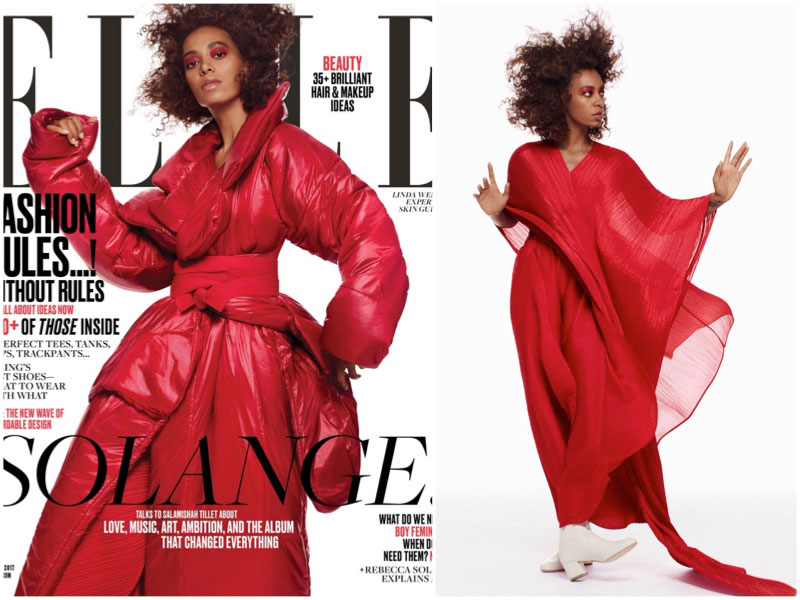
<p>Today, if you want to follow in the footsteps of the Rocket Man or disco club bouncers, you can still buy one of the many versions of the coat on Kamali&rsquo;s site, <a href="https://www.normakamali.com/sbc">NormaKamali.com</a>, ranging from $500 to $1,450. The coat still has a demand, and has made a quiet appearance in popular culture throughout the years. <a href="https://www.normakamali.com/blogs/celebrity-press/article/547-new-york-times---andre-leon-talley">Andr&eacute; Leon Talley</a>, <a href="https://www.usmagazine.com/stylish/news/lady-gagas-giant-red-sleeping-bag-coat-will-be-for-sale-w495587/">Lady Gaga</a>, and <a href="https://www.fashiongonerogue.com/wp-content/uploads/2017/02/Solange-Knowles-ELLE-2017.jpg">Solange</a> have all worn the iconic red version.&nbsp;</p>
<img src="https://platform.vox.com/wp-content/uploads/sites/2/chorus/uploads/chorus_asset/file/19257478/GettyImages_917709152.jpg?quality=90&#038;strip=all&#038;crop=0,0,100,100" alt="" title="" data-has-syndication-rights="1" data-caption="Editor Andre Leon Talley in a red Norma Kamali sleeping bag coat. | Gilbert Carrasquillo/GC Images" data-portal-copyright="Gilbert Carrasquillo/GC Images" />
<p>The sleeping bag coat wasn&rsquo;t just quirky. It ushered in a culture-altering trend that would make puffer coats as much of a winter staple as Ugg boots.</p>

<p>The long parka echoed extreme environmental wear, and people liked to wear the sleeping bag coat to feel modern. &ldquo;In Los Angeles, where mercury hit the high 70s last week, students were roaming college campuses in parkas, shorts and bare feet,&rdquo; <a href="https://www.newspapers.com/image/382999674/?terms=%22sleeping%2Bbag%2Bcoat%22">the Los Angeles Times</a> wrote in 1976. &ldquo;In New York, where the wind chill factor was 50 below zero, people wore down-filled coats and jackets for everything from theater openings to job interviews.&rdquo;&nbsp;</p>

<p>People bought the coat both for its Arctic-like quality, and because it was so eccentric. You had to have a sense of humor to wear it because it was so unusual at the time. &ldquo;It just looked so preposterous I had to have it,&rdquo; Janet Carlson, a director of an advertising firm, told <a href="https://www.newspapers.com/image/382999674/?terms=%22sleeping%2Bbag%2Bcoat%22">the LA Times</a> in 1976. &ldquo; It makes me feel like a little girl tucked in a big man&rsquo;s pocket. And it&rsquo;s turned out to be a shelter from the cold, an umbrella for the rain, an evening or a daytime coat. But I don&rsquo;t take it seriously. I wear it as if it&rsquo;s something funny I just said.&rdquo;</p>

<p>Hilarious or not, the trend caught on, even if passerby were bewildered by the marshmallow-like jacket. Stephanie Baum of Greenwich Village was just leaving her apartment for her secretarial job when the man she lived with poked his head out of their bedroom window and called out, &ldquo;Hey, you forgot to take off your sleeping bag.&rdquo; Baum just smirked over her padded shoulder.&nbsp;</p>
<figure class="wp-block-pullquote alignleft"><blockquote><p>“I wear it as if it’s something funny I just said.”</p></blockquote></figure>
<p>&ldquo;And off she went, hands deep in the pockets of her purple quilted coat, to join the world of other working women in their quilted coats. It was 28 degrees outside, but inside her down-filled coat it felt &lsquo;like summer,&rsquo;&rdquo; <a href="https://timesmachine.nytimes.com/timesmachine/1979/12/04/issue.html">the New York Times</a> reported in 1979.</p>

<p>People had a whole host of theories why the long parka trend exploded. Some thought it was a sign of an imminent doom. &ldquo;And now, people seem to be tossing out the frivolous in favor of anything practical &mdash; as if they&rsquo;re preparing for a cataclysm,&rdquo; <a href="https://www.newspapers.com/image/382999674/?terms=%22sleeping%2Bbag%2Bcoat%22">the Los Angeles Times</a> reported in 1976.&nbsp;Paco Rabanne, a Paris fashion designer, told the paper it was a sign that World War III was right around the corner. &ldquo;Women already are starting to look like refugees, he says. They&rsquo;re dressing in practical layers, piling everything on under all-purpose jackets. To Rabanne, this means the next world war will start in 1983.&rdquo;</p>

<p>While the apocalypse obviously didn&rsquo;t happen, Rabanne might have been onto something. When the World Trade Towers collapsed in 2001, Kamali&rsquo;s sleeping bag coats spiked in popularity. &ldquo;People wanted to feel comforted,&rdquo; Kamali told the Financial Times in 2019. &ldquo;Even though it wasn&rsquo;t the season for us to be making them, we had to get the factory back to work. They just worked with whatever materials they had, so we had little notes in with the coats saying &lsquo;This is not necessarily an outerwear garment, it is intended to make you feel safe.&rsquo;&rdquo;</p>

<p>Los Angeles psychologist James Douglas Scott had another theory. &ldquo;Some people are concerned about conserving natural resources and surviving in an energy crisis. So they turn down the heat, wear parkas indoors or out to help the ecology and prove they can endure,&rdquo; he told<em> </em>the Los Angeles Times in &lsquo;76. &ldquo;But primarily, I think parka partisans are probably the more sexually liberated part of the population. After all, down-filled jackets are soft, cuddly and comfortable. People who wear them are the ones who want to stay loose and have fun. Feeling good is nice, and parkas feel good.&rdquo;</p>

<p>Scott wasn&rsquo;t wrong. To mark the coat&rsquo;s 10-year anniversary, Kamali invited owners of sleeping bag coats via a Village Voice ad to create a meetup on Wall Street in New York. In 1983, a group of<a href="https://www.youtube.com/watch?v=V2s9HgCwRW4"> 75 padded folks in all sorts of coat colors</a> assembled on the steps of the Stock Exchange to create one of Kamali&rsquo;s fashion videos.</p>
<div class="youtube-embed"><iframe title="Norma Kamali Sleeping Bag Coat Flashmob in Wall Street, NYC" src="https://www.youtube.com/embed/V2s9HgCwRW4?rel=0" allowfullscreen allow="accelerometer *; clipboard-write *; encrypted-media *; gyroscope *; picture-in-picture *; web-share *;"></iframe></div>
<p>&ldquo;What is the most provocative thing that&rsquo;s happened to you in your sleeping bag coat,&rdquo; the group was asked. One woman said, &ldquo;I can say one thing: thank god they&rsquo;re machine washable.&rdquo; Having affairs in puffer coats aside, fans of sleeping bag coats found many other uses for them.</p>

<p>&ldquo;The coat works incredibly for keeping your take-home food warm for those cold days when you have blocks to walk and you want a nice warm dinner,&rdquo; one owner said. &ldquo;You don&rsquo;t have to reheat it, you just put it in your sleeping bag coat and it&rsquo;s warm when you get there.&rdquo;&nbsp;</p>

<p>Others used theirs as picnic blankets, a bed for a cat birthing kittens, or as a cozy blanket. &ldquo;It&rsquo;s good in the movie theater because you feel like your at home watching television with your comforter,&rdquo; one person said. &ldquo;It feels like a portable futon.&rdquo;</p>

<p>One drawback was the mammoth size, though. &ldquo;Another quite embarrassing situation with the sleeping bag coat: walking into a tiny little restaurant, with tiny little tables, with tiny little aisles and walking by and knocking over someone&rsquo;s drink onto someone&rsquo;s lap.&rdquo;</p>

<p>But one thing the mob agreed on was the sense of community wearing the unusual coat. When you saw someone with the same puffy sleeves and blobby silhouette, you instantly acknowledged each other. &ldquo;You&rsquo;re like instant friends and you&rsquo;ve got something in common. It&rsquo;s the biggest sorority, fraternity, all over organization going, the sleeping bag coat club.&rdquo;</p>
<figure class="wp-block-pullquote alignleft"><blockquote><p>“It feels like a portable futon.”</p></blockquote></figure>
<p>As the years went by, the ankle-length down coat became less of a novelty and more of a staple. The more that folks saw puffers briskly walking down streets, the more normal they became. The sleeping bag coat began to multiply and be knocked off by other brands, mostly because Kamali didn&rsquo;t have the resources to stop the copycats. In 1999, Maison Margiela created the <a href="https://process.fs.grailed.com/AJdAgnqCST4iPtnUxiGtTz/cache=expiry:max/rotate=deg:exif/resize=height:670,fit:scale/output=format:webp,quality:90/compress/https://cdn.fs.grailed.com/api/file/gz082e5LRFejQnItKcTt">duvet coat</a>, which looked like a comforter with sleeves. More recently, River Island released a pink &ldquo;<a href="https://metro.co.uk/2017/09/21/river-island-is-selling-a-180-sleeping-bag-coat-and-fashion-has-definitely-gone-too-far-6945010/">sleeping bag coat</a>&rdquo; in 2017 that hung around the shoulders like a pulled-on blanket, and Moncler released a <a href="https://www.insider.com/moncler-puffer-coat-winter-fashion-2018-12">sleeveless floor-length puffer</a> in 2018 that made you look like a walking bedroll.&nbsp;</p>

<p>&ldquo;There are times when you own your own business and other people are influenced by something you&rsquo;re doing, and they have more money and more advertising power to sell it, and you&rsquo;re still trying to figure out how to pay the rent,&rdquo; Kamali told <a href="https://www.nytimes.com/2018/02/14/fashion/rediscovering-norma-kamali-again.html">the New York Times</a> in 2018. But she wasn&rsquo;t one to brood. &ldquo;You can have them. I&rsquo;m on to the next thing.&rdquo;</p>

<p>With the slower cycle of coat trends and the convenience of being well insulated once temperatures drop, long puffer jackets have stuck around. So go ahead, swaddle yourself with a sleeping bag with sleeves. It&rsquo;ll never go out of style.</p>

<p><a href="http://vox.com/goods-newsletter"><em>Sign up for The Goods newsletter.</em></a><em> Twice a week, we&rsquo;ll send you the best Goods stories exploring what we buy, why we buy it, and why it matters.&nbsp;</em></p>
						]]>
									</content>
			
					</entry>
			<entry>
			
			<author>
				<name>Marlen Komar</name>
			</author>
			
			<title type="html"><![CDATA[The surprisingly controversial history of the midi-length skirt]]></title>
			<link rel="alternate" type="text/html" href="https://www.vox.com/the-goods/2019/6/27/18693612/midi-skirt-controversy-leopard" />
			<id>https://www.vox.com/the-goods/2019/6/27/18693612/midi-skirt-controversy-leopard</id>
			<updated>2019-06-24T12:43:47-04:00</updated>
			<published>2019-06-27T07:00:00-04:00</published>
			<category scheme="https://www.vox.com" term="Money" />
							<summary type="html"><![CDATA[&#8220;Did every woman in Manhattan wake up one morning and decide to buy a leopard-print midi skirt?&#8221; This is the question, posed by writer Jess Bergman on Twitter, that women nationwide found themselves asking as they realized they were under siege by a particular silk skirt this summer. The leopard midi has become not just [&#8230;]]]></summary>
			
							<content type="html">
											<![CDATA[

						
<figure>

<img alt="" data-caption="Two women in midi skirts, one leopard and one denim, in London, September 2018. | Edward Berthelot/Getty Images" data-portal-copyright="Edward Berthelot/Getty Images" data-has-syndication-rights="1" src="https://platform.vox.com/wp-content/uploads/sites/2/chorus/uploads/chorus_asset/file/16446961/GettyImages_1037768274.jpg?quality=90&#038;strip=all&#038;crop=0,0,100,100" />
	<figcaption>
	Two women in midi skirts, one leopard and one denim, in London, September 2018. | Edward Berthelot/Getty Images	</figcaption>
</figure>
<p>&ldquo;Did every woman in Manhattan wake up one morning and decide to buy a leopard-print midi skirt?&rdquo; This is the question, <a href="https://twitter.com/jesslbergman/status/1131320772641861632">posed by writer Jess Bergman</a> on Twitter, that women nationwide found themselves asking as they realized they were under siege by a particular silk skirt this summer.</p>

<p>The leopard midi has become not just <em>an</em> but <em>the</em> item to own this season, and the spotted look could be easily caught out in the wild, walking around the subway, grabbing mimosas on a patio, or out grocery shopping at a farmers market. Everywhere you look, the spotted midi seems to be present. There is even an Instagram page dedicated to it called <a href="https://www.instagram.com/leopardmidiskirt/">LeopardPrintMidi</a>. But the midi hasn&rsquo;t always been this popular. In fact, in the late &lsquo;60s and early &lsquo;70s, America was in what <em>Women&rsquo;s Wear</em> <em>Daily </em>called the &ldquo;hemline war.&rdquo;</p>
<div class="twitter-embed"><a href="https://twitter.com/jesslbergman/status/1131320772641861632" target="_blank" rel="noopener noreferrer">View Link</a></div>
<p>By the seventies, fashion had became a supermarket. There were so many options and styles that you could pick and choose what you wanted to pop into your cart. The miniskirt came from London in 1964 and quickly spread from mannequins to dancefloors to office buildings. At first it hovered just above the knee, but it slowly began cropping up and up until it had nowhere to go except back down.</p>

<p>In 1968, <em>WWD</em> declared that the mini was out and the midi &nbsp;&mdash; a long skirt that comes to about mid-calf &mdash; was in. A leader in its industry that knew when tides were about to shift, <em>WWD&rsquo;s </em>predictions usually came true. &ldquo;The whole look of American women will now change and diehard miniskirt adherents are going to be out in the fashion cold,&rdquo; the <a href="https://www.newspapers.com/image/8893497/">publication promised</a>. The thing was, the world wasn&rsquo;t ready to hide the leg again.</p>

<p>On June 1968, the magazine banned miniskirts from the office, writing in a memo: &ldquo;We all know minis are dead.&rdquo; When press and buyers went to the Paris haute couture showings in &lsquo;69, a <em>WWD</em> headline announced, &ldquo;Au Revoir Mini, Bonjour Longuette,&rdquo; using the French name for the style.</p>

<p>Because the magazine gave the new length the go-ahead, department stores started to order them, and major designers started to mimic the look in their own lines in fear of being left out of the mainstream. In June of 1970, the high-end department store Bonwit Teller made 95 percent of its fall fashion midi-length. That same year, eight of New York&rsquo;s biggest stores carried $70 million worth in midi stock; in Los Angeles, Joseph Magnin converted 95 percent of its stock into the calf-skimming look; in Chicago, Peck &amp; Peck had pushed every mini out of its store. It was like the style ceased to exist. Even <em>Vogue </em>magazine told its staffers not to wear minis to work <a href="https://www.newspapers.com/image/311457268/?terms=midi%2Bskirt">after August 1</a>.</p>
<img src="https://platform.vox.com/wp-content/uploads/sites/2/chorus/uploads/chorus_asset/file/16447179/GettyImages_50692450.jpg?quality=90&#038;strip=all&#038;crop=0,0,100,100" alt="" title="" data-has-syndication-rights="1" data-caption="Employees of Saks Fifth Avenue watching a fashion show promoting midi-length skirts. | John Dominis/The LIFE Picture Collection via Getty Images/Getty Images" data-portal-copyright="John Dominis/The LIFE Picture Collection via Getty Images/Getty Images" />
<p>But the public just came out of a six year long campaign that convinced them to put the leg on full display, and the abrupt change back into knee-covering lengths felt like whiplash. The curt shift had people resisting.</p>

<p>&ldquo;I won&rsquo;t take this sitting down!&rdquo; Mrs. Alan Siegel told <a href="https://www.nytimes.com/1970/02/02/archives/partisans-here-hold-strong-opinions-in-impending-battle-over.html?searchResultPosition=13"><em>New York Times</em></a> as she wheeled her 5&#8208;month&#8208;old on Third Avenue. &ldquo;I don&rsquo;t think women can be pushed around like this anymore. I have no intention of wearing anything long for summer, and I will be very sad if the short skirts disappear.&rdquo;</p>

<p>&ldquo;We are about to enter upon The Great Midi Crisis of 1970. In certain quarters, it is sure to rival pollution as the No. 1 issue of the year. Not to mention Vietnam,&rdquo; <a href="https://www.nytimes.com/1970/02/02/archives/partisans-here-hold-strong-opinions-in-impending-battle-over.html?searchResultPosition=13"><em>New York Times</em></a> wrote in 1970. &ldquo;Already, Seventh Avenue is quaking. Enemies are being made, and friends are being lost.&rdquo; Smaller designers were so concerned with the backlash that they gave anti-midi speeches before their fashion shows. But major fashion forces like Valentino, Saint Laurent, Dior, and Oscar de la Renta endorsed the look, nudging the inevitable change along.</p>

<p>&ldquo;I think fashion was just ready for it. The mini skirt had been in style for a number of years, and it was time for a change. A decade was ending and we were moving into a new period,&rdquo; Kevin Jones, the Curator for the Fashion Institute of Design &amp; Merchandising Museum, shares with The Goods. Take Yves Saint Laurent&rsquo;s 1971 spring haute couture Forties show for example, which brought back the silhouette of WWII. The midi was an old style and shouldn&rsquo;t have been earth shattering, but the show was savaged by critics.</p>
<img src="https://platform.vox.com/wp-content/uploads/sites/2/chorus/uploads/chorus_asset/file/16447089/GettyImages_976575846.jpg?quality=90&#038;strip=all&#038;crop=0,0,100,100" alt="" title="" data-has-syndication-rights="1" data-caption="A model wearing Yves Saint Laurent. | D. Morrison/Daily Express/Hulton Archive/Getty Images)" data-portal-copyright="D. Morrison/Daily Express/Hulton Archive/Getty Images)" />
<p>&ldquo;He was trying to bring the silhouette back of occupied Paris in WWII. Particularly the certain kind of French woman who was willing to collab with the Nazi occupiers,&rdquo; Jones explains. YSL&rsquo;s collection was full of calf-skimming skirts, shoulder pads, big furry cropped jackets, and flowers in the hair. It had gritty glamour. &ldquo;It was a style very popular during the war in Paris with this particular kind of woman. And it was a shock during the fashion show because everyone at the show watching it remembered the war. There was a big brouhaha.&rdquo; The midi might have been seen as dated by shoppers, but it was actually pretty subversive if they took a minute to think about it.</p>

<p>But ultimately it wasn&rsquo;t the design that put consumers off &mdash; it was the marketing scare-tactics. Women felt like they didn&rsquo;t have a choice but to adopt the style, and the skirt was quickly labeled as fascist for that reason. It was a dictated decree, and magazine covers promised readers that if they didn&rsquo;t drop an entire paycheck to rehaul their wardrobes, they would face the risk of being seen as outdated. The lack of choice grated.</p>

<p>&rdquo;I am short, so if I wore a midi skirt, it would look as though I were borrowing my grandmother&rsquo;s clothing,&rdquo; Mrs. Mary Bartos, a housewife, told the<a href="https://www.newspapers.com/image/65792422/?terms=midi%2Bskirt"><em> Standard Speaker</em></a> in 1970. &ldquo;And with the high cost of food and everything else, who can afford to get rid of an entire wardrobe of short clothing for a type of apparel which is neither practical nor appealing?&rdquo;</p>

<p>Seemingly oblivious to the reluctant public, <em>WWD </em>kept relentlessly pushing the new style, giving coverage only to the controversial length. One Seventh Avenue designer even told <a href="https://www.newspapers.com/image/179951601/?terms=women%2Bwear%2Bdaily%2Bmidi"><em>The Philadelphia Inquirer </em></a>that a light sprinkling of blackmail was involved to back the trend. &nbsp;&ldquo;<em>Women&rsquo;s Wear</em> said if I didn&rsquo;t do midis they wouldn&rsquo;t cover my fall collection, so I made them.&rdquo;</p>

<p>Thanks to these authoritarian-like fashion forecasts, the trend was met with rebellious cynicism. &nbsp;A 1970 poll by New York&rsquo;s <em>Daily News</em> reported <a href="http://www.time.com/time/magazine/article/0,9171,904422-1,00.html">83 percent of readers were wearing skirts above the knee</a> in defiance. As the fashion industry stayed oblivious to public opinion, news headlines had fun with escalating the hemline war. &ldquo;Women Call it Sleazy, Dowdy, Depressing; but Designers Say It Will Catch On Yet,&rdquo; <em>The Wallstreet Journal </em>wrote in 1970. &ldquo;Midi Skirts Aren&rsquo;t Safe And All Must Be Recalled,&rdquo; the <a href="https://www.newspapers.com/image/180916518/?terms=midi%2Bskirt"><em>Courier Post</em></a> joked. &ldquo;New Midi-Skirts Seen Aid To Birth Control,&rdquo; <a href="https://www.newspapers.com/image/17786533/?terms=midi%2Bskirt%2Bfascist"><em>Tyrone Daily Herald </em></a>speculated.</p>
<img src="https://platform.vox.com/wp-content/uploads/sites/2/chorus/uploads/chorus_asset/file/16447080/GettyImages_592259016.jpg?quality=90&#038;strip=all&#038;crop=0,0,100,100" alt="" title="" data-has-syndication-rights="1" data-caption="A midi skirt and a mini skirt in late ‘60s London. | Daily Mirror/Mirrorpix/Mirrorpix via Getty Images" data-portal-copyright="Daily Mirror/Mirrorpix/Mirrorpix via Getty Images" />
<p>Others made fun of the dowdy length. &ldquo;There seems to be a conspiracy to deck girls out for a day in the office as if they were being prepared for Napoleon&rsquo;s retreat from Moscow.&rdquo; <a href="https://www.newspapers.com/image/512051727/?terms=midi%2Bskirt%2Bfascist"><em>Detroit Free Press</em></a> wrote. Then others riffed on the fascist-like browbeating of the industry. <a href="https://www.newspapers.com/image/327204277/?terms=midi%2Bskirt%2Bfascist"><em>The Tampa Times </em></a>wrote a piece called &ldquo;The Fury of a Fuehrer Scorned,&rdquo; where Hitler hid in a bunker underneath Seventh Avenue&rsquo;s subway, organizing how to force midi skirts onto the New York women.</p>

<p>&rdquo;Mein Fuehrer. Seventh Avenue is in ruins. The midi-length skirt was bombed. All is lost. We must surrender,&rdquo; one of his aides told him. &ldquo;Don&rsquo;t tell me we have lost the war,&rdquo; the Fuehrer shouted. &ldquo;We will counter-attack. We will punish all those who refuse to wear the midi-skirt.&rdquo;</p>

<p>While department stores held down their forts, there really <em>were </em>mini skirt forces marching in. There were anti-midi demonstrations on the streets of Washington, D.C on May 1970, where women protested against the authoritarian system of the fashion industry. &ldquo;There won&rsquo;t be anything else to buy. They&rsquo;ll just be making midis,&rdquo; one protestor explained to <a href="https://www.newspapers.com/image/340083490/?terms=midi%2Bskirt%2Bfascist"><em>The Dispatch</em></a>.</p>

<p>In July 1970 a group of 50 mini-skirt clad women marched in front of a <a href="https://www.newspapers.com/image/198831691/?terms=midi%2Bskirt%2Bfascist">group of stores in Miami</a>, carrying homemade protest signs with messages like &ldquo;Up Your Midi&rdquo; and &ldquo;Things Go Better with Minis.&rdquo; One woman appeared in a midi coat on the street and drew a wave of boos. It turned to cheers when she flashed open her coat and revealed a mini dress underneath. Everyone from middle aged moms to teenagers walked in the &ldquo;hems up&rdquo; protests. &ldquo;I hated the midcalf look in 1946 when I was 24, and despise it now,&rdquo; said 48-year-old Ann Pollard, who marched with her 17-year-old daughter.</p>

<p>Other anti&#8208;midi&#8208;ists held &ldquo;clip ins,&rdquo; in which they took out scissors and hacked off midis in front of department stores, a sinister display. Others wrote anti-midi songs, took to signing petitions to send to magazine editors, and burned their department store credit cards from stores that were pushing the unwanted length.</p>

<p>Hundreds of anti-midi groups sprung up across the U.S., with funny acronyms that showed the absurdity of the situation. There was SOCK (Save Our Cute Knees), in Detroit; FADD (Fight Against Dictating Designers) in Washington; WHIM (Women Happy In Minis), in Boise; and MAMMA (Men Against the Maxi&#8208;Midi Atrocity) in Klosters, Switzerland.</p>

<p>&ldquo;Our best weapon is to stay away from the stores,&rdquo; said Mrs. Michael Deem, the co&#8208;founder of FADD to <a href="https://www.nytimes.com/1970/04/28/archives/petitions-and-parades-war-of-descending-hemline-escalates.html?searchResultPosition=37"><em>The New York Times</em></a>. &ldquo;If the stores don&rsquo;t give us a choice, we are simply going to push the idea of &lsquo;no buy&rsquo; for fall.&rdquo;</p>
<img src="https://platform.vox.com/wp-content/uploads/sites/2/chorus/uploads/chorus_asset/file/16447096/GettyImages_514678422.jpg?quality=90&#038;strip=all&#038;crop=0,0,100,100" alt="" title="" data-has-syndication-rights="1" data-caption="“GAMS” protests for mini skirts along Fifth Avenue in New York. | Bettmann Archive" data-portal-copyright="Bettmann Archive" />
<p>Phyllis Tweel, an assistant television producer, organized Girls Against More Skirt (GAMS) for the same reason. &ldquo;We belong to a generation that isn&rsquo;t going to be pushed into wearing something we don&rsquo;t want to wear simply because it&rsquo;s new,&rdquo; she said. &ldquo;We are going to actively resist buying midis.&rdquo;</p>

<p>FADD, along with two other mini-groups, went as far as filing a complaint with the Federal Trade Commission against <em>WWD</em>, citing the trade publication&rsquo;s campaign for the midi was &ldquo;false advertising.&rdquo; The complaint stated that the magazine had &ldquo;deliberately distorted news stories, blatantly staged photographs, and ruthlessly silenced opposition in furtherance of its aims to coerce the public and the fashion industry into acceding to its unconscionable demands.&rdquo;</p>

<p>There were consequences. <em>Vogue </em>had a 38 percent drop in ad revenue in the first three months of 1971. By 1974, several couture houses and small manufacturer filed for bankruptcy as women continued to stay away in droves. Even worse for those backing the midi, pant suit sales nearly doubled over the year as women decided to ditch the skirt debacle altogether.</p>

<p>But be that as it may, the mini was still not going to prevail. Fashion changes, whether we want it to or not. <em>WWD </em>was so aggressive in its coverage because it saw the wind changing. &ldquo;If you&rsquo;re an expert in something, you do have you pulse on things a little more than a general customer,&rdquo; Jones explains. &ldquo;So you know where fashion is going, and sometimes it&rsquo;s one of those aspects of being inevitable. So if you want to be in the forefront of fashion and want to lead, you&rsquo;re going to take risks and push something that you know will eventually catch on.&rdquo;</p>

<p>It-girls like French actress Catherine Deneuve and Spanish designer Paloma Picasso were already seen at flea markets, poking through boxes looking for the &lsquo;40s-inspired length. There have also been op-eds in 1971 that suggested the midi was turning into a defiant statement piece akin to the Man Repeller style of today. One journalist, Judith Viorst, <a href="https://www.newspapers.com/image/57586666/?terms=midi%2Bskirt%2Bfascist">wrote a column</a> where she reminisced about how the same men at cocktail parties who would light her cigarettes and ask if they could get her drinks the year before, would now greet her with remarks like, &ldquo;You&rsquo;ve got to be kidding me.&rdquo; In another instance, one of her midi-clad friends walked past a table of businessmen in a fancy French restaurant and was hissed at thanks to her heavy skirts. But these ladies kept at it.</p>

<p>&ldquo;I&rsquo;m bored with trying to dredge up a snappy comeback to their attacks on everything from my good judgement to my mental health,&rdquo; Viorst wrote. &ldquo;And I&rsquo;m sure there are questions of more immediate interest to mankind that whether I have become a victim of <em>Women&rsquo;s Wear Daily</em>, a tool of the garment industry, and the oldest gypsy maiden in D.C.&rdquo;</p>

<p>Now with the new leopard print midi craze, you get to decide which team you are on. In 1970, it was a divider of nations. Today, the response is much more tame, even in this normally outraged social media time. But love it or hate it, as we have seen, no amount of protest will stop fashion from reinventing itself since the zeitgeist is a constantly fidgeting thing. But the good news is that fashion is also filled with d&eacute;j&agrave; vu. When hemlines fall, they will only creep back up. Fashion is always cyclical &mdash; even if sometimes it requires a little push.</p>

<p><a href="http://vox.com/goods-newsletter"><em>Sign up for The Goods newsletter.</em></a><em> Twice a week, we&rsquo;ll send you the best Goods stories exploring what we buy, why we buy it, and why it matters.&nbsp;</em></p>
						]]>
									</content>
			
					</entry>
	</feed>