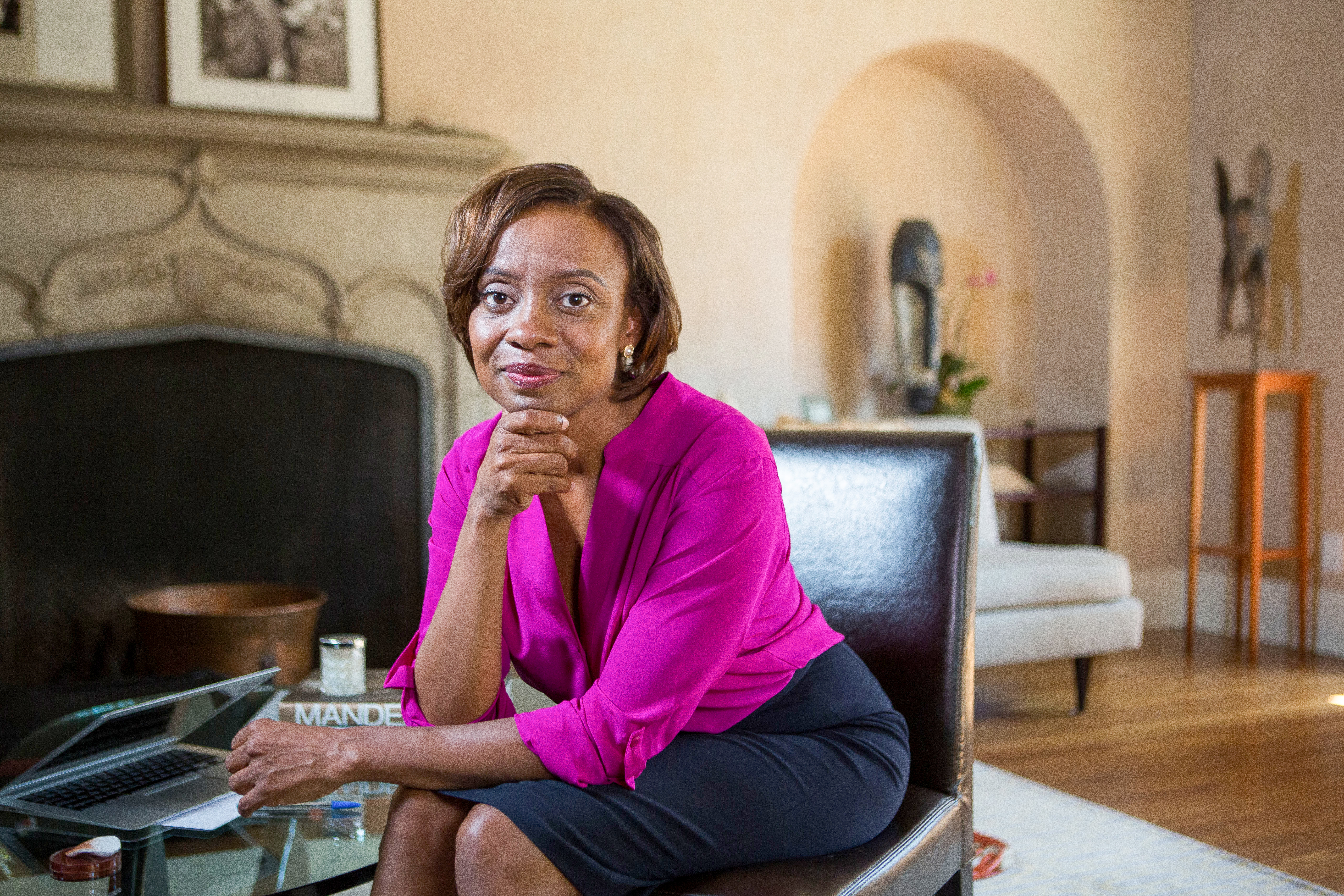
The MacArthur Foundation just announced the winners of its 2014 “genius grants” — and one of them is a psychologist trying to untangle the ties between race and the US criminal justice system.
New MacArthur ‘genius’ uncovered how deep racism in criminal justice goes

Jennifer Eberhardt is a professor at Stanford University. Her work focuses on implicit bias: the notion that your subconscious relies on stereotypes when making the mental shortcuts that help you think and react. Specifically, she focuses on race and crime — the stereotypical association between black men and criminal behavior.
The MacArthur site lists several of Eberhardt’s studies —such as one that showed jurors were more likely to give someone the death penalty if he or she had stereotypically “black” features. Earlier this year, we took an in-depth look at one of Eberhardt’s newest studies, which suggested that white Americans were more likely to support harsh criminal-justice policies if they saw evidence that blacks were disproportionately put in prison:
Both groups agreed that the three-strikes law [in California] was too harsh. But if the video they’d seen had more black inmates in it, they were less likely to agree to sign a petition to change it. More than half of the first group signed the petition; only a quarter of the second group did.
In other words, according to the researchers, “the blacker the prison population, the less willing registered voters were to take steps to reduce the severity of a law they acknowledged to be overly harsh.”
[...]
In the study, whites intrinsically associated prison with black people. And they automatically associated prison, blackness, and crime. New Yorkers who were told [in a different experiment] that 60 percent of prisoners were black were more likely to say that they were worried about crime in their neighborhoods if stop-and-frisk were repealed — and the more worried they were about crime, the less likely they were to sign the petition.
The original article has more details about the study — and some of the work it builds on, by Eberhardt and others, about the psychology of race and crime. My colleague German Lopez has also written about implicit bias in policing.
For more, watch our video on the racism of the US criminal justice system:
See More: