Kesha, the pop singer-songwriter who’s been in legal limbo for years, is officially back.
Kesha’s new single “Praying” is a scorched-earth ballad on betrayal and hope
The singer will release Rainbow, her first album in five years, on August 11.


Caroline Framke wrote about culture, which usually means television. Also seen @ The A.V. Club, The Atlantic, Complex, Flavorwire, NPR, the fridge to get more seltzer.
On July 6, she not only released the video for her contemplative new single “Praying,” but also announced that it’s the first song for an upcoming album, Rainbow, which will be released on August 11. It will be her first full-length album in five years.
Kesha has been locked in legal battles since 2014, when she and producer Dr. Luke first went to court; she accused him of sexual and emotional abuse, and he countersued for defamation and breach of contract. Kesha, locked into her contract with Dr. Luke’s label Kemosabe Records, was meanwhile unable to produce her own music elsewhere. In April of this year, it was reported that Dr. Luke was out as CEO of Kemosabe, and that parent company Sony planned to end its relationship with him entirely. According to reports, however, Rainbow is the third of five Kesha’s contractually obligated to produce under Kemosabe — and when Dr. Luke leaves Sony, Kesha has to go with him.
But for now, at least, Kesha’s got her Rainbow.
“This song is about coming to feel empathy for someone else even if they hurt you or scare you,” Kesha writes of “Praying” for Lenny Letter. “It’s a song about learning to be proud of the person you are even during low moments when you feel alone. It’s also about hoping everyone, even someone who hurt you, can heal.”
Right off the bat, Kesha wants you to know that “Praying” — not to mention Rainbow — isn’t going to be one of the dive bar party anthems she became known for after 2010’s “Tik Tok” launched her solo career. The video even opens with her in a coffin, and then on the surface of a lake, delivering a solemn monologue in which she wonders why she’s alive — “What is the lesson? What is the point?” — and whether or not some god “or whatever” is even listening.
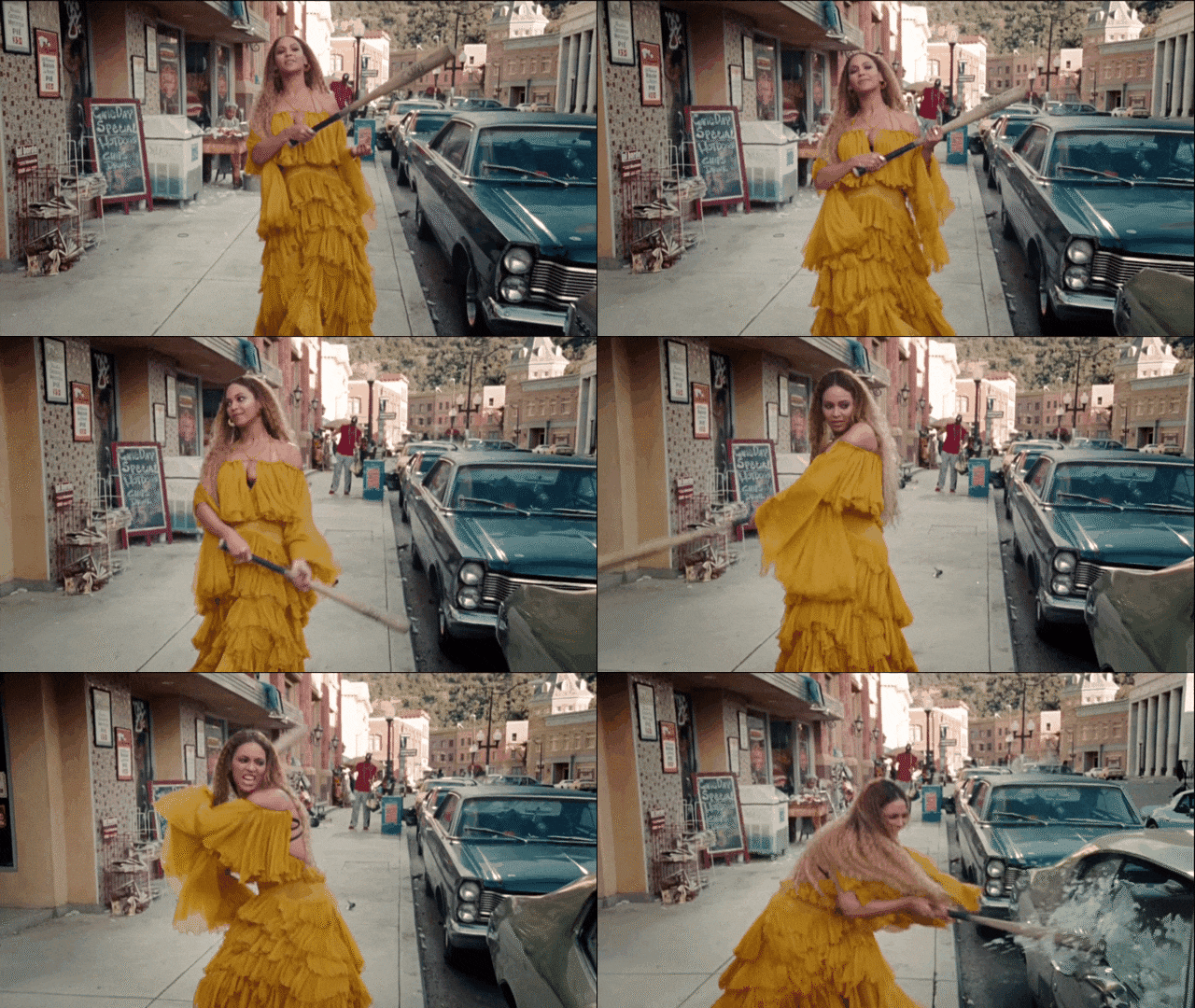
The parallels to Lemonade — Beyoncé’s stunning visual album about a woman rebuilding after a betrayal — are undeniable. Even aside from the self-reflective spoken-word opening the song (which is not unsimilar to Beyoncé’s opening track “Pray You Catch Me”), Kesha’s wardrobe and affect are eerily similar at times. She stages her own funeral, walks across the water, and wears a ruffled rainbow dress like the yellow one Beyoncé twirls in throughout the Lemonade track “Hold Up.” At one point, she even strolls across the screen swinging a baseball bat.

That Kesha is so obviously trying to make her own Lemonade can make the “Praying” video feel a little strange and distracting, especially because this is song is clearly very personal for her; evoking Beyoncé’s imagery at the video’s onset dilutes the message, making it feel more like an homage than the emotional purge she says it is.
But once Kesha starts snarling that she hopes the person who hurt her is “somewhere praying,” that their “soul is changing,” both the song and video shift. She tears at her own face, runs through a psychedelic desert shrine, unleashes rainbow smoke into the sky, and wails her voice raw. As Kesha embraces her pain and rage, the song becomes something much more intense and weird and furious and hopeful — something that feels much more like Kesha herself.
Updated to include further details on Kesha’s contract with Kemosabe and Dr. Luke.