Jason Crawford wants us to go forward by going backward.
How can we make the world progress faster? Jason Crawford wants to know.
The thinker fueling the growing progress studies movement.

Rebecca Clarke for Vox
How can we make the world progress faster? Jason Crawford wants to know.
The thinker fueling the growing progress studies movement.

Bryan Walsh is a senior editorial director at Vox overseeing the climate teams and the Unexplainable and The Gray Area podcasts. He is also the editor of Vox’s Future Perfect section and writes the Good News newsletter. He worked at Time magazine for 15 years as a foreign correspondent in Asia, a climate writer, and an international editor, and he wrote a book on existential risk.
There was a time, Crawford wrote in a 2021 blog post announcing the creation of his nonprofit organization The Roots of Progress, when “Western thinkers were caught up in a wave of optimism for technology, humanity and the future.” Fired by the philosophy of the Enlightenment, technologists and scientists beginning in the 19th century drove a wave of technological innovation, from the railroad to the telephone to the electric light to the internal combustion engine.
With those scientific advances came economic advances, as living standards and life expectancy for first the West and then, increasingly, much of the rest of the world began to rise sharply. Moral progress followed in its wake: Slavery was ended throughout much of the world, the democratic franchise spread, and violence declined.
There have been countless books written about how and why this transformation in the human condition took place. But Crawford, a former tech startup founder, identifies something that runs beneath economic factors and scientific breakthroughs: vibes — “a philosophy of progress,” as he puts it, that took for granted the idea that progress was possible and progress was good.
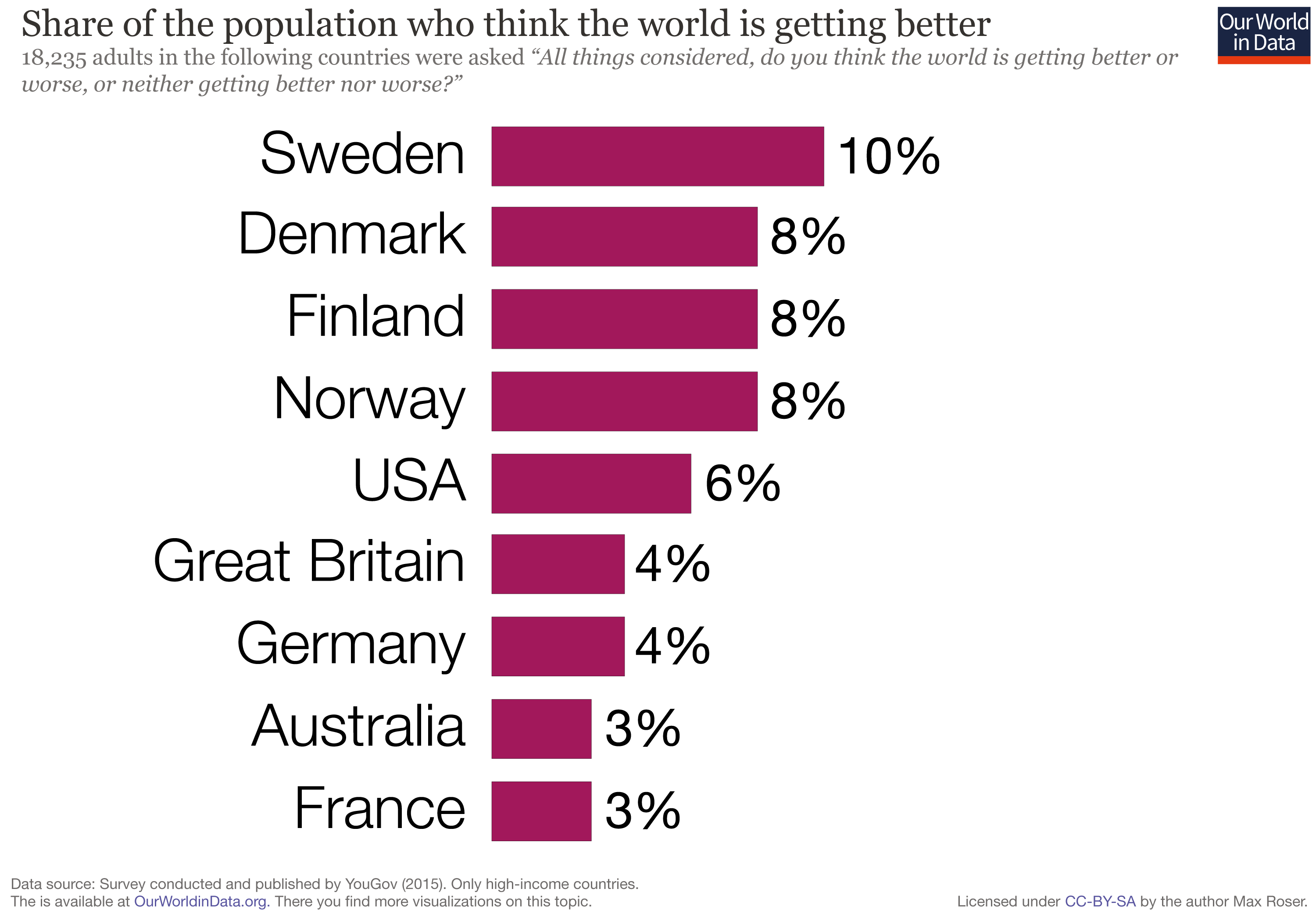
Those days are clearly gone. Even Crawford admits that original philosophy was naive, blind to the environmental, social, and ethical costs of untrammeled progress. The human catastrophe of World War II showed that material progress could give us the means to do evil on a grand scale. The environmental challenges that rose in the decades that followed — climate change most of all — paved the way for the increasingly accepted belief that the world is getting worse, and that the best we can hope for is a way to live within our limits.
But Crawford will have none of this. As one of the leading members of the nascent progress studies movement, Crawford has dedicated his career to identifying what makes progress possible and to articulating a new philosophy around the subject that can break through the skepticism and distrust that color the public’s ideas about growth. As he told Vox’s Kelsey Piper last year: “We have to go forward with a new synthesis that combines a fundamental optimism about progress with a more mature and wise and prudent approach to the risks and problems of technology.”
Truly restarting the engine of progress is a daunting task, all the more so in an age that seems to careen between stagnation and crisis. It will require fundamental reforms to how we govern ourselves, how we fund scientific research — even what we think of as “safe.” Perhaps most difficult of all, it will require us to believe we can do better, live better, when so much evidence seems to point to the opposite conclusion.
Like a medieval monk rediscovering the classical works of the ancients, Crawford is combing the past for the wisdom that we’ve lost — and then reconstructing it for a new era. If he and his fellow travelers succeed, maybe we’ll regain our belief that the future is more than something to fear.
See More: