On Monday, the UN Security Council approved a US-drafted plan that calls for an international security force and that at least keeps the door open for eventual Palestinian statehood. But for the future of the tenuous ceasefire between Israel and Hamas, the most important events may be happening not in New York, but below the streets of Rafah.
A few dozen Hamas fighters, trapped underground, could doom the Gaza ceasefire
Or they could save it.


Joshua Keating is a senior correspondent at Vox covering foreign policy and world news with a focus on the future of international conflict. He is the author of the 2018 book Invisible Countries: Journeys to the Edge of Nationhood, an exploration of border conflicts, unrecognized countries, and changes to the world map.
Gaza is hardly peaceful. Some 268 Palestinians have been killed by Israeli fire since the ceasefire began, according to the Hamas-run health ministry, on top of those killed by Hamas. But there’s been no return to the full-scale combat that persisted for two years.
That could still change. An acute risk to warfare resuming centers around dozens of Hamas fighters — perhaps as many as 200, though no one knows exactly — who have been trapped in underground tunnels behind Israeli lines since before the ceasefire, cut off from their compatriots and likely running low on food and water. The presence of these fighters is a serious threat to the ceasefire. They were likely responsible for the two ambushes that killed three IDF soldiers in October, each prompting Israeli retaliatory strikes that killed dozens of Palestinians across the Gaza Strip.
Along with the ongoing dispute over whether Hamas is doing all it can to return the bodies of deceased hostages, the trapped Hamas fighters are also proving to be a diplomatic stumbling block, preventing the sides from moving on to larger issues: Israel wants the fighters to turn over their weapons and surrender; Hamas wants them to be given safe passage back to Hamas-controlled territory; the Trump administration wants the whole thing to go away.
The fate of the fighters is also an irresistible metaphor for the status of the ceasefire as a whole: They’re currently in an untenable situation — but are stuck in place by the fear that whatever move they make might lead to something worse.
For peace in Gaza, the enemy is inertia
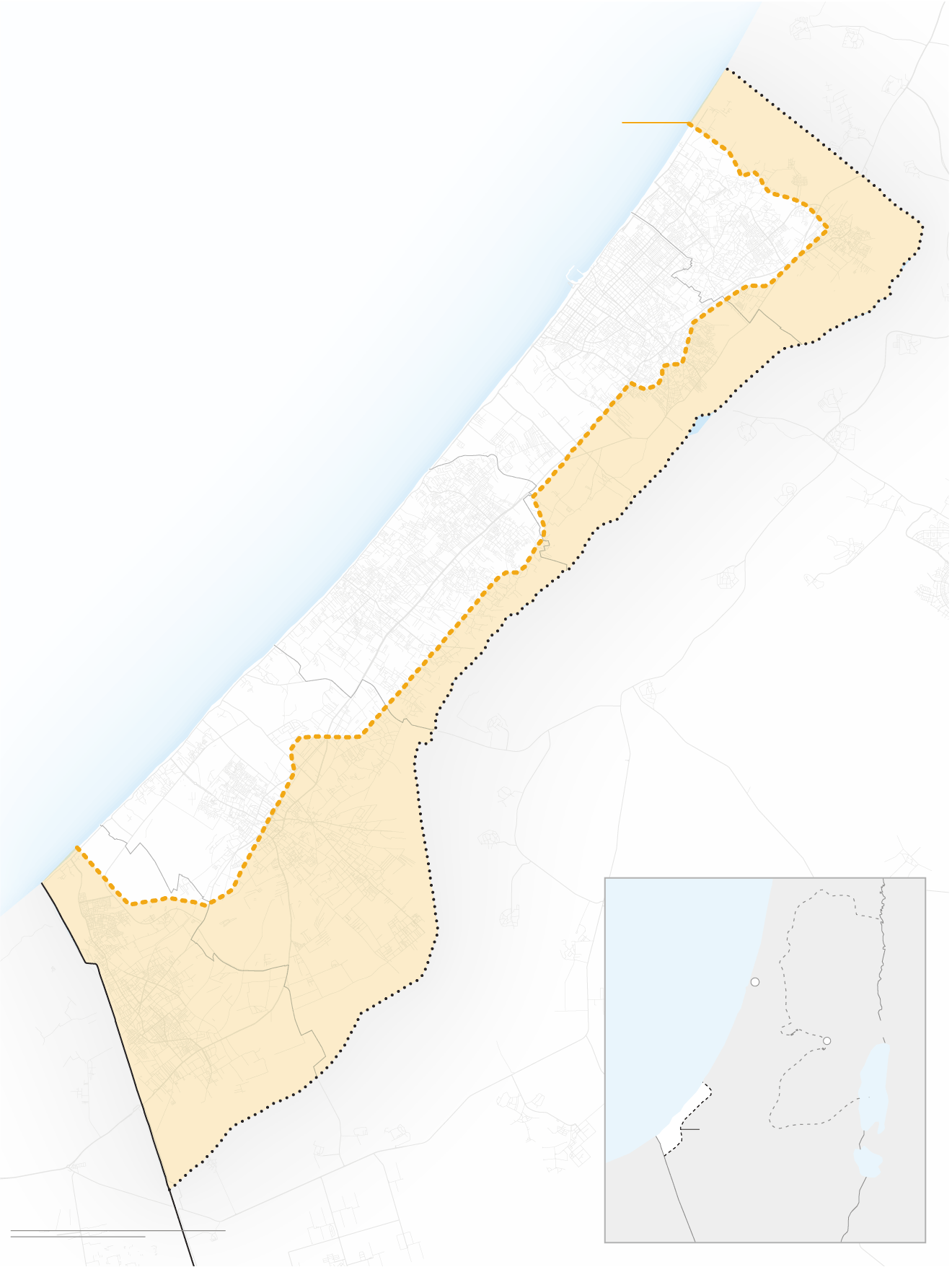
Five weeks after the ceasefire deal went into effect, Gaza is effectively divided in half: Israeli forces have withdrawn behind the so-called “yellow line,” but they still control a thick and largely depopulated swathe along Gaza’s external borders with Israel and Egypt. Hamas, meanwhile, controls the Strip’s interior. Hamas has not only not disarmed, it has reasserted control over the areas it controls, carrying out gun battles with rival armed gangs and executing accused collaborators with Israel. Though much of Hamas’s leadership in Gaza was wiped out during the war, its rank and file appear surprisingly well-equipped.
The Trump administration would like to move on to the next phases of Trump’s 20-point peace plan, which involve disarming Hamas, setting up an “International Stabilization Force” to provide security, and transitioning to a new governing authority in Gaza. That’s going to be tough, as even White House officials admit in private.
Several Muslim-majority countries including Azerbaijan, Indonesia, and Pakistan have expressed interest in contributing troops to the new security force. (Turkey has as well, though that’s a non-starter for Israel.)
But these countries are not interested in having their troops try to forcibly disarm Hamas, which could involve actual combat with the group amid the rubble of Gaza. And there’s little indication that Hamas is interested in disarming on its own. The group’s leaders rejected the prospect of a stabilization force before the Security Council vote.
The Israeli government, meanwhile, is not all that interested in moving forward to the later stages of the US peace plan that envision the Palestinian Authority taking control of Gaza and a new push toward a two-state solution. Prime Minister Benjamin Netanyahu, who is hoping to avoid a right-wing exodus that could bring down his government, vowed on Sunday to oppose any attempt to establish a Palestinian state, ahead of the UN vote on the US-drafted resolution, which calls for a “credible pathway” toward statehood. This language — as well as the fact that the normally UN-averse Trump administration is calling for a vote on it at all — arose from demands from the countries that would make up the stabilization force.
At the moment, the biggest threat in the region may be inertia: Grim as the status quo is, the current leaders of both Hamas and Israel seem to prefer it to moving forward with a political process that would leave Hamas disarmed, politically neutered, and replaced with a Palestinian Authority in a more credible position to demand statehood. Ironically, this is in many ways a return to the situation prior to October 7, 2023, when Hamas and Israel were tacitly working together to marginalize the PA and undermine Palestinian unity.
The threat from underground
On the other hand, the current status quo is probably not sustainable, which brings us back to the Hamas fighters trapped in the tunnels under Rafah. Inertia might be driving both sides into a frozen conflict with each retreating behind the yellow line, but it will be harder to keep conflict frozen with a few dozen armed Hamas militants trapped behind enemy lines.
Some see the situation as a potential off-ramp that could allow the peace plan to move forward: Israel could agree to let them go only under the condition that Hamas begin turning over its weapons. Trump’s envoy Steve Witkoff has suggested that the fighters themselves could be granted amnesty and that this could be a “model” for what they’re trying to achieve in the rest of Gaza.
Maybe. The issue reportedly came up in recent talks between Netanyahu and Trump’s son-in-law Jared Kushner. The prime minister has rejected a suggestion that he allow the fighters to travel, unarmed, across the yellow line into Hamas-held territory. And while there are reports of a possible plan to allow them to travel to a third country, it’s not clear if there’s a country willing to take them in.
As with Hamas and Israel broadly, the current situation can’t last forever and efforts to forestall the inevitable may lead to catastrophe.
The longer the men are trapped, the more desperate they are likely to become, raising the potential that they may simply go down fighting rather than surrender. Given the massive retaliation Israel has carried out in response to deadly attacks on its forces over the past month, we may soon be faced with the question of just how much fighting there can be in Gaza while we’re still saying a “ceasefire” is in place.